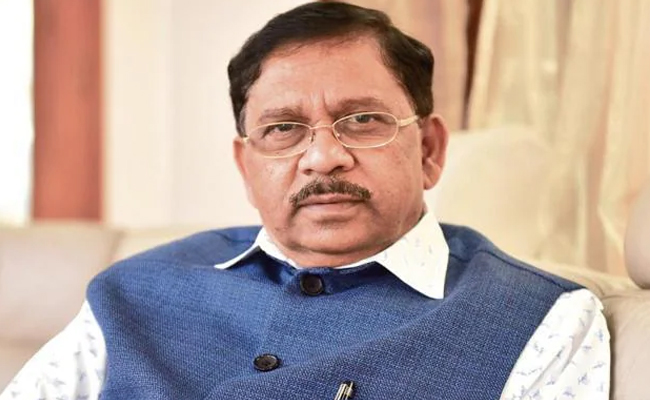
Shame HP govt can't even run disaster relief fund, actor Kangana after 'failed attempts' to donate

Shimla(PTI): Actor Kangana Ranaut has slammed the Himachal Pradesh government after making "50-60" failed attempts to donate money online for disaster relief, claiming that the state cannot even run properly the fund set up for it.
"Such a shame," she said on microblogging site X' on Thursday night.
The actor, who hails from the hill state, however, managed to make the donation of Rs 5 lakh online and posted a screen shot indicating this.
Chief Minister Sukhvinder Singh Sukhu's office pooh-poohed her claim, suggesting that this could be just a technical hitch.
"Trying to donate for the Himachal floods disaster but the government there can't even run aapada rahat kosh properly, such a shame, after trying the whole day more than 50-60 times could only donate some amount," she posted, targeting the Congress-run state.
When contacted, Naresh Chauhan, the media advisor to the CM, said, "We don't want to comment on Kangana's tweet. People have donated over Rs 200 crore towards the state disaster relief fund, a part of which was donated online and no such issue has come to our notice".
"If there is some technical glitch it could be resolved. And people from all walks of life and even state governments have contributed towards the fund, which is being used for relief and rehabilitation," he said.
Last month, Bollywood star Aamir Khan contributed Rs 25 lakh to the state's disaster relief fund.
The governments of Assam, Uttarakhand, Haryana, Bihar, Odisha, Tamil Nadu, Karnataka, Rajasthan and Chhattisgarh donated a total of over Rs 80 crore to help with relief and rehabilitation.
Temple trusts, NGOs and others have also come forward to help.
Heavy rains in the months of July and August caused huge damage to roads, water supply projects and houses. Over 300 people have died in the state in rain-related incidents since the monsoon began on June 24.
Sukhu has claimed that the state suffered losses of about Rs 12,000 crore. The state government has announced a special relief package of Rs 4,500 crore for the affected people.
Let the Truth be known. If you read VB and like VB, please be a VB Supporter and Help us deliver the Truth to one and all.
National Synodal Assembly 2026 begins in Bengaluru with over 220 delegates
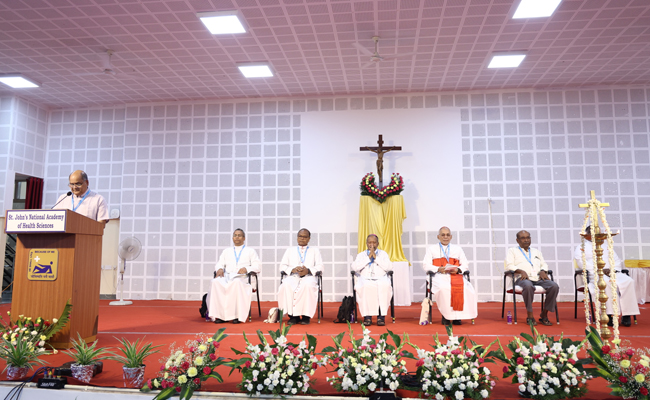
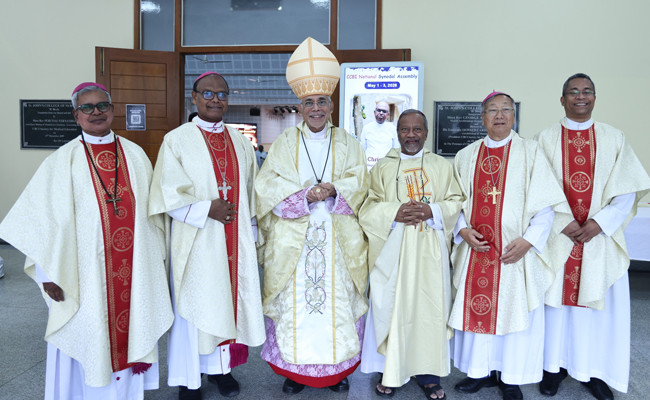
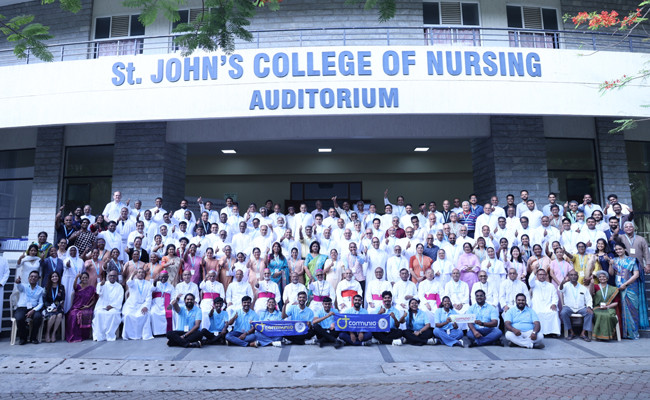
Bengaluru: The Conference of Catholic Bishops of India (CCBI) on May 1 inaugurated its National Synodal Assembly 2026 at St. John’s Medical College, bringing together more than 220 delegates from across the country under the theme Synodal Pilgrims of Hope.
The assembly is part of the global synodal process initiated in 2021 by Pope Francis, which calls for greater participation, dialogue and shared responsibility within the Church. In India, the process has involved consultations at diocesan, regional and national levels.
Participants at the assembly include two Cardinals, 25 Bishops, 65 priests, more than 20 women religious, and over 100 lay faithful, including youth and women leaders.
The gathering began with a Eucharistic celebration led by Filipe Neri Ferrão. In his homily, he described the assembly as a moment of grace and discernment and called on delegates to walk together in prayer, listening and missionary commitment.
He spoke about the importance of the Risen Christ in the mission of the Church and urged the faithful to be witnesses of the Gospel. Referring to the conversion of St Paul, he said every baptised person has a role in spreading the message of Christ. He also highlighted the example of St Joseph the Worker, stressing the dignity of labour and the call to holiness in everyday life.
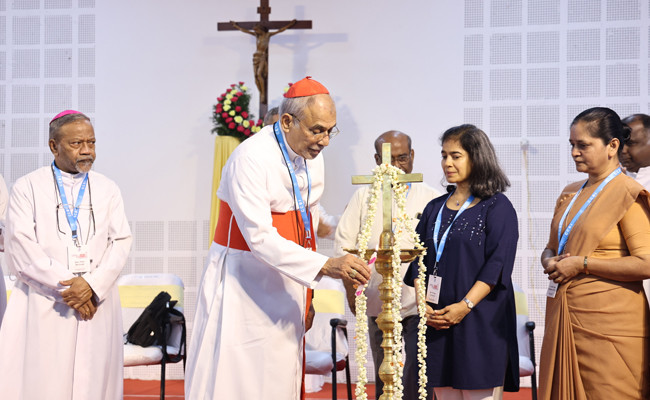
The formal inauguration included the invocation of the Holy Spirit through Veni Creator Spiritus and the lighting of the ceremonial lamp. Deputy Secretary General Fr. Stephen Alathara welcomed the delegates and described the gathering as a spiritual journey.
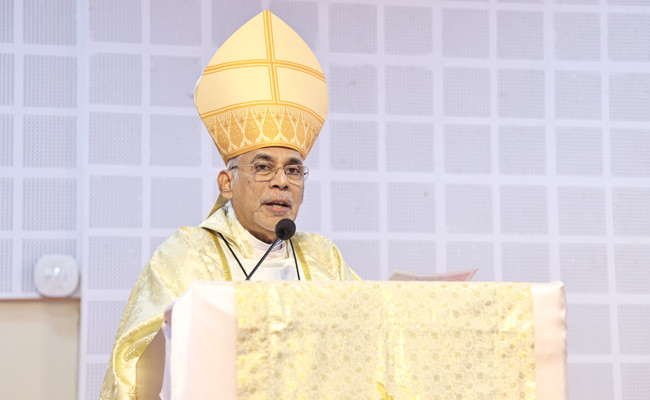
In his presidential address, Cardinal Ferrão referred to the CCBI pastoral plan titled Journeying Towards a Synodal Church: Mission 2033 and called on participants to build on the vision outlined at the 36th Plenary Assembly held in Bhubaneswar in 2025.
Delegates will reflect on four key themes identified from 16 pastoral priorities: interreligious dialogue and peacebuilding, inclusion of the excluded, poverty and integral ecology, and support for children and youth.
The discussions are being conducted through a method of spiritual conversation aimed at encouraging listening, dialogue and collective decision-making. The focus is on translating these discussions into practical actions within the Church.
The assembly also looks ahead to the Jubilee Year 2033, which will mark 2,000 years of the Redemption, and aims to strengthen the Church’s mission in the coming years.
Further consultations are scheduled for September 2026, with the process expected to conclude at the 38th Plenary Assembly of the CCBI in January 2027.
Organisers said the assembly seeks to strengthen unity within the Church and promote participation of all sections, including women and youth, in shaping its future direction.