Shashi Tharoor praises PM Modi’s energy, dynamism; Calls him 'prime asset' for India
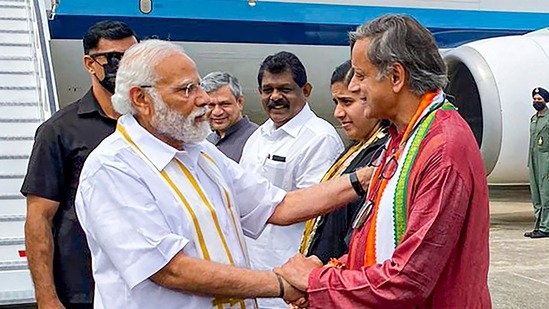
New Delhi: Congress MP Shashi Tharoor has once again drawn attention with his pointed praise for Prime Minister Narendra Modi, calling him a "prime asset for India" in the context of India's diplomatic outreach under Operation Sindoor.
Writing in a column for The Hindu, Tharoor highlighted Modi’s dynamism and willingness to engage as crucial strengths that enhance India's global standing. "Prime Minister Narendra Modi's energy, dynamism and willingness to engage remain a prime asset for India on the global stage, but deserve greater backing," Tharoor wrote.
Tharoor’s remarks come shortly after his return from the diplomatic outreach as part of Operation Sindoor, an initiative aimed at rallying international support for India's position on Pakistan and cross-border terrorism. His inclusion in the delegation had sparked political friction between the Congress and the BJP, particularly after Tharoor publicly commended the government’s efforts.
Reflecting on the delegation’s visit to the United States, Tharoor also took a subtle dig at Pakistan. "Even as a Pakistani delegation was simultaneously present, we found US representatives, including those who met the Pakistani officials, echoing our concerns and urging decisive action against terror groups such as Lashkar-e-Taiba and Jaish-e-Mohammed," he wrote in the column.
"We consistently highlighted the severity of the threat from across our borders, aiming to build global consensus to hold perpetrators accountable," he added, calling the outreach a success.
The Thiruvananthapuram MP noted that the U.S. acknowledgement served as validation of India’s consistent diplomatic efforts, which were backed by verifiable facts and consistent advocacy, and were cutting through the noise and reinforcing the legitimacy of India’s position.
He further emphasised that India’s international strategy should be anchored in what he termed the "three T’s" — tech, trade, and tradition — to help build a "more just, secure and prosperous world."
Tharoor was one of a dozen opposition leaders who were part of the delegations, which included high-profile figures such as AIMIM chief Asaduddin Owaisi, Shiv Sena (UBT)’s Priyanka Chaturvedi, and DMK’s Kanimozhi.
Let the Truth be known. If you read VB and like VB, please be a VB Supporter and Help us deliver the Truth to one and all.
Ruturaj scores unbeaten 67 as CSK beat MI by eight wickets
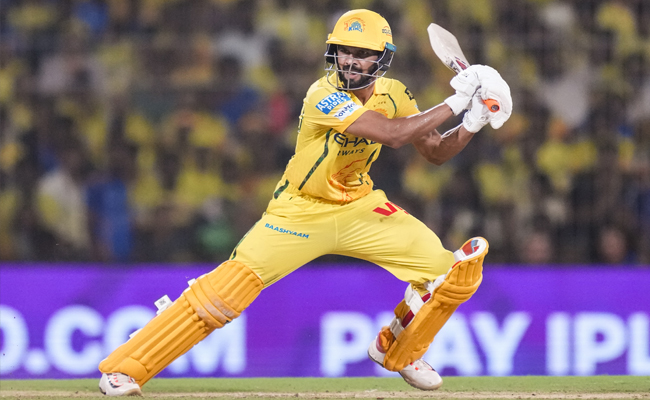
Chennai (PTI): Ruturaj Gaikwad struck his second successive half-century of the season as Chennai Super Kings cruised to a commanding eight-wicket win over Mumbai Indians in an Indian Premier League match here on Saturday.
Gaikwad remained unbeaten on 67 off 48 balls, stitching an unbroken 98-run stand for the third wicket with Kartik Sharma (54 not out) to comfortably chase down the target of 160 after Mumbai were stopped at 159 for seven.
Mumbai Indians' struggles continued as they only have two wins in nine matches, remaining on four points, while CSK climbed to eight points from nine games.
Earlier, MI's innings never quite gained momentum, with Naman Dhir the lone bright spot with a 57. He walked in after Will Jacks fell for one in the second over and added 40 runs for the third wicket with Suryakumar Yadav (21).
For CSK, left-arm spinner Noor Ahmad (2/26) was the pick of the bowlers, removing Ryan Rickelton (37) and Tilak Varma (5), while Anshul Kamboj (3/32) impressed with an effective spell.
Brief scores:
Mumbai Indians 159 for 7 in 20 overs (Ryan Rickelton 37, Naman Dhir 57; Noor Ahmed 2/26, Anshul Kamboj 3/32).
Chennai Super Kings: 160 for 2 in 18.1 overs (Ruturaj Gaikwad 67 not out, Urvil Patel 24, Kartik Sharma 54 not out; Jasprit Bumrah 1/20).