Shirish Patel, urban planner who designed India’s first flyover, dies at 92
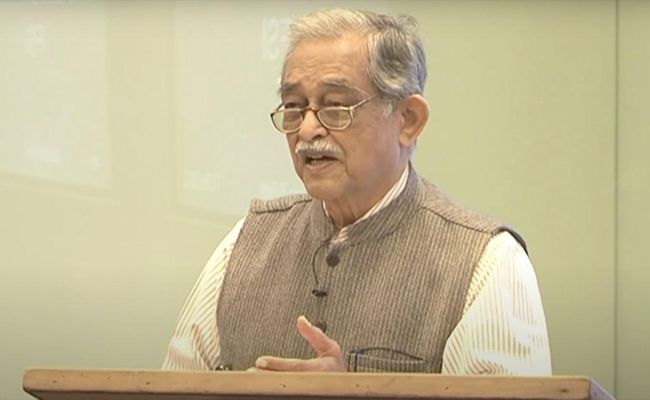
Mumbai: Urban planner Shirish Patel who designed India’s first flyover at Kemp’s Corner in Mumbai, died on Friday. He had cancer and was aged 92.
Patel was one of the pioneers in envisioning the creation of Navi Mumbai as a model city to alleviate the pressure on Mumbai. He played a key role in designing the project and overseeing the state government's efforts during its construction in the 1960s and 1970s.
He was deeply committed to preserving Mumbai's heritage and improving the city's infrastructure, in addition to playing a vital role in the construction of the Koyna Dam, one of the largest dams in Maharashtra.
Describing Shirish Patel's death as an irreparable loss, renowned conservation architect Pankaj Joshi told The Indian Express that he first met Patel when they were both members of the civic heritage committee. “He worked tirelessly towards multiple issues affecting Mumbai’s heritage and infrastructure. He also highlighted the importance of open spaces and environment sustainability and considered these factors to be non-negotiable when it came to Mumbai’s infrastructure development,” Joshi said.
Throughout his life, Patel championed the cause of equitable urban development in Mumbai. He strongly opposed the Brihanmumbai Municipal Corporation’s (BMC) plan to demolish and rebuild the Malabar Hill water reservoir. Last year, following widespread public opposition, the civic authorities decided to abandon the move.
Shirish Patel was born in 1932 and spent his childhood in Karachi. He relocated to Mumbai after his father Bhailal Patel became the first Indian municipal commissioner of the city. Patel studied at the prestigious Cambridge University and served as a chief planner with the City and Industrial Development Corporation (CIDCO).
In 2023, Patel, along with architects and urban planners Oormi Kapadia and Jasmine Saluja, authored a book titled ‘6 Metros’ which is a comparative study of urban planning and implementation in London, New York, Tokyo, Hong Kong, Delhi and London.
Let the Truth be known. If you read VB and like VB, please be a VB Supporter and Help us deliver the Truth to one and all.
Biker injured, leopard dies in road accident near forest area in Shivamogga
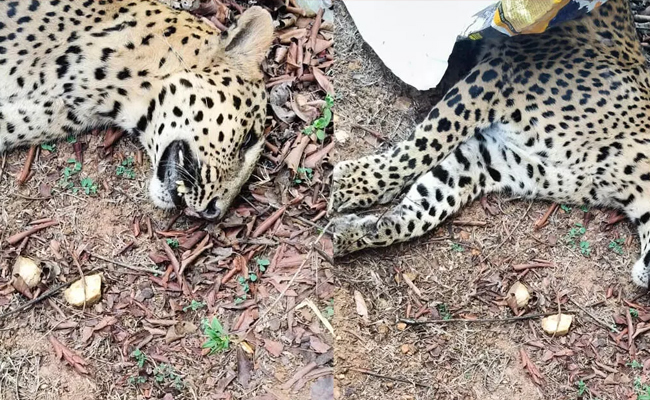
Shivamogga: A leopard was killed after being hit by a motorcycle near Mandagadde in Thirthahalli taluk of Shivamogga district.
According to reports, the biker was travelling from Shivamogga towards Thirthahalli when the leopard suddenly came onto the road from a nearby forest area near Mandagadde. The rider is said to have lost control of the bike and crashed into the animal.
The leopard suffered severe injuries in the impact and died on the spot. The biker also fell onto the road along with the motorcycle and sustained serious injuries. He was shifted to a hospital in Shivamogga for further treatment.
After receiving information about the incident, forest department officials, including Gajanur RFO Vinay Kumar, visited the spot and conducted an inspection.