Shirtless protest at AI Summit: IYC chief Uday Chib held, tight security in Delhi fearing backlash
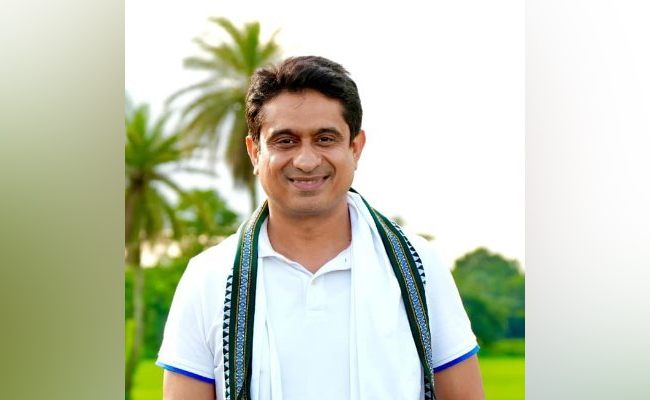
New Delhi (PTI): Delhi Police has arrested Indian Youth Congress president Uday Bhanu Chib in connection with the shirtless protest staged by a group of youth wing members at the AI Impact Summit here last week, officials said on Tuesday.
Police have also stepped up security across key locations in the capital in anticipation of possible protests following Chib’s arrest, which took the total number of people held in the case to eight.
Police had earlier arrested seven Indian Youth Congress (IYC) workers, including three from Gwalior in Madhya Pradesh, for the protest at the Bharat Mandapam last Friday. They have been identified as Jitendra Yadav, Raj Gujjar and Ajay Kumar.
In addition, IYC's Uttar Pradesh general secretary Ritik alias Monty Shukla has been detained from Lalitpur in the state.
Senior officers said additional force has been deployed at the sensitive points, particularly in New Delhi, a hotspot for political demonstrations.
Security has been tightened around the Tilak Marg police station, where Chib is presently held, while barricades have been put up at the strategic points, with anti-riot teams on standby.
Quick Reaction Teams (QRTs) and additional companies of paramilitary forces have also been placed on alert to respond to any law and order situation, officials said.
Senior officers have directed the field staff to ensure that traffic movement remains smooth.
“Our priority is to maintain public order and ensure that daily life is not disrupted. Preventive measures may be invoked if any group attempts to assemble without permission,” a senior officer said.
According to police, additional sections under the Bharatiya Nyaya Sanhita (BNS), including 196 (promoting enmity between different groups and acts prejudicial to maintenance of harmony) and 197 (assertions prejudicial to national integration), have been invoked in the FIR. Both carry a jail term of up to three years.
Charges of criminal conspiracy, obstruction of a public servant in discharge of duty, disobedience to an order duly promulgated by a public servant, unlawful assembly and common intention had already been added to the case.
On Friday, a group of IYC workers staged a dramatic protest inside Hall No. 5 of the summit venue by removing their shirts to reveal T-shirts printed with slogans against the government and the India-US interim trade deal, before being whisked away by security personnel.
Police said the accused had registered online and obtained QR codes to gain entry into the venue.
The incident triggered a political slugfest, with the BJP calling it a "shameful act to tarnish India's image on the global stage", and the IYC defending it as a "peaceful" demonstration aimed at safeguarding national interests.
A senior police officer said the role of each accused is being examined, and more arrests may follow.
"We are analysing CCTV footage, digital evidence and entry records to establish the sequence of events and identify the others involved in planning and executing the protest," the officer said.
Another senior officer said investigators are probing a possible conspiracy angle and tracking the financial trail behind the protest, including funding for printing the slogans on the T-shirts.
“We are examining whether there was any coordinated effort and how the logistics were arranged,” the officer said.
Youth Congress Chief Uday Bhanu Chib arrested over AI summit protest, Cong calls move 'dictatorial'
— ANI Digital (@ani_digital) February 24, 2026
Read @ANI Story |https://t.co/my3NIGfwtb#YouthCongress #UdayBhanu #AiSummitprotest pic.twitter.com/aVOq5s0lTh
Let the Truth be known. If you read VB and like VB, please be a VB Supporter and Help us deliver the Truth to one and all.
Yogish Gowda murder case: HC issues notice to CBI after hearing Kulkarni’s plea
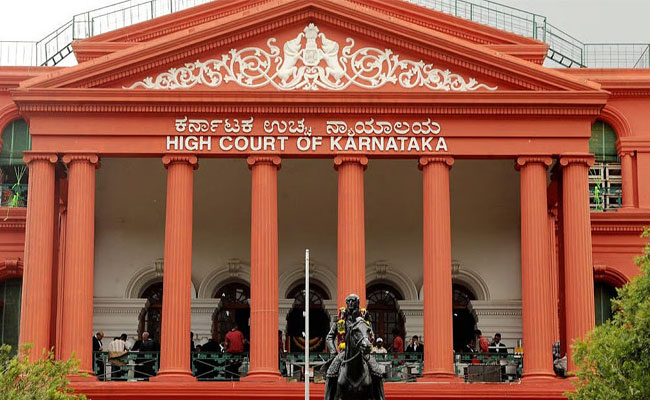
Bengaluru: Karnataka High Court has issued a notice to the Central Bureau of Investigation (CBI) following the filing of application by Congress MLA Vinay Kulkarni and Chandrashekhar Indi challenging the life imprisonment awarded to them by the Special Court for murder of BJP Dharwad leader Yogish Gowda.
The divisional bench comprising Justices Muhammad Nawaz and T Venkatesh Naik heard the pleas filed by Kulkarni on April 15 and Chandrashekhar Indi also called Chandu Mama on April 16.
The bench has now issued a notice to the CBI and also directed the HC Registry to obtain the trial court documents before adjourning the hearing.