Shocking, Param Bir Singh has no trust in state police now: Supreme Court
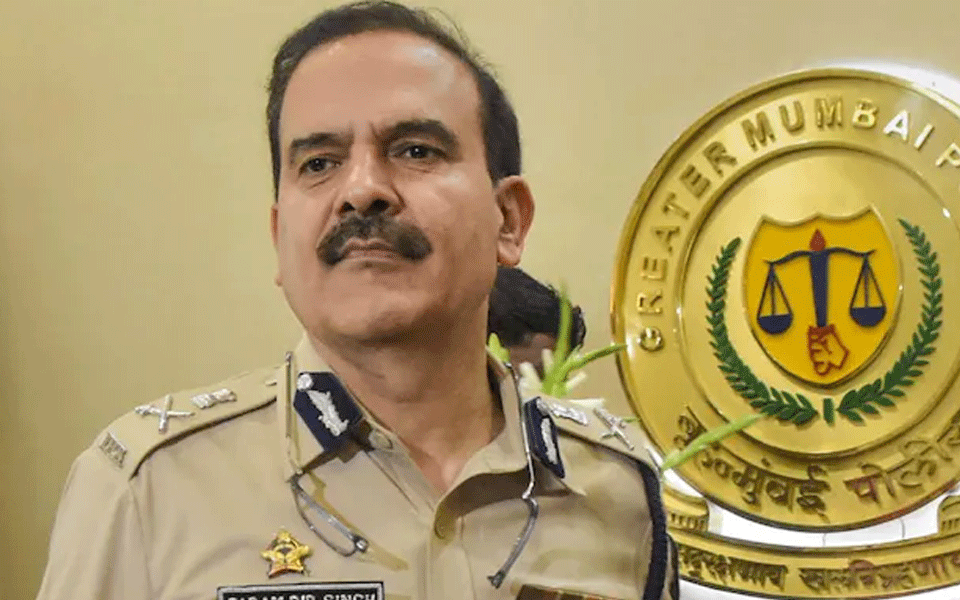
New Delhi: The Supreme Court Friday said it is shocking that former Mumbai Police Commissioner Param Bir Singh, who has served the state for over 30 years, is now stating that he has no trust in state police and is seeking transfer of all inquiries against him to an independent agency outside Maharashtra.
It is commonly said, the person who lives in glass house should not throw stones at others, said a vacation bench of Justices Hemant Gupta and V Ramasubramanian while hearing Singh's plea seeking transfer of inquiries against him outside Maharashtra.
After the apex court observed that it will pass an order dismissing the petition, Singh's counsel said he would withdraw the plea and would avail other appropriate remedy.
Singh, a 1988-batch IPS officer, was removed from the post of Mumbai Police Commissioner on March 17 and was made the General Commander of Maharashtra State Home Guard after he levelled allegations of corruption and misconduct against the then Home Minister and senior NCP leader Anil Deshmukh.
Senior advocate Mahesh Jethmalani, appearing for Singh, said the petitioner can't keep on facing one case after the other just because he is a whistleblower in the matter.
He said Singh is seeking directions for transferring all inquiries which are already ordered against him outside the state and also that the investigation be transferred to an independent agency like the CBI.
This is surprising us. You have been a part of Maharashtra state cadre and served it for over 30 years. Now you are saying that you have no trust in your own state police. This is shocking, the bench observed.
During the hearing conducted through video-conferencing, Jethmalani said that the Bombay High Court had ordered a CBI probe into allegations of Singh against Deshmukh.
He argued that Singh has been pressurised by the inquiry officer to withdraw his letter in which he had levelled allegations against the former minister.
These are two different things. The inquiry against the former minister is different and the inquiry against you (Singh) is different. You have served in the police force for over 30 years. You should not have doubt on the police force. You cannot say now that you want inquiries to be done outside the state, the bench said.
Jethmalani told the bench that Singh is not living in a glass house and false cases have been lodged to frame him.
The Bombay High Court had earlier ordered a CBI probe into allegations of Singh against Deshmukh who had to resign as the minister.
In his plea filed in the apex court, the senior police officer has alleged that he has been made to face several inquiries by the state government and its instrumentalities and sought their transfer outside Maharashtra and a probe into them by an independent agency like the CBI.
Singh has been facing inquiries, including the one under the Scheduled Castes and Scheduled Tribes (Prevention of Atrocities) Act in a case of 2015 and he has termed this as a witch-hunt by the state agency.
Singh, in his earlier plea filed before the top court, had sought a CBI probe against Deshmukh who, he claimed, had asked police officers, including Sachin Waze, to extort Rs 100 crore from bars and restaurants.
The top court had then asked him to go before the Bombay High Court which later ordered CBI probe into Singh's allegations.
The state government and the NCP leader subsequently filed an appeal in the apex court but failed to get any relief against the high court order.
Deshmukh denied any wrongdoing and had said there was not an iota of substantive evidence to even prima facie establish that any of the allegations made by Singh had an element of truth.
In its 52-page judgement passed earlier, the high court had said that Singh's allegations against Deshmukh had put at stake the citizen's faith in the state police.
Such allegations, made by a serving police officer, against the state home minister could not be left unattended, and were required to be probed into, if prima facie, they made a case of a cognisable offence, the high court had said.
The high court's verdict had come on three PILs including one filed by Singh seeking several reliefs as also a CBI probe into the matter.
Let the Truth be known. If you read VB and like VB, please be a VB Supporter and Help us deliver the Truth to one and all.
Sujit Nair raises concerns over speculation of DMK-AIADMK understanding to block TVK
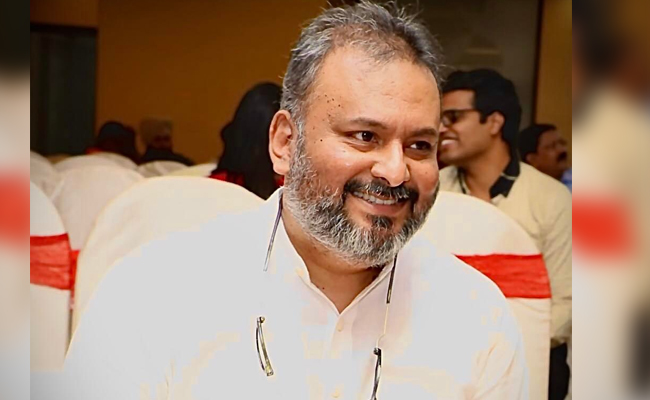
Chennai: Journalist and political commentator Sujit Nair has expressed concern over speculation that the Dravida Munnetra Kazhagam and the All India Anna Dravida Munnetra Kazhagam could explore a post-poll understanding to prevent Vijay-led Tamilaga Vettri Kazhagam from forming the government in Tamil Nadu.
In a social media post, Sujit Nair said the election verdict in Tamil Nadu reflected a clear public demand for political change and argued that the mandate should be respected irrespective of political preferences.
Referring to reports and political discussions surrounding a possible understanding between the DMK and AIADMK, he said he hoped such developments remained only speculative conversations and did not turn into reality.
Nair stated that if such an alliance were to take shape, it would raise serious questions about ideological politics in the country. He said TVK had emerged through a democratic electoral process and that the legitimacy to govern in a parliamentary democracy comes from the people’s verdict.
According to him, attempts to prevent an electoral winner from forming the government through unexpected political arrangements may be constitutionally valid, but many people could view them as politically opportunistic.
He further said that such a move could particularly affect the political image of the DMK, which has historically projected itself around ideology, social justice and opposition politics. Nair said that in ideological terms, the DMK appeared closer to TVK than to the AIADMK, and joining hands with its long-time political rival only to remain in power could weaken its broader political narrative.
He added that the same questions would apply to the AIADMK as well, as the party had spent decades positioning itself against the DMK and such an arrangement could create discomfort among its cadre and supporters.
Drawing a comparison with Maharashtra politics in 2019, Nair said he had expressed similar views when the Shiv Sena formed an alliance with the Indian National Congress and the Nationalist Congress Party after the Assembly elections.
He said post-poll alliances between long-standing political rivals often create a public perception that ideology and electoral mandates become secondary when political power equations come into play.
Nair also said such developments increase public cynicism towards politics and reinforce the belief among voters that ideology is often sidelined after elections.
He maintained that the Tamil Nadu verdict was emphatic and said respecting both the spirit and substance of the mandate was important for the credibility of democratic politics.