Shocking things happening in state, cases being "en masse" transferred to CBI : WB govt tells SC
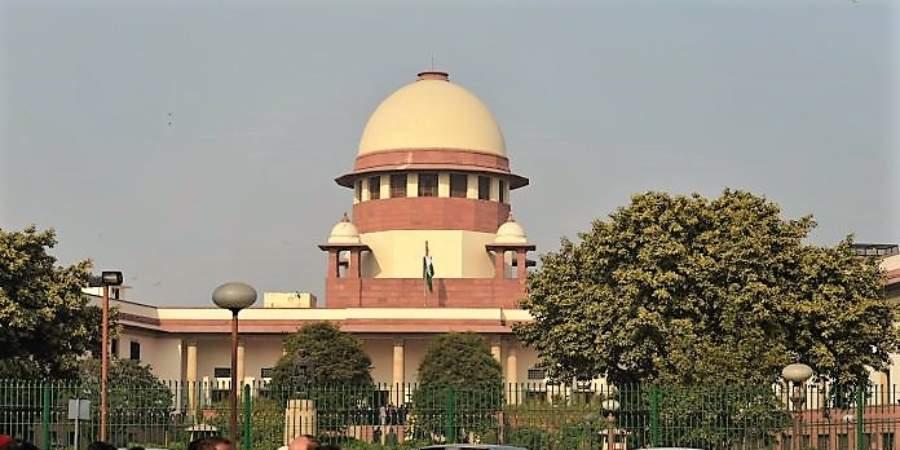
New Delhi(PTI): The West Bengal government Monday alleged before the Supreme Court that "shocking things" have happened in the state and cases were being transferred "en masse" to CBI including the dacoity cases.
Senior advocate Kapil Sibal, appearing for the state, told a bench comprising Justices Vineet Saran and Aniruddha Bose that whenever there is an allegation that a probe is not being carried fairly, the court takes the facts into account and then transfers the case to CBI after a prima facie conclusion.
"In this case, en masse the cases were given to the CBI. Some of the most shocking things have happened. In one case, the man is alive. In the meantime, CBI is also investigating dacoity cases. All kinds of things are happening," Sibal told the bench.
The top court was hearing a special leave petition filed by the state government alleging that it did not expect fair and just investigation by the central agency which is busy foisting cases against the functionaries of ruling Trinamool Congress Party.
As the hearing commenced, Sibal told the top court that he would need two-three hours to make submissions but the bench said that it won't be able to hear the matter today due to lack of time and would take it up next week.
"By consent of the learned counsel for the parties, list on September 28, 2021 as a first case. The parties are permitted to file documents/additional documents by September 24, 2021 after serving the copy of the same on the other side," the bench said.
Earlier, the state government had cast aspersions on the members of a committee formed by the National Human Rights Commission (NHRC) to investigate the incidents of post-poll violence in the state.
The state government had said that the panel chief Rajiv Jain has served as Director of the Intelligence Bureau under the BJP-led government at the Centre.
It had also said that "Jain was subsidiary intelligence bureau chief, Ahmedabad from 2005 to 2008 when the honourable Prime Minister was the chief minister of Gujarat."
Contending about another member, Sibal had said that Atif Rasheed served as Delhi State Prabhari BJP Minority Morcha and still tweets in support of BJP.
"Can you imagine these people have been appointed to collect the data? Is this a BJP investigating committee my Lords?" Sibal had said.
Commenting on Sibal''s submission, the bench said," "If somebody had a political past and if he lands up in an official position by that very fact will we treat him to be biased?"
Earlier, lawyer Anindya Sundar Das, one of the PIL petitioners on whose plea the High Court August 19 verdict came, had filed a caveat in the apex court urging that no order be passed without hearing him if the state or other litigant move appeals.
A five-judge bench of the High Court, headed by Acting Chief Justice Rajesh Bindal, had ordered a CBI investigation into all alleged cases of heinous crimes in West Bengal after the assembly poll results this year in which the ruling TMC came back to power.
As regards other criminal cases related to post-poll violence, the high court had directed that they be investigated by a Special Investigation Team under the monitoring of the court.
The high court bench, which also comprised justices I P Mukerji, Harish Tandon, Soumen Sen and Subrata Talukdar, had observed that there were "definite and proved" allegations that complaints of the victims of violence in the aftermath of the West Bengal assembly polls were not even registered.
Ordering the setting up of an SIT to probe all other cases, it had said that it will include Suman Bala Sahoo, Soumen Mitra and Ranveer Kumar, all IPS officers of the West Bengal cadre.
"All the cases where, as per the report of the Committee, the allegations are about murder of a person and crime against women regarding rape/attempt to rape, shall be referred to CBI for investigation, it had said.
The high court has also directed the NHRC committee, constituted by its chairman on a direction by the five-judge bench, and any other commission or authority and the state to immediately hand over the records of the cases to the CBI to carry forward the probe.
The bench had said it will monitor the investigations by both the CBI and the SIT and asked the two agencies to submit status reports to the court within six weeks.
It had said that the working of the SIT will be overseen by a retired Judge of the Supreme Court for which a separate order will be passed after obtaining his/her consent.
In its ruling, the bench had said heinous crimes such as murder and rape "deserve to be investigated by an independent agency which in the circumstances can only be Central Bureau of Investigation".
The bench had said the state failed to register FIRs even in some cases of alleged murder.
"This shows a pre-determined mind to take the investigation into a particular direction," it had said.
"Under such circumstances investigation by an independent agency will inspire confidence in all concerned," it had noted.
It had said allegations that the police had not registered a number of cases initially and that some were registered only after the court had intervened or the committee was constituted were found to be true.
It had observed that the facts in relation to the allegations made in the PILs are "even more glaring" as the incidents are not isolated to one place in the state.
The NHRC committee had on July 13 submitted its final report to the court.
An interim report of the NHRC committee had mentioned that Atif Rasheed, a member of the committee, was obstructed from discharging his duty and he and his team members were attacked by some undesirable elements on June 29 in Jadavpur area on the southern fringe of the city, the court noted.
The PILs had alleged that people were subjected to assault, made to flee homes and properties were destroyed during the violence in the wake of the assembly elections and sought impartial probe into the incidents.
Let the Truth be known. If you read VB and like VB, please be a VB Supporter and Help us deliver the Truth to one and all.
Air India resorts to cost-cutting ways amid 'tough times'; layoffs not anticipated
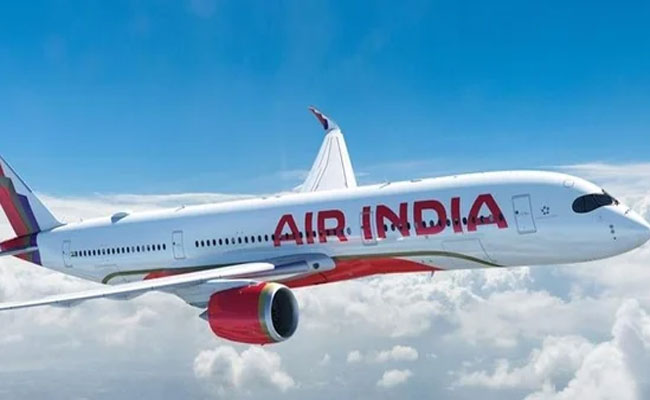
New Delhi/Mumbai (PTI): Hit hard by Pakistan airspace closure and Iran war, Air India has resorted to cost-cutting measures, including holding back annual increments for staff and asking them to cut discretionary spending as well as non-critical expenditures, warning of "tough times".
On Friday, Air India Chief Executive Officer & Managing Director (CEO & MD) Campbell Wilson told the staff it is going to be a "very, very difficult year" if things don't improve on the Middle East front.
A day after the loss-making airline's board discussed various cost-saving steps, Wilson, along with Chief Financial Officer (CFO) Sanjay Sharma and Chief Human Resources Officer (CHRO) Ravindra Kumar GP, addressed the employees during a townhall on Friday where the emphasis on the need to keep a close watch on costs.
With higher jet fuel prices due to the West Asia conflict and airspace curbs, the loss-making airline's expenses have spiralled in recent times and against this backdrop, Sharma also told staffers that FY26 has seen a softening in revenue amid heightened external uncertainties.
Calling for a relentless focus on costs in these tough times, Wilson urged employees to suspend discretionary spending, renegotiate rates where feasible, and defer non-critical expenditures.
"There must be a laser-sharp focus on eliminating wastage and leakages," he said.
Stressing the need to tighten the belt for a while, Wilson sounded optimistic that travel demand would rebound and the industry would continue on its upward path.
CHRO Ravindra Kumar told staff that the airline will proceed with variable pay for the last financial year and continue with planned promotions while noting that annual increments will be deferred by at least one quarter.
"We don't anticipate layoffs," he said.
At the airline's board meeting on Thursday, various cost-saving steps, including likely furloughs, were discussed. The Tata Group-owned airline has around 24,000 employees.
Generally, furlough refers to sending staff on unpaid leaves by companies during a tough financial situation.
During the townhall, CFO Sanjay Sharma said while strong revenue growth and fleet expansion drove financial momentum through FY25, FY26 has seen a softening in revenue amid heightened external uncertainties.
Air India has seen around 40 per cent CAGR (Compounded Annual Growth Rate) in revenue between 2022 and 2025, he added.
The airline was acquired by the Tata Group from the government in January 2022.
The Air India CEO mentioned the external challenges being facing the aviation industry as a whole, including the continued closure of Pakistan airspace that is expected to persist for the foreseeable future and geopolitical conflicts leading to disruptions and airspace closures across West Asia.
Wilson, who is set to step down later this year, also flagged a sharp depreciation of the rupee and a 2.5-3 times increase in jet fuel prices, and added that these factors have adversely affected travel sentiment and consumer confidence, as per the sources.
If the Strait of Hormuz opens, oil prices fall and consumer as well as business confidence come back, there is a decent chance of a solid recovery, Wilson said, adding that unless those circumstances happen, it was going to be "a very, very difficult year".
"I feel somewhat responsible that we ended up with probably the biggest surprise of the year in the external environment which was a full-scale war in our neighbouring region in the Gulf. That has had a huge impact on airspace," he said.
For Air India, Wilson said the situation is compounded by the fact that the airline cannot fly over the neighbouring country and has to take a much longer routing for any west-bound destination.
"Every airline is reporting that they are under some sort of financial pressure as a result of higher fuel prices and economic uncertainty. So, it is unfortunately not a great environment to be running an airline," the Air India CEO said.
The Air India Group -- Air India and Air India Express -- is projected to have incurred more than Rs 22,000 crore loss in the financial year ended March 2026.
At the townhall, Wilson also highlighted various initiatives, including completion of the retrofit of its legacy narrow-body aircraft and rapid network optimisation to redeploy capacity more efficiently.