Shorts, ripped jeans, skirts not allowed in Puri's Jagannath temple as dress code comes into force
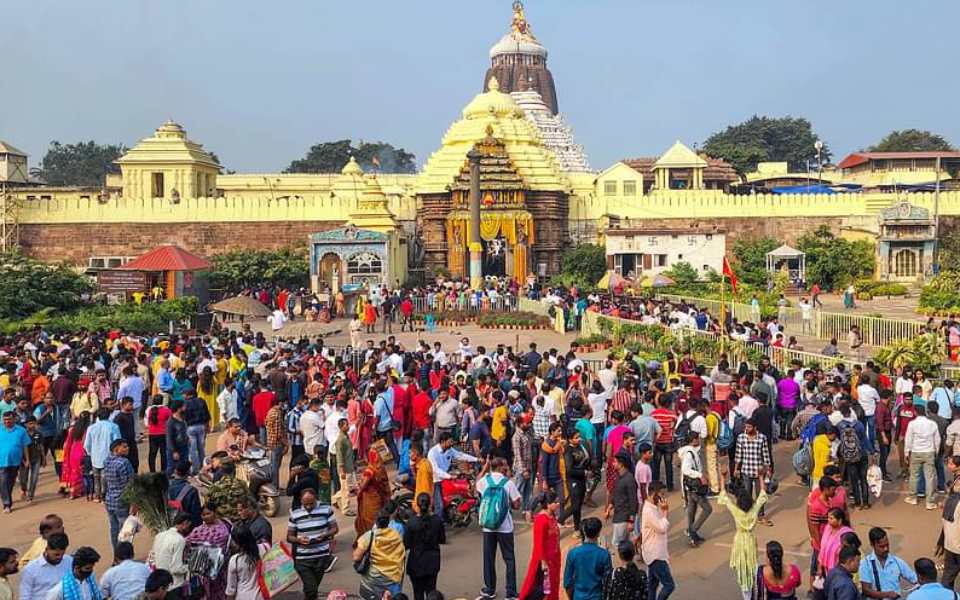
Puri, Jan 1: People wearing half-plants, shorts, ripped jeans, skirts and sleeveless dresses will not be allowed entry into the famed Jagannath temple in Odisha's Puri as a dress code came into force on Monday, officials said.
Devotees will be required to wear "decent clothes", which are not revealing, to enter the temple, they said.
As the new rule came into force, men were seen entering the 12th-century shrine wearing dhotis and 'gamchas', while women were mostly seen in either sarees or salwar kameez.
The Shree Jagannath Temple Administration (SJTA) has asked hotels to make people aware of the dress code as most of the devotees come to the temple from there, officials said.
The SJTA also increased its vigil on chewing gutkha and pan inside the temple, besides the use of plastic bags, which have been banned, they said.
The doors of the temple reopened for devotees as early as 1.40 am to handle the rush on New Year's Day, and till 5 pm, about 3.5 lakh people visited the shrine, the SJTA said.
Elaborate arrangements were made to ensure that no untoward incident take place at the temple, which is the home to the sibling deities of Lord Jagannath, Lord Balabhadra and Goddess Subhadra.
The air-conditioned tensile fabric structure that has been built outside the temple was made functional in the morning.
Facilities such as drinking water and public toilets have been made available at the structure, and it has also been equipped with CCTV cameras and public announcement systems. Sitting arrangements have also been provided in it.
Police said that the number of devotees visiting the temple on New Year's Day this time was double as compared to last year.
The added enthusiasm was because the people wanted to experience the revamped surrounding of the temple due to the heritage corridor project, which is almost complete, and will be inaugurated on January 17, SJTA chief administrator Ranjan Das had said on Sunday.
Traffic restrictions have also been imposed in the town. The area between Market Chakka to Singhadwara (main gate) on Badadanda has been declared a 'no vehicle zone', while vehicles have been banned on the beachside road from Digabareni to the lighthouse, officials said.
Consumption of pan and tobacco products has also been banned inside the Lingaraj Temple in Bhubaneswar.
Let the Truth be known. If you read VB and like VB, please be a VB Supporter and Help us deliver the Truth to one and all.
India never offers any duty concessions in dairy sector under FTAs: Goyal
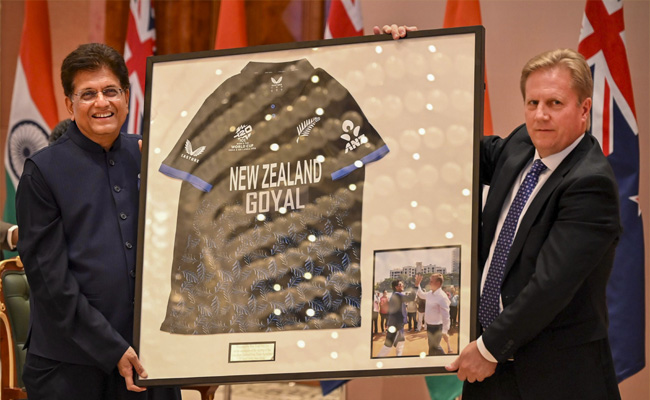
New Delhi (PTI): India has not offered any duty concessions in the dairy sector under any of its free trade agreements so far, including those with the European Union, the UK, New Zealand, and Australia, Commerce and Industry Minister Piyush Goyal on Monday.
He said India's dairy sector is driven by very small and marginal farmers with limited landholdings who own only a few cattle.
These farmers has a "very" low production and needs to be protected against large farms that Europe, America, Australia, or New Zealand have.
"India has had a very consistent stand in all our FTAs across the world, whether it is European Union, Switzerland... UK, USA, Australia, New Zealand. Never has India opened the dairy sector. Everybody in this room knows it. Everybody in the world knows it," he told reporters here after signing a trade pact with New Zealand.
This is a known position, and there is nothing new in this, he said.
However, he added that as per India's foreign trade policy, the government allows foreign firms to bring raw materials or ingredients into India, process them to make high-quality products and then re-export 100 per cent of those goods.
That product is not allowed to be sold in the country, he said.
"So it doesn't hurt the Indian market, doesn't hurt the Indian farmers, but adds to our foreign exchange income, adds jobs to our youth, provides opportunities for our farmers also to possibly supplement for further re-export. So it's a win-win for both countries," Goyal said.
The India-New Zealand trade pact has an investment arrangement under which firms from the Oceania country can bring raw materials or ingredients from the dairy sector into India, process them to make high-quality products and then re-export 100 per cent of those goods.
These dedicated fast-track arrangements will be used exclusively for the manufacture of products destined solely for export, thereby safeguarding the interests of the domestic industry.
New Zealand is one of the world's largest dairy exporters. Its dairy exports to India in FY25 totalled just USD 1.07 million, consisting of milk and cream (USD 0.40 million), natural honey (USD 0.32 million), mozzarella cheese (USD 0.18 million), butter (USD 0.09 million) and skimmed milk (USD 0.08 million).
Under the FTA, India would grant quota-based duty concessions on Albumins (a milk protein product) and bulk infant formula from New Zealand with Minimum Import Price and other safeguards.
Tariffs on bulk infant formula and other dairy-based preparations, and peptones (a dairy-based product) would be phased out by India in over seven years, according to New Zealand's Foreign Affairs and Trade ministry statement.