Single-use plastic items like candy sticks, plates, cups to be prohibited from Jul 1, 2022: Govt
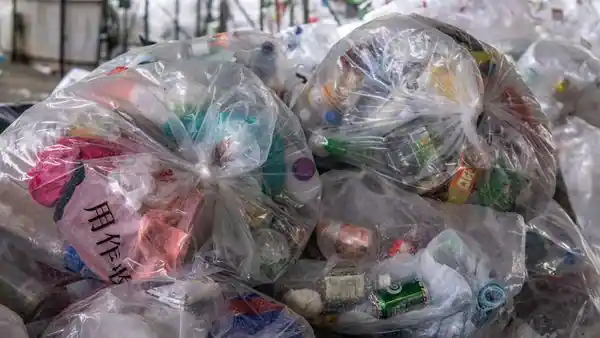
New Delhi, Aug 13: The Centre has notified the Plastic Waste Management Amendment Rules, 2021, prohibiting manufacture, import, stocking, distribution, sale and use of identified single-use plastic (SUP) items, including candy sticks, plates, cups and cutlery, from July 1, 2022.
The thickness of plastic carry bags will be increased from 50 microns to 75 microns from September 30, 2021, and to 120 microns from December 31, 2022, according to the notification dated August 12. This will also allow the plastic carry bags to be reused, it stated.
Non-woven plastic carry bags should not be less than 60 gram per square metre (GSM) with effect from September 30, 2021, the notification said.
"The manufacture, import, stocking, distribution, sale and use of following single-use plastic, including polystyrene and expanded polystyrene, commodities shall be prohibited with effect from July 1, 2022: ear buds with plastic sticks, plastic sticks for balloons, plastic flags, candy sticks, ice-cream sticks, polystyrene (thermocol) for decoration; plates, cups, glasses, cutlery such as forks, spoons, knives, straw, trays; wrapping or packing films around sweet boxes, invitation cards, and cigarette packets, plastic or PVC banners less than 100 micron, stirrers," it read.
The provisions will not apply to commodities made of compostable plastic, the notification said.
In June 2018, Prime Minister Narendra Modi had announced that India will eliminate all single-use plastics in the country by 2022.
In the fourth United Nations Environment Assembly held in 2019, India had piloted a resolution on addressing single-use plastic products pollution, recognising the urgent need for the global community to focus on this issue.
In a statement, the Environment Ministry said plastic packaging waste not covered under the phase-out of identified single-use plastic items should be collected and managed in an environmentally sustainable way through the Extended Producer Responsibility of the producer, importer and brand owner (PIBO) as per Plastic Waste Management Rules, 2016.
For effective implementation of the Extended Producer Responsibility, the guidelines being brought out have been given a legal force through the amended rules, it said.
Extended Producer Responsibility is a policy approach in which producers take responsibility for management of the disposal of products they produce once those products are designated as no longer useful by consumers.
The Centre had earlier asked states and union territories to constitute a special task force under the chief secretary or the administrator for elimination of SUP and effective implementation of the Plastic Waste Management Rules, 2016.
Fourteen states and UTs had constituted the special task force by July 23, according to a reply given by Minister of State for Environment Ashwini Choubey in Parliament.
The Environment Ministry has also set up a national-level task force for making coordinated efforts in this direction.
The state and the UT governments and the central ministries and departments concerned have also been asked to develop a comprehensive action plan for elimination of SUP and effective implementation of the rules in a time-bound manner.
Let the Truth be known. If you read VB and like VB, please be a VB Supporter and Help us deliver the Truth to one and all.
West Bengal board declares class 10 exam results, 86.83 pc students pass

Kolkata (PTI): The West Bengal board's class 10 results were declared on Friday, with 86.83 per cent of the total 9.71 lakh candidates passing the examination, an official said.
In last year's Madhyamik Pariksha, 86.56 per cent of the 9.84 lakh students were declared successful, West Bengal Board of Secondary Education president Ramanuj Ganguly said.
This year's examination was held from February 2 to February 12 at over 2,600 centres across the state, he said.
Abhirup Bhadra of Sarada Vidyamandir in Uttar Dinajpur district bagged the first rank, securing 698 of 700 marks. Priyotosh Mukhopadhyay of Sarojinidevi Saraswati Sishu Mandir in Birbhum was declared second with 696 marks. The third rank was shared by three students.
A total of 131 students secured the top 10 ranks, of whom 28 were girls.
Kalimpong recorded the highest percentage at 95.01, followed by Purba Medinipur at 94.02 and Kolkata at 92.31.