Sitharaman blames UPA for bad loans, defaulters fleeing country
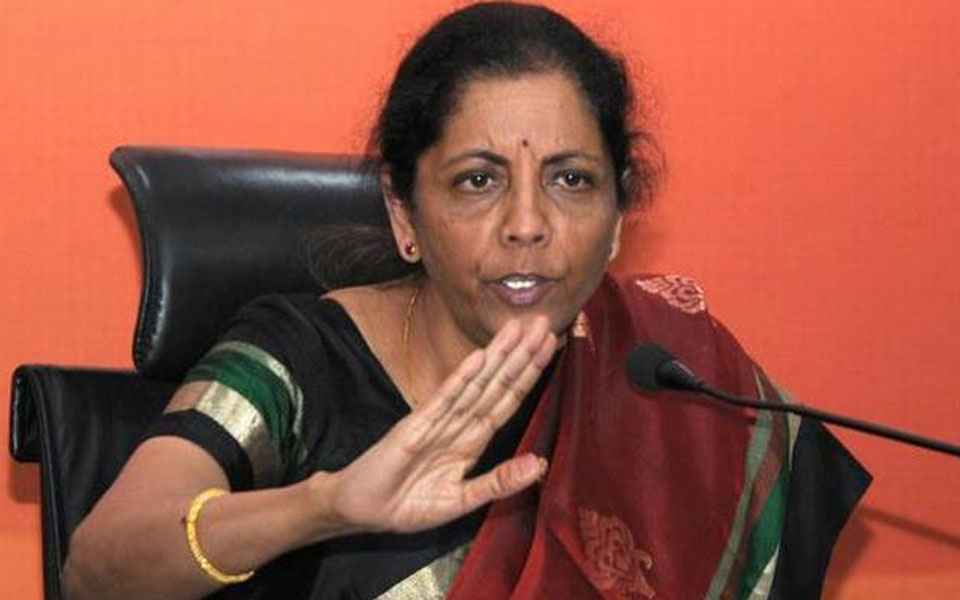
Chennai, Oct 10 : Defence Minister Nirmala Sitharaman has blamed the Congress-led UPA regime for public and private sector banks facing huge corporate bad loans.
The loans were provided without following due diligence and as a result, defaulters fled the country and the banks had no money to lend, Sitharaman said while referring to fugitive business barons like Vijay Mallya and Nirav Modi.
Sitharaman had also held the portfolios of corporate affairs and finance (Minister of State) and was the Minister of State (Independent Charge), Commerce and Industry.
Huge loans were provided by banks at the drop of a hat "when a phone call was made," by the powers that be, the minister said, addressing a Bharatiya Janata Party traders wing meet here Tuesday.
Since such loans were not paid back till date, the banks faced a crunch and could not lend for new businesses, she claimed.
"Public and private sector banks are all facing difficulty due to this. Though policy allowed banks to provide loans, banks are not prepared to lend as they do not have money. Why this happened," she asked.
Loans were provided to "acquaintances" without any assessment, scrutiny or background check to ascertain if the promoters could actually carry on the business and pay back the loan, and it was "crony capitalism," followed by the UPA regime, she alleged.
"Under the guise of providing loans to do business, banks were made to lend without assessing factors like repayment capabilities, assets and expertise and they (apparently referring to Vijay Mallya and others) have departed with the money and the banks do not have money," Sitharaman said.
Under such circumstances, to achieve 7.5 to 8 per cent growth (GDP) rate, several efforts have been taken by Prime Minister Narendra Modi, she said.
To tackle the issue of defaulters fleeing the country after cheating banks, an enabling legislation - The Insolvency and Bankruptcy Code, 2016 - was passed which envisaged attachment of properties, she said.
"This law was not brought during their (UPA) regime)," she said.
The defaulters fled the country in view of tough action. Even if the defaulters had fled the country, efforts are being made to bring them back home to justice and attach their properties as well for default, she said.
Sitharaman said the BJP-led Centre has given good governance and all welfare schemes have to be taken to the people.
If a comparison was made between the 48 years rule of the Congress and other parties at the Centre and the BJP-led NDA for the past 48 months, she said it could be understood that what the Centre has been doing was a "herculean task"
"During the 10 years of the UPA regime, they did nothing to give good governance," she said.
"At that time, even at the cost of "betrayal" of the country, those who held power eyed only things that could be "grabbed," and the then prime minister Manmohan Singh was not bothered about it even as corruption reigned," she alleged.
Sitharaman spoke about other welfare schemes of the Centre like the 'Ayushman Bharat.' The traders' wing meet was the starting point to the Lok Sabha campaign in Tamil Nadu, she said.
Let the Truth be known. If you read VB and like VB, please be a VB Supporter and Help us deliver the Truth to one and all.
Sujit Nair raises concerns over speculation of DMK-AIADMK understanding to block TVK
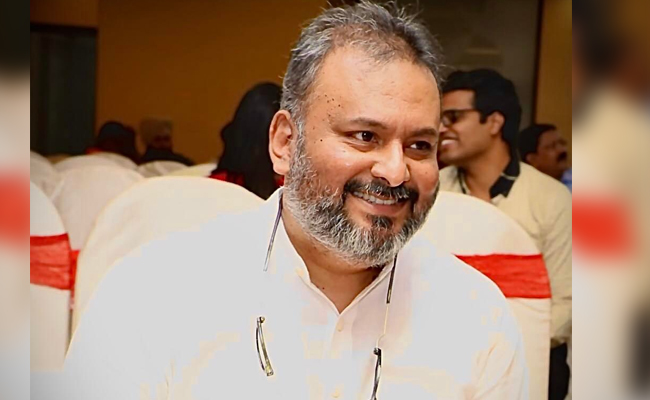
Chennai: Journalist and political commentator Sujit Nair has expressed concern over speculation that the Dravida Munnetra Kazhagam and the All India Anna Dravida Munnetra Kazhagam could explore a post-poll understanding to prevent Vijay-led Tamilaga Vettri Kazhagam from forming the government in Tamil Nadu.
In a social media post, Sujit Nair said the election verdict in Tamil Nadu reflected a clear public demand for political change and argued that the mandate should be respected irrespective of political preferences.
Referring to reports and political discussions surrounding a possible understanding between the DMK and AIADMK, he said he hoped such developments remained only speculative conversations and did not turn into reality.
Nair stated that if such an alliance were to take shape, it would raise serious questions about ideological politics in the country. He said TVK had emerged through a democratic electoral process and that the legitimacy to govern in a parliamentary democracy comes from the people’s verdict.
According to him, attempts to prevent an electoral winner from forming the government through unexpected political arrangements may be constitutionally valid, but many people could view them as politically opportunistic.
He further said that such a move could particularly affect the political image of the DMK, which has historically projected itself around ideology, social justice and opposition politics. Nair said that in ideological terms, the DMK appeared closer to TVK than to the AIADMK, and joining hands with its long-time political rival only to remain in power could weaken its broader political narrative.
He added that the same questions would apply to the AIADMK as well, as the party had spent decades positioning itself against the DMK and such an arrangement could create discomfort among its cadre and supporters.
Drawing a comparison with Maharashtra politics in 2019, Nair said he had expressed similar views when the Shiv Sena formed an alliance with the Indian National Congress and the Nationalist Congress Party after the Assembly elections.
He said post-poll alliances between long-standing political rivals often create a public perception that ideology and electoral mandates become secondary when political power equations come into play.
Nair also said such developments increase public cynicism towards politics and reinforce the belief among voters that ideology is often sidelined after elections.
He maintained that the Tamil Nadu verdict was emphatic and said respecting both the spirit and substance of the mandate was important for the credibility of democratic politics.