Sitharaman pitches for strong, quota-based and adequately resourced IMF
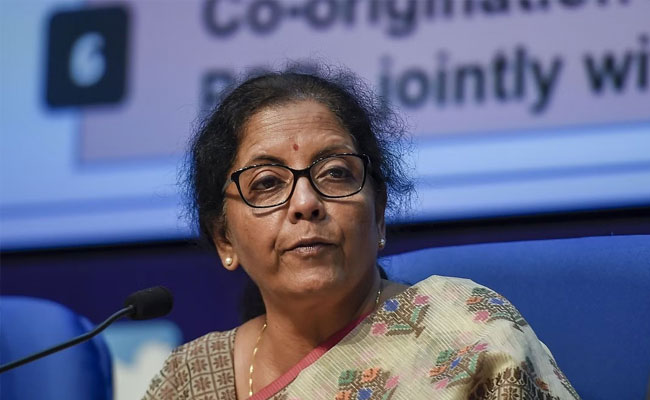
New Delhi (PTI): Finance Minister Nirmala Sitharaman on Saturday made a case for a strong, quota-based and adequately resourced IMF at the centre of the global financial safety net and climate action on the principles of common but differentiated responsibilities and respective capabilities.
The 16th General Review of Quotas (GRQ) is expected to provide a greater say to developing economies in the International Monetary Fund (IMF).
As per an IMF resolution, the 16th GRQ should be concluded by December 15, 2023. Any adjustment in quota shares would be expected to result in an increase in voting rights of emerging countries in line with their relative positions in the world economy.
Participating in a breakfast meeting of the IMF Board of Governors on the theme of 'Dialogue on Policy Challenges' in Marrakesh, Morocco, Sitharaman expressed concerns with regard to a slowdown in global growth.
She noted that 2023 has been a year of continued uncertainties and expressed concern about the weak medium-term growth and policy trade-offs confronting policymakers worldwide.
However, she said, India continues to be the fastest-growing large economy with a growth of 7.8 per cent during the first quarter of 2023-24.
With regard to escalating global debt vulnerabilities, she highlighted the importance of the Global Sovereign Debt Roundtable to foster cooperation on debt issues and reforms in IMF policy to engage with members in debt distress.
"FM Smt. @nsitharaman reiterated commitment to a strong, quota-based and adequately resourced IMF at the centre of the global financial safety net, and climate action on the principles of common but differentiated responsibilities and respective capabilities," the finance ministry said in a post on X.
The global financial safety net is a set of institutions and mechanisms that provide insurance against crises and financing to mitigate their impact.
During the Plenary Meeting of the International Monetary and Financial Committee (IMFC) later in the day, the Finance Minister reiterated the importance of IMF quota reforms to ensure an adequately resourced IMF at the centre of Global Financial Safety Net, bolstering IMF's lending capacity, and support to members through IMF's lending toolkit to prevent debt crises.
In her intervention, Sitharaman underlined the need for collective action on shared problems and noted the importance of IMF's bilateral surveillance and capacity development in providing tailored advice to members.
She emphasised the need for a supportive IPR regime for technology transfer of Climate Change innovations to developing countries and welcomed the emphasis on the need for global cooperation on the same in MD IMF's Global Policy Agenda.
"Union Finance Minister Smt. @nsitharaman supported IMF's focus on #digitalisation, and highlighted that during the #G20 Presidency, India has worked towards ensuring that lessons from the Digital Public Infrastructure #DPI revolution are shared as a global public good," another post on X said.
She emphasised that coordinated response of the global community will foster multilateralism in the spirit of 'Vasudhaiva Kutumbakam' -- One Earth, One Family, One Future.
Let the Truth be known. If you read VB and like VB, please be a VB Supporter and Help us deliver the Truth to one and all.
AIITA welcomes Karnataka’s ban on obscene songs in school events
Bhatkal: The Karnataka unit of the All India Ideal Teachers Association (AIITA) has welcomed the Karnataka government’s decision to strictly ban school children from dancing to obscene songs during educational and cultural programmes in government, aided, and private schools across the state.
AIITA Karnataka State President M. R. Manvi congratulated the government for taking what he termed an important step to preserve the sanctity of education.
“Such decisions to safeguard the dignity of school children and uphold the values of education are the need of the hour. This rule should not be limited to government schools alone but must be strictly implemented in all private educational institutions as well,” he said.
He further urged the government to address other concerns within school programmes.
“The government should not only prohibit obscene dances in the name of school anniversaries, but also ensure that plays and dialogues that incite religious hatred are avoided. Schools should be centres of harmony, not platforms for spreading hatred,” he added.
According to a recent circular issued by the Department of School Education and Literacy, obscene dances are adversely affecting the mental health and moral values of students.
In this regard, schools have been advised to use songs that promote nationalism, positive thinking, the greatness of Kannada culture, and value-based traditions instead of inappropriate content during programmes.
The circular also emphasises that students should be dressed in decent attire.
AIITA also backed the department’s warning that disciplinary action would be taken against head teachers if such guidelines are violated. The association has further demanded that district Deputy Directors of Public Instruction strictly monitor the implementation of these rules.