Situation under control, says West Bengal govt in reply to Centre's advisory over violence
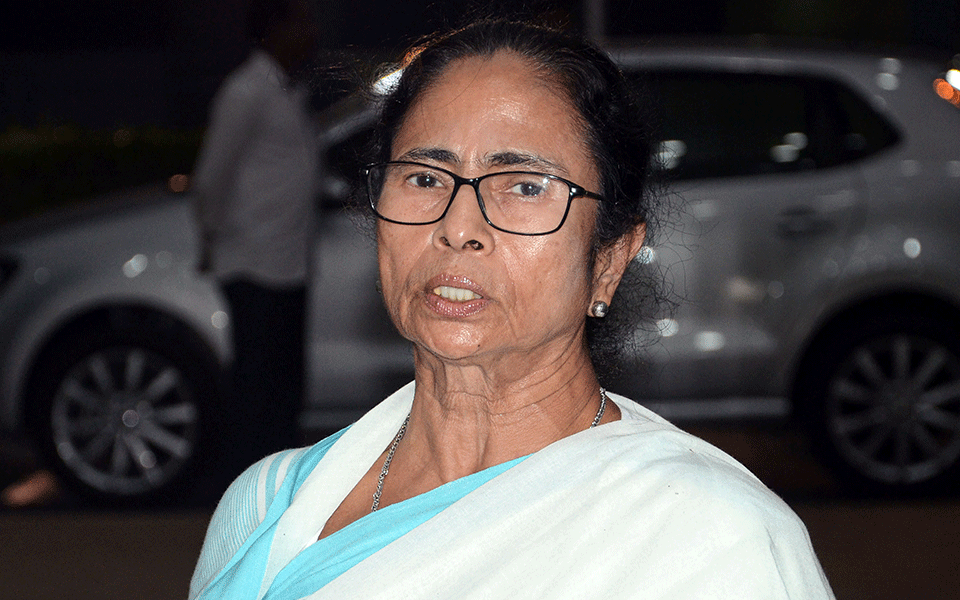
Kolkata: Stating that there were a few "stray post-poll clashes" in West Bengal, the Mamata Banerjee government Sunday claimed that situation in the state was "under control" in a letter to the Centre, which had issued an advisory after four people died in violence between workers of the Trinamool Congress and the BJP.
State Chief Secretary Malay Kumar De wrote that "firm and appropriate actions" were initiated in all cases of violence without any delay.
"There have been a few stray post-poll clashes in the state perpetrated by some anti-social elements, the law enforcement authorities have been taking firm and appropriate actions in all such cases without any delay," De wrote in the letter to the Union Home Ministry.
"In the instant case under Nazat Police Station in North 24 Parganas district too, police case has been registered and investigation has been initiated, even while the maintenance of peace in the area has kept the police contingents busy on the roads and in the neighbourhood," the letter read.
"There has been no delinquency in discharge of functions by public officials yet, strict vigil has been kept on the evolved affairs," it added.
The chief secretary said the situation is under control and it may not be construed under any circumstance to be a failure on the part of the law enforcement machinery of the state to maintain the rule of law and impure confidence among the people.
Earlier in the day, the Centre expressed "deep concern" over continuing violence in the state, saying the "unabated violence" even after the Lok Sabha polls appears to be a failure on part of the state government.
In the advisory, the Home Ministry asked the state government to maintain law and order, peace and public tranquillity.
"The unabated violence over the past weeks appears to be a failure on the part of the law enforcement machinery of the state to maintain the rule of law and inspire confidence among people," the advisory said.
Trinamool Congress secretary general Partha Chatterjee described the Centre sending the advisory as a conspiracy against the state government.
"West Bengal is the most peaceful state in the country and there has been no incident of any political bloodshed here. And you are floating a conspiracy theory by sending us this advisory note," Chatterjee told reporters.
Chatterjee questioned why there was no advisory note sent to the Uttar Pradesh government when incidents of violence were reported from there.
"You are using the home ministry in an undemocratic manner to issue this advisory to the state government. This is nothing but a political conspiracy," he said.
Let the Truth be known. If you read VB and like VB, please be a VB Supporter and Help us deliver the Truth to one and all.
CJI's advice to aspirant: Join the bar, become a lawyer, don't hanker for judicial services post
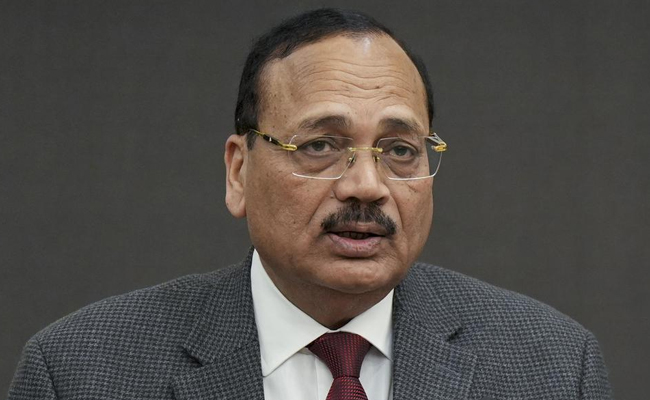
New Delhi (PTI): She came to the Supreme Court seeking a re-evaluation of her paper in the examination for joining judicial services as a magistrate. What she got instead was a rejection — and a candid confession by the Chief Justice that he too had wanted to join the judicial services in his youth but was advised by a senior judge to become a lawyer instead.
A bench comprising Chief Justice Surya Kant and Justice Joymalya Bagchi on Friday dismissed a plea filed by Prerna Gupta, the judicial services aspirant.
As Gupta pressed her case, the CJI intervened and said, "Let me share my personal story and I hope you will go happily as we cannot allow your petition."
He recounted his time as a final-year law student in 1984 when he wanted to become a judicial officer. As per requirement, he cleared the written test and was set to appear for an interview.
Judicial services is one of the two routes to become a judge after initially joining as a magistrate in lower court and thereafter rising through the ranks to become judge in a high court and possibly the Supreme Court.
The other route is to join the Bar, which means becoming a lawyer, and after building a reputation be picked from the Bar to become a judge at a senior level.
By the time the CJI's exam results came out, he had started practising at the Punjab and Haryana High Court when he was called for the interview.
The senior-most judge on the interview panel happened to be a judge before whom he had recently argued two significant matters.
"One of the matters was Sunita Rani vs Baldev Raj, where he had allowed my appeal in a matrimonial case and set aside the decree of divorce granted by the District Judge on the ground of schizophrenia," he noted.
Before the interview could take place, the judge called the young Surya Kant to his chamber and asked, 'Do you want to become a judicial officer?'
"I said 'yes.' He immediately said, 'Get out from (my) the chamber.'"
The courtroom fell silent as the CJI Justice described his initial heartbreak.
“I came out trembling. All my dreams were shattered. I thought he had snubbed me and that my career was over,” the CJI said.
However, the story took another turn the following day and the judge summoned him again, this time offering a piece of advice that would change the trajectory of his life.
“He said, ‘If you want to become (a judge), you are welcome. But my advice is, don’t become a judicial officer. The Bar is waiting for you,’” Justice Surya Kant recalled.
The CJI said he decided to skip his interview and didn't even tell his parents at first, fearing their disappointment, and instead chose to dedicate himself to his practice as an advocate.
“Now tell me did I make a bad right or bad decision,” the CJI asked and the litigant lawyer left the court with a smile on her face despite her case being dismissed.
Encouraging the petitioner to look toward the future rather than dwelling on the re-evaluation of a single paper, Justice Surya Kant said, "The Bar has much to offer."