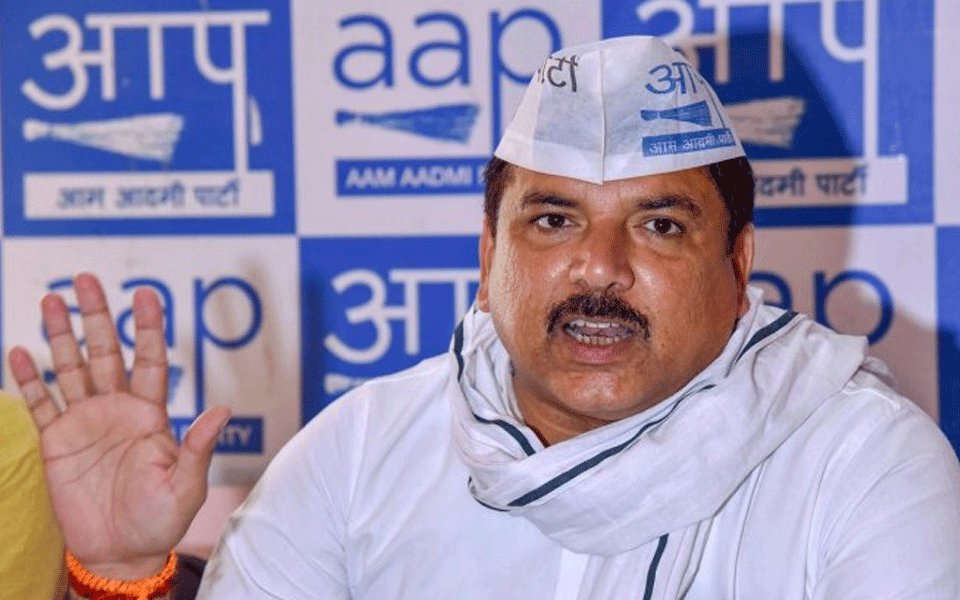
Six disqualified Himachal MLAs move SC
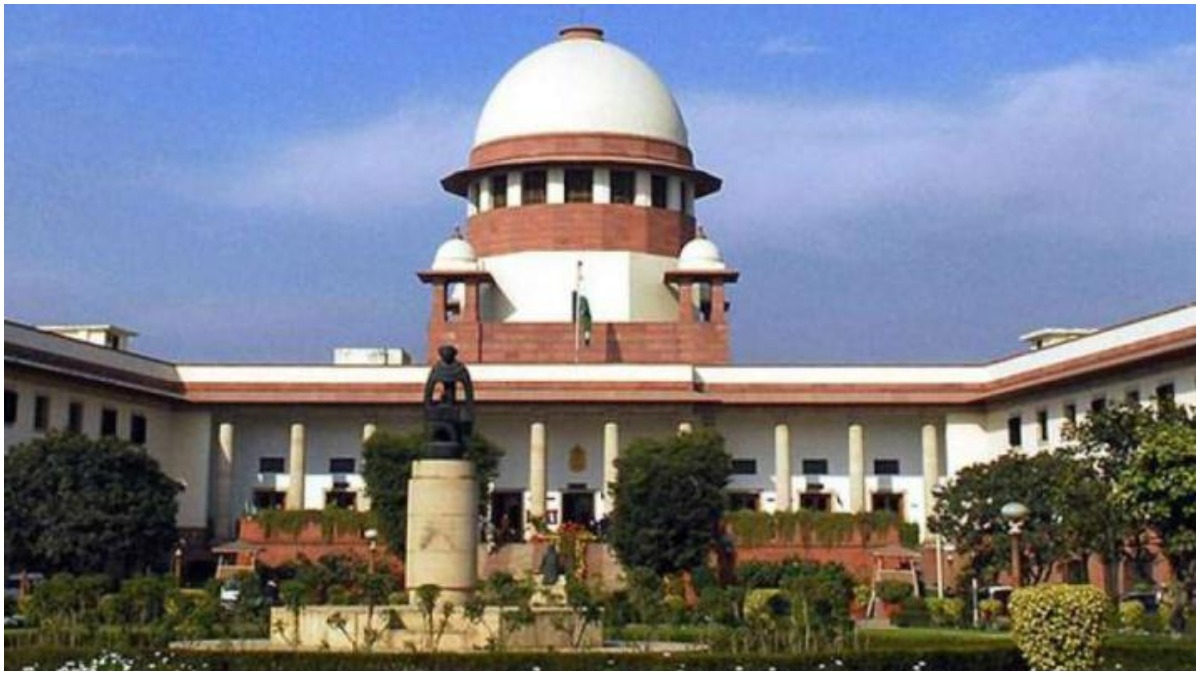
New Delhi (PTI): Six Congress MLAs, who were disqualified after they cross-voted in the recent Rajya Sabha polls in Himachal Pradesh, moved the Supreme Court on Tuesday against their disqualification.
The ex-MLAs have filed a plea against the February 29 decision of the state Legislative Assembly Speaker Kuldeep Singh Pathania.
These Congress rebels, who had voted in favour of the BJP nominee in the Rajya Sabha polls, later abstained from voting on the Budget, defying a party whip.
The ruling Congress had sought their disqualification on this ground.
The disqualified MLAs are Rajinder Rana, Sudhir Sharma, Inder Dutt Lakhanpal, Devinder Kumar Bhutoo, Ravi Thakur and Chetanya Sharma.
Following their disqualification, the effective strength of the House has gone down from 68 to 62, while the number of Congress MLAs has shrunk from 40 to 34.
Let the Truth be known. If you read VB and like VB, please be a VB Supporter and Help us deliver the Truth to one and all.
Nashik TCS controversy: Senior journalist questions police probe, media narrative, communal angle
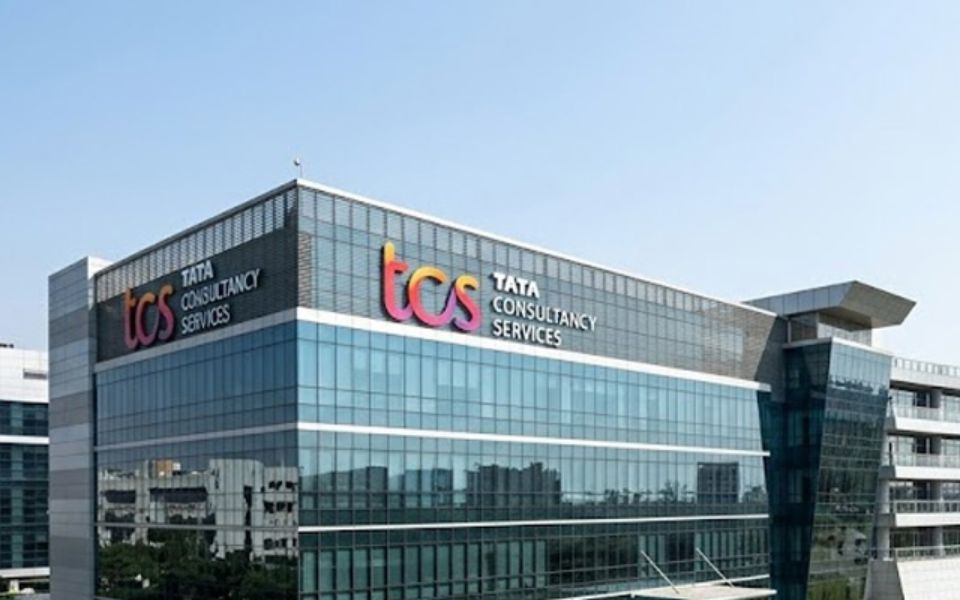
Nashik: The controversy surrounding the Tata Consultancy Services (TCS) office in Nashik, which was projected by several television channels and political voices as a case of “corporate jihad” and alleged organised targeting of Hindu women, has taken a fresh turn after senior journalist Niranjan Takle made a series of serious claims challenging the police investigation, media reporting and political narrative around the matter.
In two detailed interviews with journalist Sohit Mishra, Takle alleged that the case was communalised without credible evidence, individuals were publicly vilified without due process, and the controversy was used for larger political purposes in Nashik.
The interviews have now reopened debate over how the case was handled by police, sections of the media, and even corporate management.
Background of the controversy
The Nashik TCS case had become a national talking point after claims surfaced that Muslim employees at the TCS office were allegedly trapping Hindu women co-workers, pressuring them into fasting during Ramzan, forcing religious practices, insulting Hindu beliefs and attempting conversions.
Several media outlets used terms like “corporate jihad” and “love jihad”, turning the issue into a high-voltage political and communal debate.
However, Takle said the public was shown only one side of the story, while several serious loopholes in the case were ignored.
“No victim first approached police”
Takle claimed the matter did not begin with any complaint from an alleged victim.
According to him, the first complaint was made by a worker linked to a Hindutva political organisation, who approached police alleging that a Hindu woman employee was fasting during Ramzan.
He questioned how such a complaint could be entertained by police.
“On what legal basis can someone monitor another person’s personal religious practices and file a police complaint over it?” he asked during the interview.
Takle said this was the starting point that made him suspicious about the case.
Claim of undercover police inside TCS
Takle said police later claimed they had sent undercover personnel into the TCS office disguised as housekeeping staff and conducted an internal inquiry for several weeks before filing FIRs.
He questioned the credibility of that claim, saying if such an operation had truly happened, police should have known basic facts about the employees they later named.
His main example was the case of Nida Khan.
Nida Khan controversy
According to Takle, Nida Khan was publicly described as the mastermind of the alleged racket and projected as the HR head of the office.
He said this was false.
Takle claimed Khan was actually a telecaller or telephone operator and had already been transferred to Mumbai. Despite this, he said many channels labelled her absconding and a fugitive.
He accused sections of the media of carrying unverified claims, circulating her photos and making her the face of the controversy.
He further said the damage caused to her reputation would remain even if later facts proved otherwise.
Allegation of pressure on complainant family
Takle also alleged that around 150 to 200 people gathered outside the police station and raised slogans, creating pressure for the complaint to be formally registered.
He claimed political activists also went to the complainant’s house and pressured family members before the FIR was filed.
These allegations have become central to the counter-narrative emerging around the case.
Questions over FIR allegations
Takle referred to the FIR in which one complainant alleged that accused employee Danish Sheikh had promised marriage while hiding the fact that he was already married.
However, Takle claimed WhatsApp conversations existed between the complainant and Danish Sheikh’s wife over several years.
If true, he argued, it would weaken the allegation that the complainant was unaware of his marriage.
He also questioned claims that the complainant was taken to a resort and assaulted, saying such accusations would normally require supporting evidence such as booking records, location proof, CCTV footage, material evidence or forensic support.
He repeatedly said the case lacked material, circumstantial and forensic evidence.
Religious angle “deliberately introduced”
Takle argued that because several allegations would be difficult to prove, a religious angle was deliberately inserted into the case.
He said accusations such as insulting Hindu religion, forcing fasting, compelling namaz and promoting conversion were made to inflame public sentiment.
He added that these allegations received more media attention than any actual evidence-based inquiry.
“Conversion racket” questioned
Police and many reports described the matter as a conversion racket operating for four years.
Takle strongly disputed this narrative.
He asked that if such a racket had existed for years, where were the actual conversion cases.
He said during his inquiry, he found reference to one Christian woman named Johanna who allegedly converted to Hinduism.
He sarcastically asked whether Muslim accused were then being blamed for a racket that resulted in conversion to Hinduism.
According to him, no Hindu-to-Muslim conversion case had been established publicly.
Can seven people control 150 staff?
Takle said around 140 to 150 employees worked at the office, while seven or eight Muslim employees were accused.
He questioned claims that such a small group could force the larger workforce to fast, eat beef, offer namaz or submit to religious pressure.
He dismissed these claims as unrealistic and legally weak.
Internal complaint systems ignored?
Another major point raised by Takle was that a large company like Tata Consultancy Services would have structured internal grievance mechanisms.
He referred to POSH committees, ethics channels, HR escalation systems and reporting chains.
He said if harassment had been happening for years, there should have been emails, written complaints, internal records or escalations.
According to him, no such documented complaints had surfaced publicly.
This, he argued, should have been one of the first questions asked by media and investigators.
Questions over TCS response
Takle also criticised TCS for acting in haste.
He said the company had announced external investigations through legal and consulting agencies, but employees were suspended before those findings were completed.
He argued that a professional company should wait for inquiry outcomes before punitive action.
He also called for CCTV footage from the office to be examined if serious misconduct claims had been made.
Accused employees were “award winners”
Takle claimed some of the arrested employees had repeatedly received performance awards inside the company.
He named Raza Memon, Shahrukh Qureshi and others as staff members with strong performance records.
His argument was that individuals repeatedly recognised by management for performance were suddenly being painted as part of a long-running criminal conspiracy.
Why Nashik?
Takle said the issue cannot be seen in isolation and must be understood in the wider political context of Nashik.
He claimed communal polarisation had been building in the city over the past year.
He further linked this to the upcoming Kumbh Mela and future political calculations leading up to the 2029 Lok Sabha elections.
According to him, Nashik was being turned into a “laboratory” for communal politics.
Comparison with Ashok Kharat case
Takle compared the TCS matter with allegations earlier made against Ashok Kharat.
He said despite serious accusations in that case, religion was not made the focus of coverage.
By contrast, in the TCS case, he said religion became central from the beginning.
His argument was that cases are framed differently depending on the identity of the accused.
Media under fire
The sharpest criticism in the interviews was reserved for sections of mainstream media.
Takle accused many channels of simply repeating police claims without independent verification.
He said accused persons were declared guilty in headlines, while words such as “alleged” were often missing.
He also accused channels of sensationalism, claiming some presented unverified sources as TCS employees and amplified conspiracy theories.
According to him, responsible journalism should have examined evidence, spoken to families, checked company systems and sought legal opinion instead of running communal narratives.
Impact on families
Takle said many of those arrested or suspended were sole earning members of their families.
He claimed relatives faced fear, humiliation and helplessness while trying to meet accused persons in custody.
He also said even if courts later grant relief, reputational damage and employment loss may remain permanent.
He raised concerns about how children of accused persons may face stigma in schools and society.
Wider fear of job discrimination
One of Takle’s strongest concerns was that the controversy could create fear among educated Muslim youth seeking white-collar employment.
He said if communal narratives enter workplaces, employers may avoid hiring Muslims to escape controversy.
He described this as dangerous, unlawful and against constitutional values.
Judiciary now under spotlight
Takle said public faith in police and media had been damaged by the episode.
He argued that the next real test would be for the judiciary, which would have to examine evidence fairly and independently.
He also said society, corporations and institutions would be judged by whether they act with bias or uphold fairness.
Remarks on Devendra Fadnavis and Eknath Shinde
During the interview, Niranjan Takle also made direct political remarks involving Maharashtra leaders Devendra Fadnavis and Eknath Shinde.
On allegations that some employees were forced to consume beef, Takle said if such claims were true, then serious questions should be raised before the state government itself. He argued that Maharashtra has strict laws on cow slaughter and beef-related restrictions, and if beef was allegedly being openly supplied in a corporate workplace, then it would indicate failure of law enforcement. In that context, he said Devendra Fadnavis, who also handles the Home portfolio, should answer such claims rather than police using them only for sensational allegations.
Takle also linked the broader political atmosphere in Nashik to power struggles within the ruling alliance. Referring to the earlier Ashok Kharat controversy, he alleged that political pressure was used selectively and that some controversies were timed to target rivals or settle internal equations. He claimed Ashok Kharat had links with Eknath Shinde, and suggested that the fallout of that case was also used to send political signals within the alliance.