Social activist Sandeep Pandey returns Magsaysay award over US support to Israeli attack in Gaza
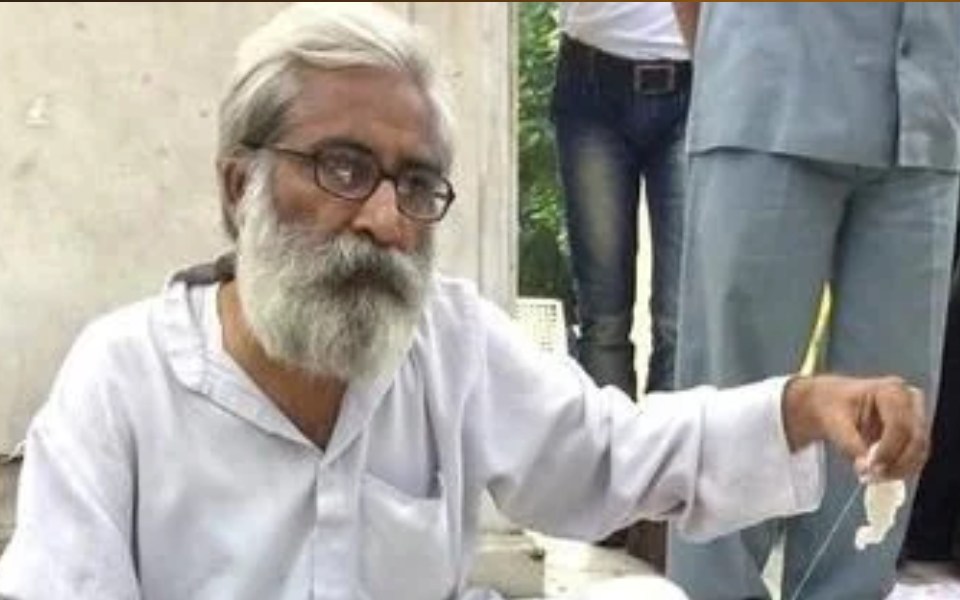
New Delhi, Jan 2: Social activist Sandeep Pandey on Tuesday said he has decided to return the Ramon Magsaysay award conferred on him in 2002 in protest against the role of the US in the Israeli attack in Gaza.
Pandey, who has been associated with the Socialist Party (India), has also decided to return the dual Masters of Science degrees earned from US universities.
The activist said Magsaysay Award was primarily funded by Rockefeller Foundation and the category in which he had received the honour was funded by Ford Foundation, both American foundations.
"Given the role of the US in blatantly supporting Israel in the current offensive against Palestinian citizens, more than 21,500 of whom are dead, and still continuing to sell arms to Israel, it has become unbearable for me to keep the award. I, therefore, am deciding to finally return the award too," Pandey told PTI.
Let the Truth be known. If you read VB and like VB, please be a VB Supporter and Help us deliver the Truth to one and all.
Dalit outfits call state-wide hartal over dental student’s death
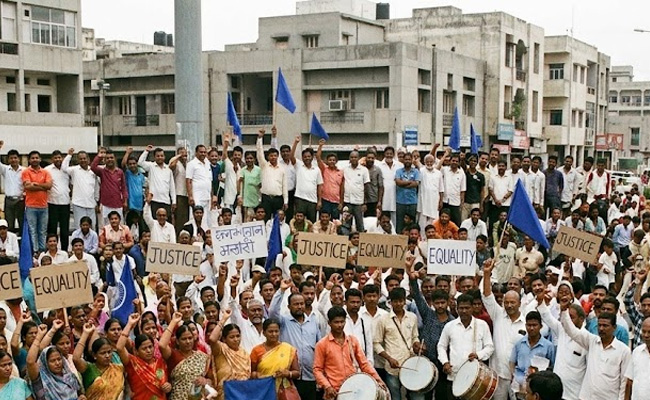
Thiruvananthapuram (PTI): Various Dalit organisations on Monday announced a state-wide hartal seeking justice in the death of Kannur Dental College student Nithin Raj.
The hartal will be observed on Tuesday from 6 am to 6 pm.
As many as 52 Dalit organisations, including Justice for Nithin Raj Action Council, have announced the strike.
Organisations requesting cooperation for the strike said that no vehicles will be forcibly stopped and that all essential services are exempted.
Raj, a first-year BDS student at a private dental college in Anjarakkandy in Kannur district, was found critically injured after falling from a building on April 10 and later succumbed to his injuries.
Police have registered a case against two faculty members on charges of abetment of suicide and under provisions of the SC/ST (Prevention of Atrocities) Act, following allegations by the student’s family that he was subjected to caste- and complexion-based harassment.
Kerala Pinnokka Samudaya Munnani (KPSM), one of the organisations supporting the hartal, alleged in a statement that police had shown apathy in the investigation and were attempting to protect the accused in the case.
KPSM state president K V Padmanabhan and general secretary S Anwar alleged that the probe into Raj’s death was being deliberately misdirected and delayed.
While the family has firmly alleged that caste discrimination and mental harassment by faculty members led to the student’s death, police were attempting to divert the investigation towards loan app borrowings, they claimed.
The organisation alleged that this was a planned move to shield the real accused.
KPSM further alleged that by deliberately delaying the arrest of the accused teachers, police enabled them to secure anticipatory bail.
They said there was no confidence in the present police investigation and demanded that the case be handed over to an independent agency at the earliest.