Sohrabuddin case: Don't discard testimonies, CBI to court; Judge says unexplained gaps in its theory
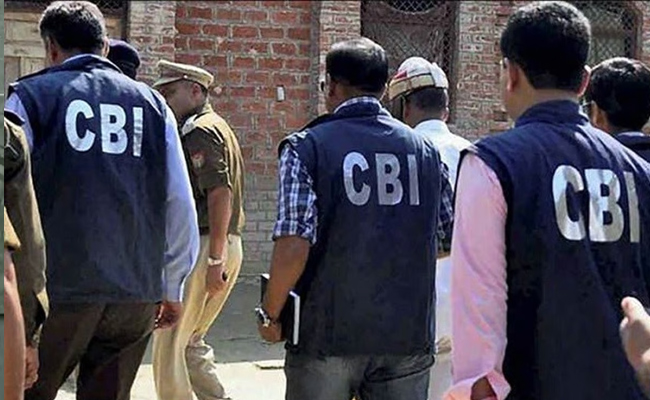
Mumbai, Dec 3: The CBI on Monday requested a special court hearing the Sohrabuddin Shaikh alleged fake encounter case not to discard entirely the testimonies of prosecution witnesses who have turned hostile, even as the court said the CBI's theory and charge sheet are "riddled with unexplained gaps".
The Central Bureau of Investigation said that the killings of Sohrabuddin, his wife Kausar Bi and his aide Tulsiram Prajapati--in 2005 and 2006--were staged and if some defects exist in the prosecuting agency's probe, it can't be a ground in itself to grant benefit or acquittal to the accused.
A total of 92 out of 200 witnesses examined in the case have turned hostile.
Special public prosecutor BP Raju, who was making his final arguments on behalf of the CBI before Special Court Judge SJ Sharma here, said that it was "unfortunate" that so many important prosecution witnesses had turned hostile and gone back on their statements given to the CBI and the magistrate courts.
He argued that the Supreme Court had ruled in many instances that courts could take cognisance of the testimonies given by those witnesses who eventually turned hostile.
"It is unfortunate that so many witnesses turned hostile (in the Sohrabuddin Shaikh fake encounter case) but the court must not discard their testimonies entirely, especially the statements given to the CBI by Nathuba Jadeja and Gurdayal Singh. They are very important," Raju said.
Jadeja and Singh, both constables of Gujarat police, were the CBI's "star witnesses" in the case who turned hostile during the trial.
As per the CBI charge sheet, which was filed earlier, Sohrabuddin and Kausar Bi were abducted by the Gujarat ATS (Anti-Terrorism Squad) on November 26, 2005 when they were travelling to Sangli in Maharashtra from Hyderabad in a private bus along with Prajapati.
While Sohrabuddin was killed near Ahmedabad some days after abduction, Kausar Bi met the same fate on November 29.
Prajapati, who was a witness to the incident, was allegedly killed by the Rajasthan and Gujarat police a year later (2006) in another fake encounter, as per the chargesheet.
While Raju said that all the three were killed in fake encounters, Judge Sharma said, "The CBI's theory and its charge sheet were riddled with unexplained gaps".
Prajapati's presence on the bus, in which Sohrabuddin and his wife were travelling, was not mentioned by any complainant, witnesses or probe agencies until 2010, when the CBI took over the probe from the Gujarat CID (Crime Investigation Department), the judge said.
"Sohrabuddin Shaikh's brother Rubab Uddin wrote a letter to the Supreme Court and filed a writ petition in the Bombay high court in 2006. However, he did not even whisper about Prajapati. The Gujarat police and the CID that initially probed the case made no mention of Prajapati being present at the site, or witnessing the incident.
"So what dots did the CBI join to conclude that he was the third person travelling with Sohrabuddin and his wife on that bus?" the judge asked.
The judge also noted that the CBI chargesheet was "silent" on Prajapati's whereabouts some hours before he was killed in the alleged fake encounter in December 2006.
At this, Raju said he was admitting of some "lacunae" in the CBI probe. "However, these questions were for the Gujarat police to answer as the latter had probed the case initially," he said.
"There are several judgements of the Supreme Court which rule that even if some defects exist in the prosecuting agency's probe, such defects can't be a ground in itself to grant benefit or acquittal to the accused person," the special public prosecutor argued.
He said much of the CBI's case depended on circumstantial evidence and that he will accordingly submit previous rulings of the top court on such evidence, besides "other relevant judgements" before the special court Tuesday.
Defence lawyers for Gujarat police officers ML Parmar, Narayansingh Dabhi and Balkrishna Choubey--who are among the 22 people facing trial in the case--argued that the CBI's case was "not cogent and its evidence was not unimpeachable".
The defence's arguments are likely to continue on Tuesday.
Let the Truth be known. If you read VB and like VB, please be a VB Supporter and Help us deliver the Truth to one and all.
SC to hear on May 4 PIL seeking stringent guidelines for issuing Aadhaar to adolescents, adults
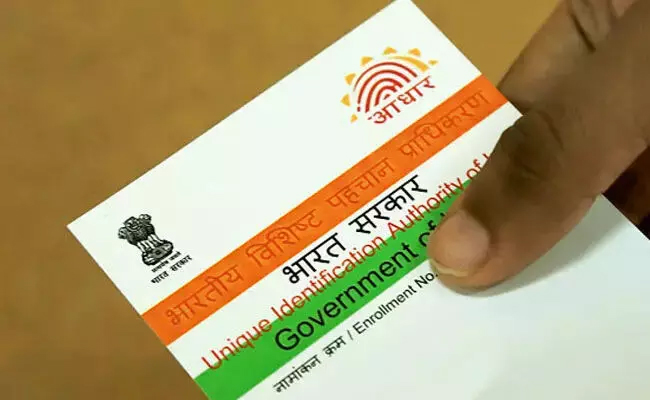
New Delhi (PTI): The Supreme Court is scheduled to hear on Monday a plea seeking a direction to the Unique Identification Authority of India to issue new Aadhaar cards only to citizens up to the age of six years, and frame stringent guidelines for its issuance to adolescents and adults to stop infiltrators from masquerading as Indian citizens.
As per the apex court's causelist of May 4, the plea would come up for hearing before a bench of Chief Justice Surya Kant and Justice Joymalya Bagchi.
The Public Interest Litigation (PIL) filed by lawyer Ashwini Upadhyay has also sought a direction to the authorities to install display boards at common service centres stating that the 12-digit unique identification number is only a "proof of identity" and not a proof of citizenship, address or date of birth.
Besides all the states and Union Territories, the plea has made the UIDAI -- which is the authority that issues Aadhaar -- and the Union ministries of home, law and justice, and electronics and information technology as parties.
The plea, filed through advocate Ashwani Dubey, said Aadhaar, originally intended as a proof of identity, has increasingly become a "foundational document" enabling individuals to obtain other identification documents, such as ration cards, domicile certificates and voter identity cards.
"The UIDAI has issued 144 crore Aadhaar and 99 percent Indians have been enrolled. Therefore, the petitioner is filing this writ petition as a PIL under Article 32, seeking a direction to UIDAI to issue new Aadhaar to children only and frame new stringent guidelines for adolescents and adults, so as to stop infiltrators from getting it and masquerading as Indian citizens," the plea said.
It said the need to file the plea arose when the petitioner came to know the manner in which infiltrators are able to procure Aadhaar through a verification process that is weak and can be easily manipulated.
"Foreigners apply for Aadhaar under the 'foreign' category. But infiltrators apply for Aadhaar under the 'Indian citizen' category and get it easily made. Thereafter, they obtain a ration card, birth and domicile certificate, driving licence, et cetera, essentially becoming indistinguishable from Indian citizens…," it said.
Besides seeking other directions, the plea has raised legal questions, including whether the Aadhaar Act 2016 has become "temporally unreasonable" for failing to keep up with the legislative intent of distinguishing foreigners from Indian citizens.
It said the alleged misuse of Aadhaar undermines targeted welfare delivery and leads to diversion of public resources.