Someone who talks about Sanatan Dharma being told he is not a Sankaracharya: Avimukteshwaranand
_vb_56.jpeg)
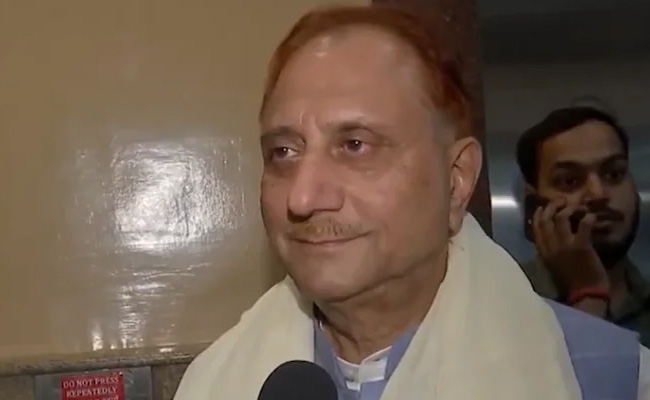
Varanasi (PTI): In a veiled attack on Uttar Pradesh Chief Minister Yogi Adityanath, Swami Avimukteshwaranand Saraswati on Saturday said someone who talks about Sanatan Dharma is being told he is not a Shankaracharya at all.
His remarks came a day after Adityanath said in the state Assembly that not everyone could use the title of Shankaracharya and stressed that religious decorum and rule of law must be maintained during all events.
Saraswati said that in Sanatan Dharma, a Shankaracharya is one who works for the religion and upholds truth.
Speaking to mediapersons here, he said the definition of Shankaracharya being projected by some had never existed earlier.
“In Sanatan Dharma, a Shankaracharya is someone who works for Sanatan Dharma. The first attribute of Sanatan Dharma is truth. One who speaks the truth, protects cows and safeguards Sanatan Dharma is a Shankaracharya,” he added.
Without naming anyone, Saraswati said, “Anyone who supports him (apparently pointing towards Adityanath) is being called a Shankaracharya. Someone who talks about Sanatan Dharma is being told he is not a Shankaracharya at all.”
Adityanath on Friday had said in the House that, “Not every person can write Shankaracharya before his name. Not everyone can claim to be the acharya of a peeth and vitiate the atmosphere at will. Everyone has to follow certain limits.”
The remarks followed a dispute between the Magh Mela administration and Saraswati over the use of the title Shankaracharya during the event in Prayagraj last month and the circumstances under which he was stopped while heading towards the Sangam for a holy dip on Mauni Amavasya on January 18.
In an apparent reference to the controversy, Adityanath questioned the opposition's stand and said those speaking of morality should introspect.
“At a place where crores of devotees have assembled, the exit gate through which people leave after taking a dip cannot be used for entry. Any such attempt can trigger a stampede and endanger lives,” Adityanath said.
A responsible and disciplined individual would never indulge in any conduct that could jeopardise public safety, he added.
Let the Truth be known. If you read VB and like VB, please be a VB Supporter and Help us deliver the Truth to one and all.
Hailstorm brings relief to Bengaluru from scorching summer

Bengaluru (PTI): Bringing much relief to the people battered by the scorching summer, heavy rains coupled with hailstorm lashed the city on Wednesday.
The thunderous downpour with stormy wind cooled the city, where the temperature had soared to 37 degree.
With the rains, the city, from being parched, witnessed waterlogging in just two hours.
There was waist-deep water in many areas in the city such as Richmond Town and Shanthinagar resembling a river.
The unexpected rain did not spare Vidhana Soudha, the seat of power, as water gushed inside the government offices from the lobby. The office of the Leader of the Opposition in the Karnataka Assembly R Ashoka was also flooded.
Since the downpour occurred in the evening, many office goers struggled to return home.
Uprooting of trees was reported in many parts of the city, including Malleswaram, Shanthinagar and Seshadripuram.