Sonia Gandhi inaugurates Cong's new Kotla Road headquarters
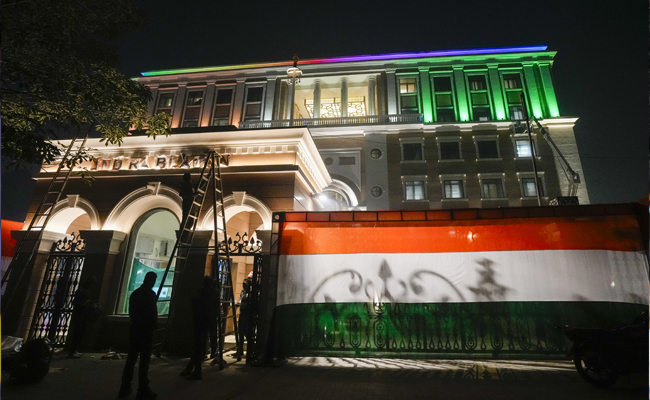
New Delhi (PTI): Congress Parliamentary Party chief Sonia Gandhi inaugurated the party's new headquarters located at 9A, Kotla Road here on Wednesday, marking a key moment in the history of the grand old party which has operated from the 24, Akbar Road premises for the last 47 years.
Congress president Mallikarjun Kharge, former party chief Rahul Gandhi, Congress general secretaries Priyanka Gandhi Vadra and K C Venugopal, among other senior party leaders, were present on the occasion.
The event saw party leaders hoist the party flag at the new headquarters and the singing of Vande Matram and the national anthem.
Sonia Gandhi then inaugurated the building, asking Kharge to join her in cutting the ribbon at the entry of the building.
The new state-of-the-art AICC headquarters -- Indira Gandhi Bhawan - symbolises the Congress party's continuing mission to uphold the vision of its stalwarts, the party had earlier said.
"It is time for us to move ahead with the times and embrace the new,” AICC general secretary, organisation, Venugopal had said,
The construction of Indira Gandhi Bhawan was started during Sonia Gandhi's tenure as Congress chief.
"Situated at 9A, Kotla Road, New Delhi, the Indira Gandhi Bhawan is designed to meet the evolving needs of the party and its leaders, featuring modern facilities to support administrative, organisational, and strategic activities.
"This iconic building reflects the Congress party's forward-looking vision while paying homage to its extraordinary past, which has shaped the political and social fabric of India," he had said.
Sources have said the party will not vacate its present 24, Akbar Road office, which has been its headquarters since 1978 after the Congress (I) was formed, and it will continue to house some of its cells.
The construction of the new AICC headquarters was delayed by several years owing to "paucity of funds" ever since the Congress lost its government at the Centre. The BJP has also not vacated its old party headquarters at 11, Ashoka Road, even after shifting to its new headquarters at Deendayal Upadhyay Marg.
Congress old-timers and romantics agree that modern amenities and a larger area are the need of the hour but the emotional connect and unfolding of history associated with the 24, Akbar Road address will always stay strong.
The Akbar Road bungalow once housed Sir Reginald Maxwell, who was a member of Viceroy Lord Linlithgow's executive council. It was also home to a teen Aung San Suu Kyi in 1961 when her mother was appointed ambassador to India.
The Congress has been its mainstay though. More than just an office for the party, the premises set in expansive lawns was witness to the tenure of seven Congress presidents.
Let the Truth be known. If you read VB and like VB, please be a VB Supporter and Help us deliver the Truth to one and all.
EC role, Hindu vote consolidation among factors for BJP win in Bengal polls: J-K CM Omar
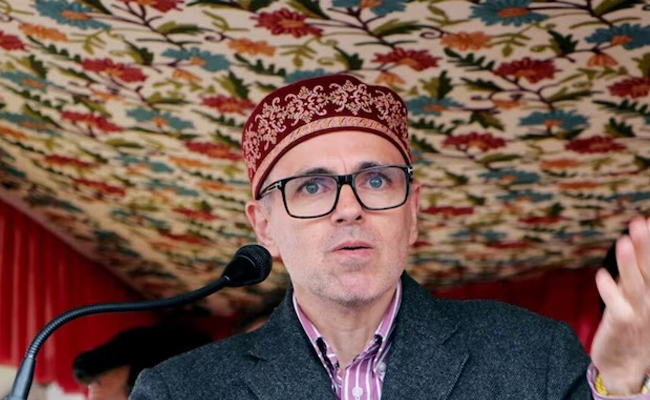
Srinagar (PTI): Jammu and Kashmir Chief Minister Omar Abdullah on Tuesday attributed the BJP's West Bengal win to a "significant role" played by the Election Commission (EC), alongside a consolidation of Hindu votes and a fractured minority mandate.
Abdullah also said the INDIA bloc needs to define its role in the political landscape of the country and make it clear whether the opposition alliance was limited to the parliamentary elections or extended to the state elections as well.
Talking to PTI Videos, Abdullah hinted that the EC has compromised its neutrality by conducting the Special Intensive Revision (SIR) in West Bengal and linked it to the BJP's gains in the state, claiming large-scale deletion of legitimate voters.
On the performance of the BJP in the just concluded assembly elections, Abdullah said the saffron party has almost nothing to show in southern states.
"So then you look at West Bengal and Assam. Yes, the BJP improved its tally in Assam. There are various reasons for that. You know as well as I do, what those are. West Bengal, I think we need to look at the results very carefully," he said.
"The easiest explanation for the West Bengal result is the serious curtailing of voter list," Abdullah said.
"Voters found their names deleted. People who served in uniform and fought for this country on the borders, who were considered Indian citizens all their lives, were suddenly held to a higher standard and not allowed to vote. Something is not right," he said.
While alleging that the EC played a "significant part" in the results, the chief minister admitted the outcome was multifaceted and noted a consolidation of over 60 per cent of the Hindu vote towards the BJP and a "significant fracture" in the minority vote, particularly in seats where Muslims constitute over 50 per cent of the population.
"There is no doubt that the role of the Election Commission played a significant part in the results but we will also have to look at the other factors," he said.
He said the results of West Bengal cannot be compared to those in other states. "The situation was unique to West Bengal. The SIR that was done, the way in which the voter lists were changed, the sort of minute scrutiny that the Election Commission subjected West Bengal to, the role of the central investigative agencies.
"All of these are situations that at least in recent electoral history of India are unique to West Bengal. So to suggest that we can learn lessons from West Bengal and implement them in other parts of the country, I think would not be correct," he said.
Abdullah had recently said that if the West Bengal results throw a surprise, the role of EC will come under scrutiny.
However, during Tuesday's interview, the chief minister said he still maintains that electronic voting machines (EVMs) do not lead to vote theft.
"What we saw in West Bengal...I know there are a lot of people who believe that the EVMs themselves are flawed. I am not a proponent of that conspiracy theory.
"But I do believe that the Election Commission has done itself no favours in the way in which it has gone about both the process of delimitation and the process of finalisation of electoral rolls," he said and cited the example of delimitation exercise in Jammu and Kashmir or Assam.
"These are clear examples of how the process was done to benefit one party or in the case of Jammu and Kashmir, one party and its allies. And the results speak for themselves. You created seven new seats in Jammu and Kashmir and out of those six seats were won by the BJP. You redrew assembly constituencies to benefit one particular party or its allies. And the same is true for West Bengal as well," he said.
Referring to the INIDA bloc, he said the election results were no new message for the alliance.
"We need to decide what the INDIA bloc is for. Is it only for Parliament or for state elections as well?" he asked.
"What happened in West Bengal is unfortunate. The Congress and TMC fought against each other. Now the Congress agrees with Mamata Banerjee that 100 seats were stolen, but the fact is they fought each other," he said.
Despite the friction, Abdullah reaffirmed the "pre-eminent position" of the Congress within the opposition alliance, dismissing the idea of any other party assuming the mantle.
"The Congress is the only party other than the BJP with a pan-India presence. All of us acknowledge this," he stated.
"To suggest someone else can assume a leadership role would be incorrect. Kharge Sahib is the president of the Congress, and by virtue of that, he assumes leadership of the INDIA bloc meetings. That is the way it should be," the chief minister said.
Abdullah said any 'Common Minimum Programme' would depend on whether the opposition alliance decides to fight state assembly elections collectively, noting that he would share his specific views with the bloc internally rather than through the media.