SP-BSP alliance led to wave of happiness; BJP worried, says Akhilesh Yadav
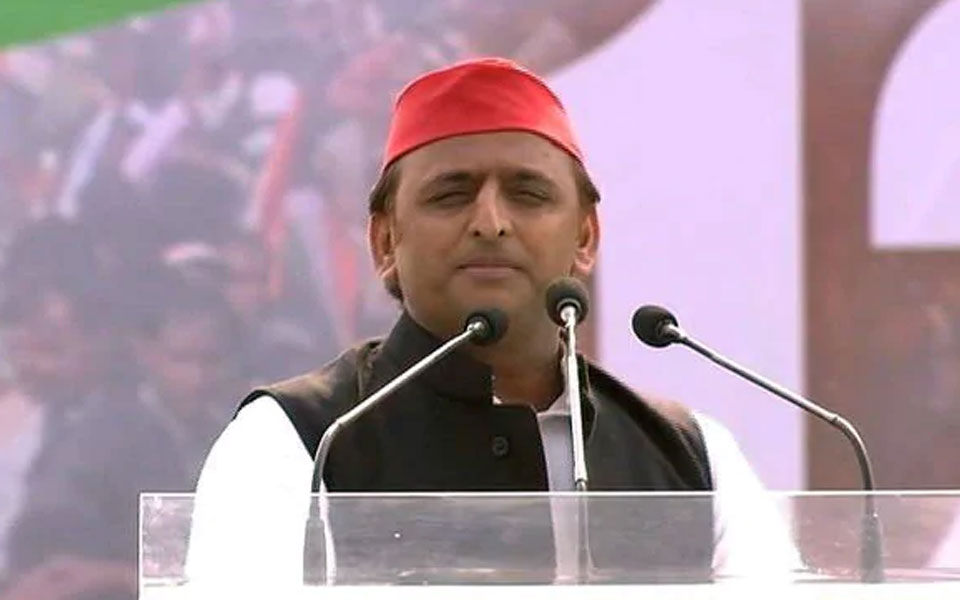
Kolkata, Jan 19 : Samajwadi Party chief Akhilesh Yadav Saturday said the coming together of the SP and the BSP has led to a wave of happiness in the country and left a worried BJP to hold meeting after meeting to devise a strategy to win even one seat in Uttar Pradesh.
Speaking at a mega opposition rally here, Yadav also sought to give a reply to the BJP questioning the opposition parties about their prime ministerial candidate.
"They ask, who is PM candidate of opposition parties... We say people will decide the PM candidate from our side. But from their side, this name (Narendra Modi) has disappointed the country, who is your another name?" Yadav said.
He said while opposition parties have entered into alliance with the common people, the BJP has forged ties with the CBI and the ED.
The SP chief sat on the dais next to BSP general secretary Satish Chandra Mishra, who was participating in the rally as a representative of his party chief Mayawati.
RLD chief Ajit Singh and his son Jayant Choudhury, who are engaged in discussions with the SP to join their political alliance in UP, were also present on the stage.
Yadav said the people across the country were celebrating the arrival of the New Year and this happiness will increase manifold when they will have a new prime minister.
Let the Truth be known. If you read VB and like VB, please be a VB Supporter and Help us deliver the Truth to one and all.
Rickelton's ton in vain as SRH beat MI by 6 wickets
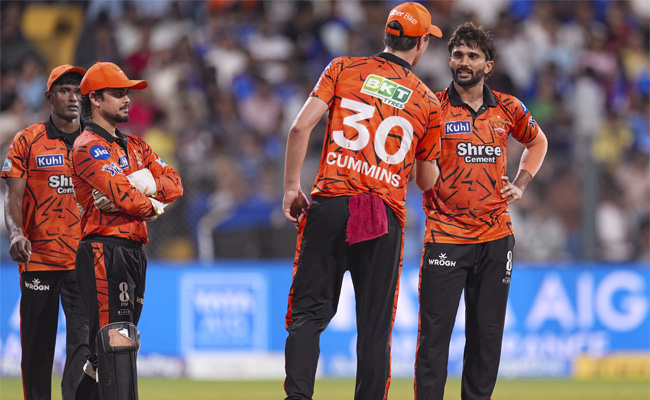
Mumbai (PTI): Ryan Rickelton's whirlwind unbeaten ton was overshadowed by Heinrich Klaasen's unbeaten 65 as Sunrisers Hyderabad defeated Mumbai Indians by six wickets in an IPL match here on Wednesday.
Chasing an imposing 244-run target, Travis Head (76 off 30) and Abhishek Sharma (45 off 24) shared 129 runs for the opening wicket to set the platform for SRH.
Klaasen (65 not out off 30 balls) then displayed his all-round hitting abilities to guide SRH home with the help of Nitish Kumar Reddy (21) and Salil Arora (30 not out off 10) in 18.4 overs.
Earlier, Rickelton's knock powered MI to 243 for five.
MI rode on a 93-run stand between Rickelton (123 not out off 55 balls) and Will Jacks (46 off 22) in 7.1 overs for the opening stand to power the side.
MI skipper Hardik Pandya scored a valuable 31 off 15 balls before being dismissed.
Praful Hinge (2/54), Eshan Malinga (1/29), Sakib Hasan (1/39) and Nitish Kumar Reddy (1/31) were the wicket-takers for SRH.
Brief Scores:
Mumbai Indian: 243 for 5 in 20 overs (Ryan Rickelton 123 not out; Praful Hinge 2/54).
Sunrisers Hyderabad: 249 for 4 in 18.4 overs (Travis Head 76, Heinrich Klaasen 65 not out; AM Ghazanfar 2/51).