Speaker cannot hoist national flag on August 15 in Parrikar's absence: Congress
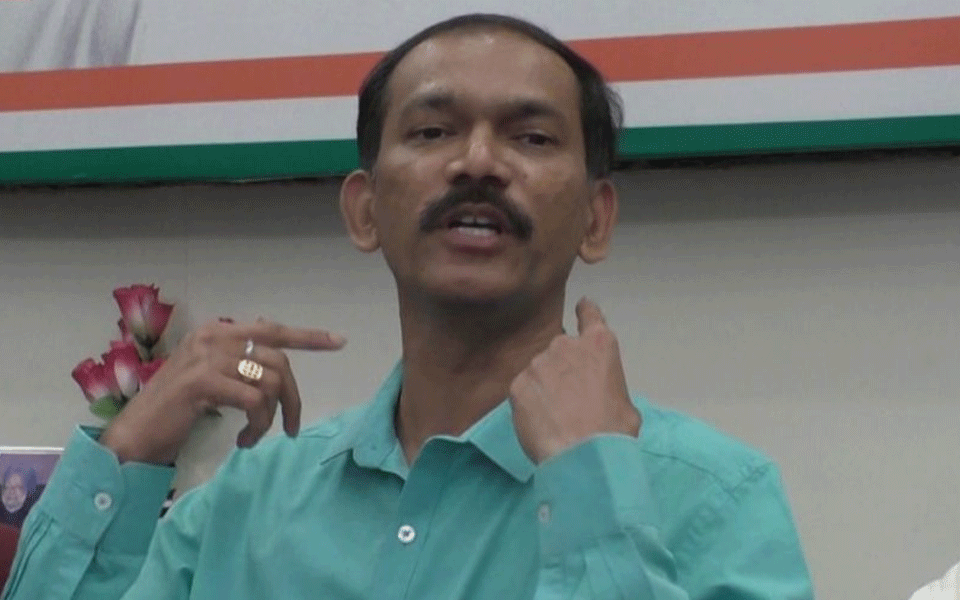
Panaji, Aug 13 : Claiming violation of privilege of the executive, the Congress in Goa has demanded that Speaker of the Goa legislative assembly Pramod Sawant should not hoist the national flag on Independence Day in the absence of Chief Minister Manohar Parrikar.
Parrikar is currently undergoing a second round of treatment in the US.
In a letter written to Sawant, state Congress president Girish Chodankar said on Monday, that if the Speaker does go ahead and unfurl the flag on August 15, "the image and independence of the office of the Speaker" would be in question.
"Hoisting of the flag is a privilege of the executive, of which the Speaker is not a part, as the Office of the Speaker of the Legislative Assembly is an independent authority and not a part of the government under the Constitution. The Speaker is required not to be partisan and therefore the Speaker cannot substitute the Chief Minister who is the Chief Executive in the State," Chodankar said in a letter to the Speaker.
Sawant has been nominated by Parrikar to chair the Independence Day function on August 15 and unfurl the national flag. The decision has triggered controversy with a city lawyer also petitioning the Bombay High Court bench in Goa, claiming the act would be a violation of executive privilege.
Chodankar in his letter has said that the Speaker is a high constitutional office and is not part of the government or executive and reading out the achievements of the Government and future state agenda would "damage the institution of the Speaker".
"Your consent for hoisting the flag and substituting the Chief Minister very clearly discloses your bias and partisan nature," the letter also states, requesting Sawant to withdraw his consent for hoisting the national flag at the state celebrations in Panaji on August 15.
Sawant has maintained that it is a matter of pride for him, that the Chief Minister has given him the responsibility of hoisting the national flag and has also thanked Parrikar for the honour.
"The Congress makes many demands. But it is not the case that all the demands are correct. Chief Minister has allotted me this responsibility as a Speaker of the state legislative assembly. That is his right to decide who should be carrying out the flag hoisting. His faith in me is a matter of pride for me," he told reporters.
Let the Truth be known. If you read VB and like VB, please be a VB Supporter and Help us deliver the Truth to one and all.
Kerala Assembly polls: Trends after 9 am show UDF continues to lead
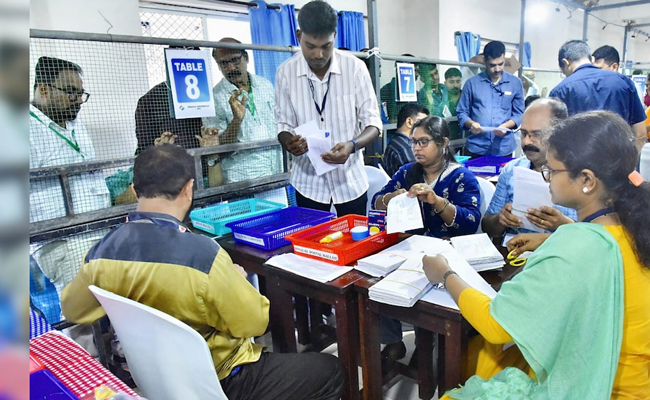
Thiruvananthapuram (PTI): As counting of EVM votes polled in the April 9 Kerala Assembly elections commenced, trends after 9 am show the Congress-led UDF leading in the state.
The UDF was ahead in close to 90 seats, while the CPI(M)-led LDF was leading in over 40 seats with the BJP-headed NDA in the front in around 5 assembly constituencies as EVM votes began to be counted, according to news reports.
As per Election Commission figures, Congress is ahead in 10 seats, CPI(M) in 5, CPI in 2, Revolutionary Socialist Party (RSP) 2 and IUML, RJD and Kerala Congress (KEC) with one each, among others.
The trends appear to support the UDF claim that it would get a huge majority. PTI
If the situation continues, the UDF stand to claim power in the state.