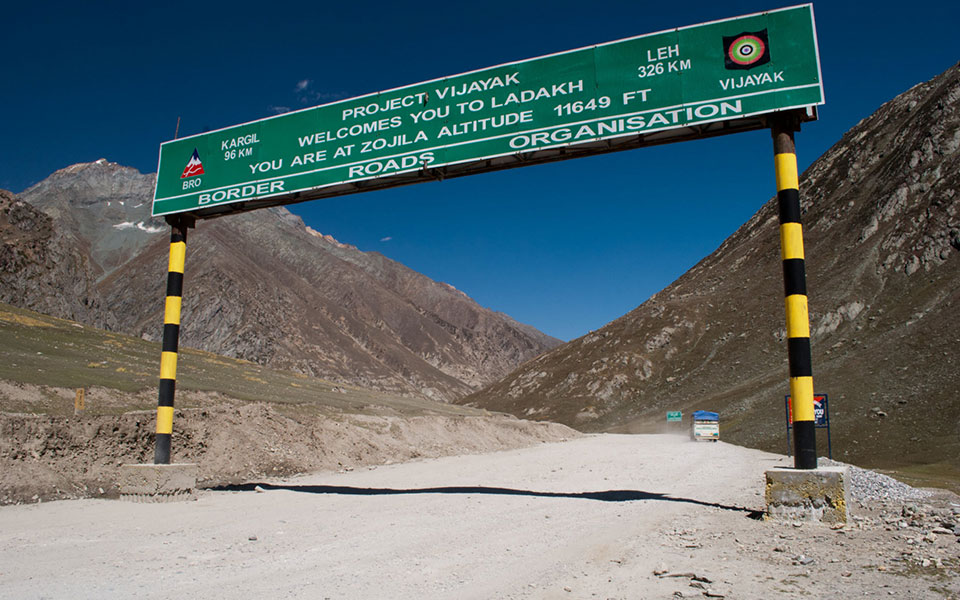
Srinagar, April 6: After remaining closed for four months, Srinagar-Leh highway connecting the Ladakh region with the rest of the country was formally thrown open for traffic on both carriageways on Friday.
The over 422 km Srinagar-Leh Highway was thrown open by Lt. Gen A.K. Bhatt, General Officer Commanding of Army's 15 Corps.
The highway passes through the Zojila Pass which is situated at an altitude of 3,528 metres above the sea level.
Let the Truth be known. If you read VB and like VB, please be a VB Supporter and Help us deliver the Truth to one and all.
Bengaluru (PTI): Karnataka Health Minister Dinesh Gundu Rao on Tuesday said his department was focused on presenting the ground reality and improving healthcare delivery, even as the opposition accused the government of "mismanagement and internal conflicts".
Responding to a discussion on the functioning of the Health Department in the assembly, the Minister said the government had undertaken several reforms and programmes to strengthen public healthcare and expand access across the state.
“I am not here to say that everything they said is wrong, nor am I here to counter their arguments point by point. I will simply present the ground reality—what the situation is, what is happening, and what we have done,” he said.
Rao rejected allegations levelled by the opposition that the Health department was in decline and instead highlighted initiatives such as the Griha Arogya Yojana, under which around 51 lakh households were covered, and large-scale screening and treatment programmes for diseases like hypertension, diabetes, and cancer were facilitated.
He said lakhs of patients were currently under treatment for various conditions and emphasised preventive healthcare and early diagnosis.
The minister also cited the implementation of day-care chemotherapy centres in all district hospitals, enabling patients to access treatment closer to home.
Under schemes such as Puneeth Rajkumar Hrudaya Jyothi, he said life-saving injections costing up to Rs 25,000 were being provided free of cost, helping save around 18,000 lives.
Dialysis services had also been overhauled, with 7.39 lakh cycles conducted so far and thousands of patients receiving regular treatment.
The minister noted that the Asha Kiran programme, recognised by the World Health Organization, had led to the establishment of 393 vision centres, benefiting lakhs of people through free eye check-ups and surgeries. The Suchi scheme had been revived to provide sanitary pads and menstrual cups to women.
On disease control, Rao said dengue-related deaths have been brought down to zero in 2025 through preventive measures and community outreach, while fatalities due to KFD had also declined significantly.
He also highlighted progress in reducing maternal mortality, stating that the Maternal Mortality Ratio (MMR) had declined from 62 to 48, with a target of bringing it down to 30 by 2028. Measures such as risk identification, mandatory hospital stays, and strengthening of taluk hospitals with specialist doctors were being implemented.
“We are not shutting down facilities arbitrarily but reorganising them based on performance and geographical needs,” he said, adding that the aim was to ensure “guaranteed” healthcare services at all times.
Earlier, Leader of the Opposition R Ashoka accused the government of "failing" to manage the Health Department, alleging internal conflicts among senior officials and shortages of medicines.
“The Health Department has become unhealthy. First, resolve the internal quarrels among officials and then improve the department,” Ashoka said.
He also raised concerns over the functioning of the department, claiming that the officials are not attending office for months and alleging lapses in medicine supply and administration.
He questioned the transfer of doctors from Community Health Centres and sought clarity on budgetary allocations and expenditure on healthcare.
Ashoka further alleged that doctors had complained about increased workload and declining services at local health centres following transfers, and urged the government to reverse such decisions.
The Minister, however, maintained that reforms were aimed at better utilisation of resources and strengthening healthcare infrastructure, particularly at the taluk level, to ensure timely and quality medical services for the public.