State of economy cause of 'extreme concern': Chidambaram
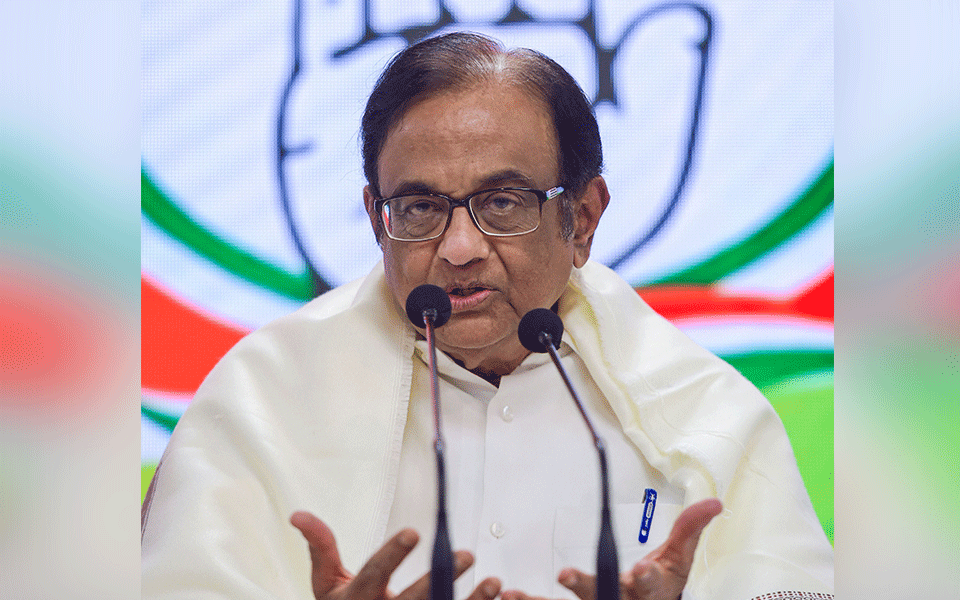
Udaipur(PTI): Asserting that the state of the economy is a cause of "extreme concern", senior Congress leader P Chidambaram on Saturday said taking into account global and domestic developments, it may be necessary to contemplate a reset of economic policies.
Addressing a press conference, Chidambaram said a slower rate of growth has been the "hallmark" of the present government in the last eight years, and the post-pandemic recovery has been "indifferent and halting".
Chidambaram, who heads the panel on economy constituted by Congress president Sonia Gandhi to lead discussions at the three-day 'Chintan Shivir' here, also said the time is ripe for a comprehensive review of fiscal relations between the Centre and the States.
The consequences of the poorly drafted and unfairly implemented GST laws brought in by the Modi government in 2017 are there for everyone to see, the Congress leader said.
"The States' fiscal position is fragile like never before and needs urgent remedial measures," said the former finance minister, flanked by some other members of the panel such as Gourav Vallabh and Supriya Shrinate.
Noting that the Congress-led government ushered in a new era of liberalisation in 1991, Chidambaram said the country has reaped enormous benefits in terms of wealth creation, new businesses and new entrepreneurs, a huge middle class, millions of jobs, exports and lifting 27 crore people out of poverty during a 10-year period.
"After 30 years, it is felt that taking into account global and domestic developments, it may be necessary to contemplate a reset of the economic policies.
"A reset of economic policies must also address the questions of rising inequalities, extreme poverty among the bottom 10 per cent of the population, India's rank in the Global Hunger Index 2021 (101 out of 116 countries), and evidence of widespread nutritional deficiency among women and children," he said.
The external situation has added to the pressures on the economy, he noted. "The government appears clueless on the ways to deal with these developments," he added.
Chidambaram further said, "I am confident that our deliberations over three days and the decisions that will be taken by the CWC in the days and weeks ahead will make a significant contribution to the nationwide debate on the economic policies that will best serve the interests of the country and its people."
The discussions at the 'Chintan Shivir', which began on Friday, will continue on the second and third day as well and the conclusions will be recorded in the form of a declaration. A draft of the declaration will be discussed at the Congress Working Committee (CWC) meeting to be held here on the third and last day of the conclave.
Let the Truth be known. If you read VB and like VB, please be a VB Supporter and Help us deliver the Truth to one and all.
Congress using hijab issue to pacify minority anger, alleges Karnataka LoP R Ashoka
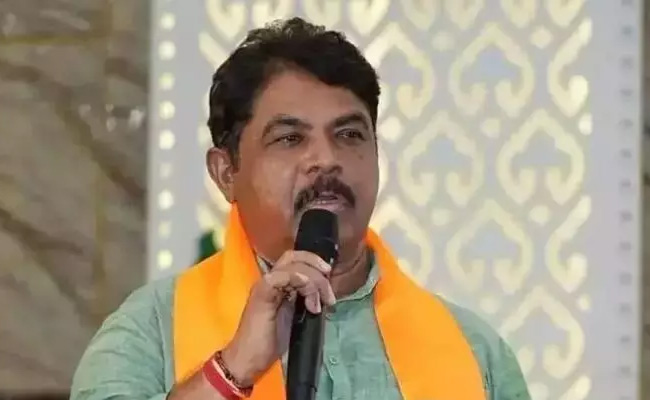
Bengaluru: Leader of Opposition in the Assembly R. Ashoka has accused the Congress government of using the hijab issue to placate what he described as discontent among minority voters after the Davanagere by-election.
In a post on X on Wednesday, Ashoka alleged that the state government, instead of addressing issues such as price rise, corruption, farmers’ distress and law and order, was attempting to retain its minority vote base by reviving the hijab issue.
Referring to the 2022 dress code introduced by the BJP government, which prohibited hijab in schools and colleges, Ashoka said the Karnataka High Court had upheld the policy and emphasised the importance of discipline in educational institutions.
He questioned the Congress government’s move to revisit the issue and asked whether setting aside the court-backed policy to benefit one community could be described as secularism.
Ashoka further alleged that while the government was willing to permit hijab, it continued to prohibit saffron shawls.
He accused the government of dividing students on religious lines rather than treating schools and colleges as spaces of equality.
Drawing a comparison with Mamata Banerjee’s government in West Bengal, Ashoka claimed that excessive appeasement politics had harmed the state and warned that the Congress in Karnataka could face a similar political response.
He said voters in Karnataka would teach the Congress a lesson for what he termed “vote-bank politics” and for compromising constitutional and judicial principles.