Stock market 'fraud': Court orders FIR against ex-Sebi chief Madhabi Puri Buch, 5 others
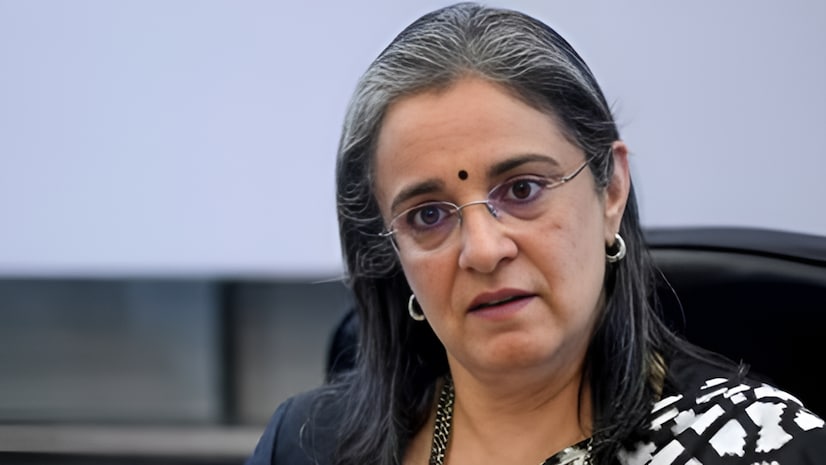
Mumbai (PTI): A special court here has directed the Anti-Corruption Bureau (ACB) to register an FIR against former Sebi chairperson Madhabi Puri Buch and five other officials in connection with alleged stock market fraud and regulatory violations.
"There is prima facie evidence of regulatory lapses and collusion, requiring a fair and impartial probe," the special ACB court judge, Shashikant Eknathrao Bangar, said in the order passed on Saturday.
The court order also noted that the allegations disclose a cognisable offence, necessitating an investigation.
The inaction by law enforcement (agencies) and the Securities and Exchange Board of India (SEBI) necessitates judicial intervention under the provisions of the CrPC (Criminal Procedure Code), it added.
Apart from Buch, the other officials against whom the court has ordered registration of the FIR are BSE’s Managing Director and Chief Executive Officer Sundararaman Ramamurthy, its then chairman and public interest director Pramod Agarwal and Sebi’s three whole time members Ashwani Bhatia, Ananth Narayan G and Kamlesh Chandra Varshney.
The court said it will monitor the probe, and sought a status report (of the case) within 30 days.
The complainant, a media reporter, had sought an investigation into the alleged offences committed by the proposed accused, involving largescale financial fraud, regulatory violations and corruption.
The allegations pertain to the fraudulent listing of a company on the stock exchange with the active connivance of regulatory authorities, particularly the Sebi, without compliance under the SEBI Act, 1992 and rules and regulations thereunder.
The complainant claimed that the SEBI officials failed in their statutory duty, facilitated market manipulation, and enabled corporate fraud by allowing the listing of a company that did not meet the prescribed norms.
Despite approaching the police station and regulatory bodies concerned on multiple occasions, no action has been taken by them, the complainant said.
The court, after considering the material on record, directed the ACB Worli, Mumbai Region, to register an FIR under relevant provisions of the IPC, Prevention of Corruption Act, SEBI Act, and other applicable laws.
India's first woman Sebi chief Buch, who faced conflict of interest allegations by the US-based short-seller Hindenburg and also political heat thereafter, completed her three-year tenure on Friday.
Although, Buch in her tenure made significant strides in areas like faster settlements in equities, enhanced FPI disclosures and increasing mutual fund penetration through Rs 250 SIP, the last year of her tenure saw heightened controversy, when she battled a series of allegations by Hindenburg and the Congress party, while simultaneously dealing with in-house employee protests against "toxic work culture".
In August last year, Buch faced pressure to resign after the Hindenburg Research accused her of having conflict of interest that prevented a thorough examination of manipulation and fraud claims at the Adani Group.
Hindenburg accused Madhabi Puri Buch and her husband Dhaval Buch of investing in offshore entities that were allegedly part of a fund structure in which Vinod Adani -- the elder brother of Adani group founder chairman Gautam Adani -- also had investments.
Buchs have denied the allegation, saying the investments were made before she joined the regulator and she had complied with all disclosure requirements.
Hindenburg recently announced shutting down its business.
Let the Truth be known. If you read VB and like VB, please be a VB Supporter and Help us deliver the Truth to one and all.
Sujit Nair raises concerns over speculation of DMK-AIADMK understanding to block TVK
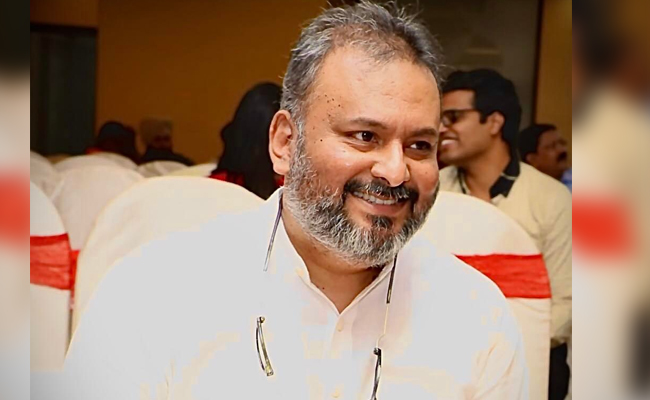
Chennai: Journalist and political commentator Sujit Nair has expressed concern over speculation that the Dravida Munnetra Kazhagam and the All India Anna Dravida Munnetra Kazhagam could explore a post-poll understanding to prevent Vijay-led Tamilaga Vettri Kazhagam from forming the government in Tamil Nadu.
In a social media post, Sujit Nair said the election verdict in Tamil Nadu reflected a clear public demand for political change and argued that the mandate should be respected irrespective of political preferences.
Referring to reports and political discussions surrounding a possible understanding between the DMK and AIADMK, he said he hoped such developments remained only speculative conversations and did not turn into reality.
Nair stated that if such an alliance were to take shape, it would raise serious questions about ideological politics in the country. He said TVK had emerged through a democratic electoral process and that the legitimacy to govern in a parliamentary democracy comes from the people’s verdict.
According to him, attempts to prevent an electoral winner from forming the government through unexpected political arrangements may be constitutionally valid, but many people could view them as politically opportunistic.
He further said that such a move could particularly affect the political image of the DMK, which has historically projected itself around ideology, social justice and opposition politics. Nair said that in ideological terms, the DMK appeared closer to TVK than to the AIADMK, and joining hands with its long-time political rival only to remain in power could weaken its broader political narrative.
He added that the same questions would apply to the AIADMK as well, as the party had spent decades positioning itself against the DMK and such an arrangement could create discomfort among its cadre and supporters.
Drawing a comparison with Maharashtra politics in 2019, Nair said he had expressed similar views when the Shiv Sena formed an alliance with the Indian National Congress and the Nationalist Congress Party after the Assembly elections.
He said post-poll alliances between long-standing political rivals often create a public perception that ideology and electoral mandates become secondary when political power equations come into play.
Nair also said such developments increase public cynicism towards politics and reinforce the belief among voters that ideology is often sidelined after elections.
He maintained that the Tamil Nadu verdict was emphatic and said respecting both the spirit and substance of the mandate was important for the credibility of democratic politics.