Stock markets snap 3-day decline; Sensex jumps 319 pts on gains in IT shares
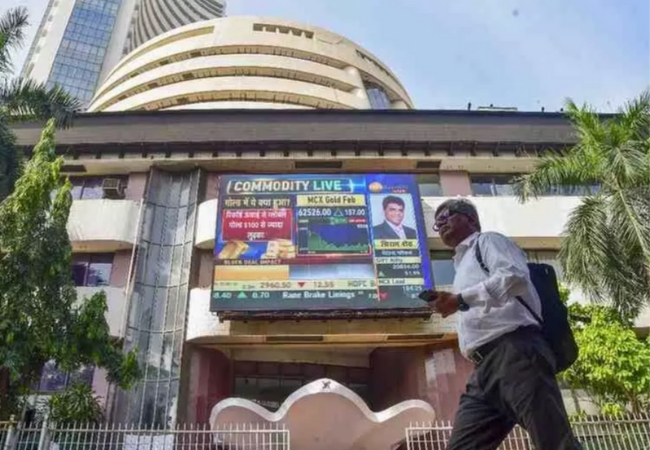
Mumbai (PTI): Benchmark stock indices Sensex and Nifty bounced back on Monday after three straight days of losses following buying in IT and financial shares and a rally in global peers after a breakthrough in the US government shutdown.
The 30-share BSE Sensex benchmark climbed 319.07 points, or 0.38 per cent, to close at 83,535.35. In the intraday session, the index rallied 538.21 points, or 0.64 per cent, to hit a high of 83,754.49.
The NSE Nifty advanced 82.05 points, or 0.32 per cent, to settle at 25,574.35. During the day, it climbed 161.15 points or 0.63 per cent to hit an intraday high of 25,653.45.
Among the Sensex firms, Infosys, HCL Technologies, Bajaj Finance, Asian Paints, Tata Motors Passenger Vehicles, Tata Consultancy Services, Bharti Airtel, Titan, Bajaj Finserv, Reliance Industries and Larsen & Toubro were the gainers.
Trent Ltd, Eternal, Power Grid, UltraTech Cement, Mahindra & Mahindra, Axis Bank, State Bank of India, Adani Ports, Hindustan Unilever and NTPC were the laggards.
"The potential resolution of the US government shutdown, coupled with renewed FIIs buying driven by a favourable Q2 earnings season, supported a positive sentiment in the market. The rise in the US 10-year Treasury yield reflects improving risk sentiment toward equities with the reopening of the federal government," Vinod Nair, Head of Research, Geojit Investments, said.
Domestically, strengthening macroeconomic indicators are expected to underpin upward revisions in earnings estimates for H2FY26. This reinforces the current valuations and is likely to attract incremental liquidity, Nair added.
The BSE midcap gauge went up by 0.62 per cent, while smallcap ended 0.28 per cent lower.
Focussed IT climbed 1.66 per cent, followed by information technology by 1.57 per cent, Teck by 1.43 per cent, Capital Goods by 1.24 per cent, Industrials by 0.66 per cent, Consumer Durables 0.62 per cent, Metal by 0.51 per cent and Energy by 0.36 per cent.
On the other hand, Utilities slipped by 0.36 per cent, Realty (0.29 per cent), Services(0.25 per cent), Consumer Discretionary (0.13 per cent), FMCG (0.11 per cent), and Telecommunication (0.09 per cent).
A total of 2,372 stocks declined while 1,962 advanced and 179 remained unchanged on the BSE.
"Sentiment improved as foreign investors turned buyers again after six days of selling. Global cues also supported the move, as progress toward avoiding a US government shutdown boosted investor confidence," Bajaj Broking Research said in a note.
In Asian markets, South Korea's Kospi closed 3.02 per cent higher, Hong Kong's Hang Seng rose 1.55 per cent, Japan's Nikkei 225 index went up 1.33 per cent, and Shanghai's Composite Index finished 0.53 per cent.
Markets in Europe were trading mostly higher. The US markets ended largely higher on Friday.
Foreign Institutional Investors (FIIs) bought equities worth Rs 4,581.34 crore on Friday, while Domestic Institutional Investors outnumbered the FIIs by acquiring the stocks worth Rs 6,674.77 crore, according to the exchange data.
On Friday, the 30-share BSE Sensex declined 94.73 points to settle at 83,216.28. The 50-share NSE Nifty dipped 17.40 points to 25,492.30.
Let the Truth be known. If you read VB and like VB, please be a VB Supporter and Help us deliver the Truth to one and all.
Lebanon appoints new representative for talks with Israel, rejects linkage to Iran
Beirut: Lebanon’s has moved to underline its independent position in ongoing regional developments, amid attempts to link the country to the broader conflict involving Iran, the United States and Israel.
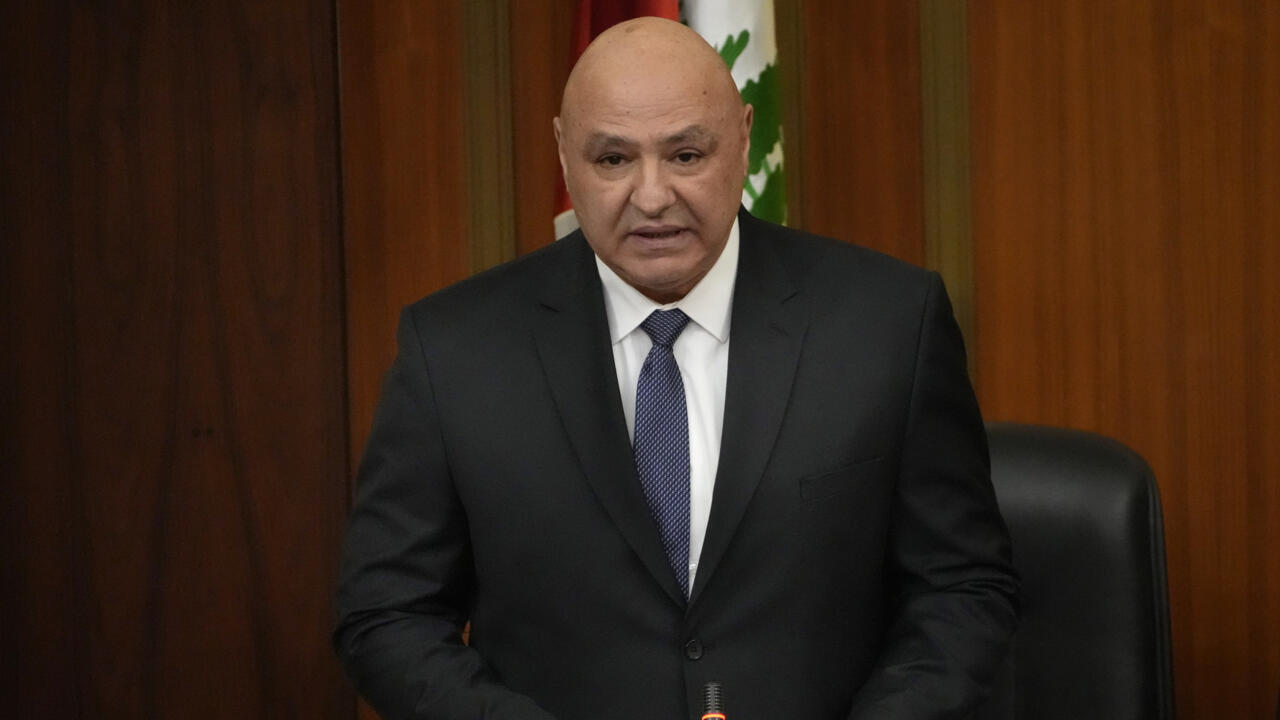
President Joseph Aoun, while announcing the appointment of former US ambassador Simon Karam as Lebanon’s representative in talks with Israel, made it clear that Karam would be the sole representative for Lebanon and that there would be no substitute.
The move comes in response to what the Lebanese officials see as efforts by Iran to tie Lebanon’s situation to the wider regional conflict. Iran had indicated that there would be no ceasefire involving the US, Israel and Iran unless it also included a ceasefire in Lebanon.
Some groups, including Hezbollah and its supporters, had expressed support for linking the situations, citing concerns that the Lebanese government has limited leverage in negotiations with Israel. Lebanon is not formally a party to the conflict, and its army is considered weak.
However, others, including Prime Minister Nawaf Salam, have opposed this approach. They view Iran’s stance as an attempt to influence Lebanon’s internal affairs and see it as undermining the country’s sovereignty.
Officials backing the government’s position say the move is aimed at reaffirming Lebanon’s sovereignty and ensuring that decisions about peace and ceasefire within the country are not dictated externally.
They also see it as a safeguard, so that any breakdown in talks between the US, Israel and Iran does not automatically lead to renewed conflict in Lebanon.