Stray dog attack on foreigners affects public safety, tourism, country's image: SC
_vb_40.jpeg)
New Delhi (PTI): The Supreme Court on Friday referred to a media report about a stray dog attack on a foreign national in Bengaluru and said such incidents have not only affected public safety and tourism but also the country's image globally.
A three-judge special bench comprising justices Vikram Nath, Sandeep Mehta and N V Anjaria referred to the incident in which a Welsh entrepreneur was bitten by a stray dog during a morning run.
"This incident underscores that the menace is neither confined to rural or densely populated localities nor limited to vulnerable citizens, but has assumed proportions that affect public safety, tourism, and the image of the country in the global perspective," the bench said.
The top court passed a slew of directions in a suo motu case concerning stray dog menace.
It said after Independence, despite significant advances in public health, India continues to report one of the world's highest statistics of rabies-related mortality.
The bench said recognising the need for a humane yet effective framework, the Centre, in exercise of its powers under the Prevention of Cruelty to Animals Act, 1960, promulgated the Animal Birth Control Rules.
"However, the implementation of these rules has been ineffective, to say the least, across jurisdictions and the persistence of stray dog population has continued to imperil public safety in many parts of the country," it said.
The bench said educational institutions, particularly schools and colleges with open campuses, have emerged as areas of recurring dog-bite incidents.
It said frequency of such incidents reflects deficiencies in institutional responsibility and municipal oversight concerning the safety of educational environments.
The bench said in hospitals and several tertiary-care centres, patients, attendants and staff have been attacked by packs of dogs residing within hospital compounds.
"Ironically, the very institutions entrusted with the treatment of dog-bite victims, have themselves become susceptible to the menace," it said.
The bench said the continuous inflow of dog-bite victims has strained medical resources, particularly the availability of anti-rabies vaccines and immunoglobulins, which are often in short supply.
It also took cognisance of numerous reported incidents of stray dog attacks at public transport hubs, including bus stands, depots and railway stations across several states.
The court noted that underlying causes of this menace are multifaceted, including uncontrolled reproduction of stray dogs owing to inadequate implementation of sterilisation programmes and improper disposal of food waste in and around public institutions.
"The menace of dog bites, particularly in public and private institutions that serve as spaces of learning, healing and recreation, thus constitutes not merely a public-health challenge but a matter of human safety concern," it said.
The bench said the State and its instrumentalities bear an affirmative obligation to ensure that no citizen, including children, elderly people and patients, are exposed to preventable injury or disease within public premises.
Taking note of the "alarming rise" in dog bite incidents within institutional areas like educational institutions, hospitals and railway stations, the apex court directed the forthwith relocation of stray canines to designated shelters after due sterilisation and vaccination.
It posted the matter for further hearing on January 13.
The apex court is hearing a suo motu case, initiated on July 28 over a media report on stray dog bites leading to rabies, particularly among children, in the national capital.
Let the Truth be known. If you read VB and like VB, please be a VB Supporter and Help us deliver the Truth to one and all.
Lebanon appoints new representative for talks with Israel, rejects linkage to Iran
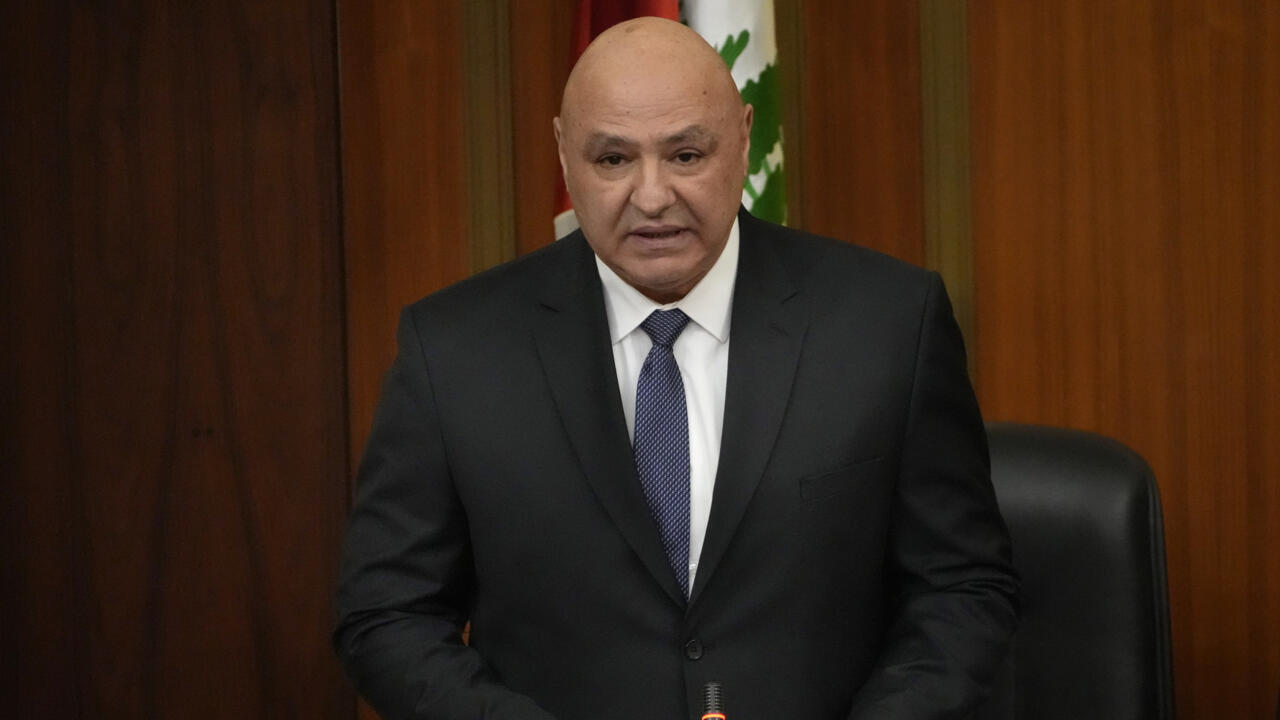
Beirut: Lebanon’s has moved to underline its independent position in ongoing regional developments, amid attempts to link the country to the broader conflict involving Iran, the United States and Israel.
President Joseph Aoun, while announcing the appointment of former US ambassador Simon Karam as Lebanon’s representative in talks with Israel, made it clear that Karam would be the sole representative for Lebanon and that there would be no substitute.
The move comes in response to what the Lebanese officials see as efforts by Iran to tie Lebanon’s situation to the wider regional conflict. Iran had indicated that there would be no ceasefire involving the US, Israel and Iran unless it also included a ceasefire in Lebanon.
Some groups, including Hezbollah and its supporters, had expressed support for linking the situations, citing concerns that the Lebanese government has limited leverage in negotiations with Israel. Lebanon is not formally a party to the conflict, and its army is considered weak.
However, others, including Prime Minister Nawaf Salam, have opposed this approach. They view Iran’s stance as an attempt to influence Lebanon’s internal affairs and see it as undermining the country’s sovereignty.
Officials backing the government’s position say the move is aimed at reaffirming Lebanon’s sovereignty and ensuring that decisions about peace and ceasefire within the country are not dictated externally.
They also see it as a safeguard, so that any breakdown in talks between the US, Israel and Iran does not automatically lead to renewed conflict in Lebanon.