Stray dogs case: No respect for court's order; chief secretaries to appear physically, says SC
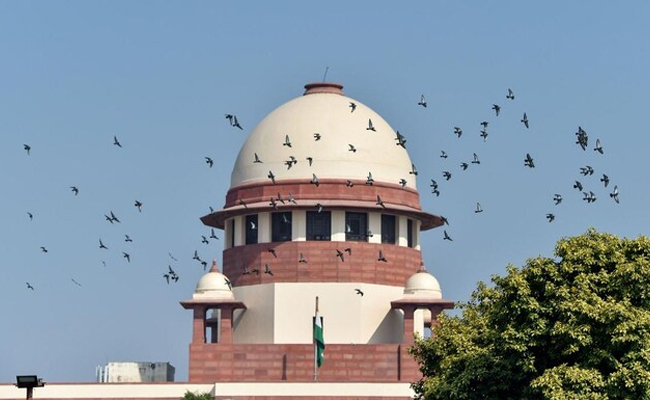
New Delhi (PTI): The Supreme Court on Friday refused to accept the request of Solicitor General Tushar Mehta that chief secretaries of states, except West Bengal and Telangana, be allowed to appear virtually before the court on November 3 in the stray dogs case.
Mehta mentioned the matter before a bench of Justices Vikram Nath and Sandeep Mehta, which made it clear that the chief secretaries will have to appear physically before the court on November 3.
"When we require them to come and file compliance affidavit, they are just sleeping over it. No respect for the order of the court. Then alright, Let them come," Justice Nath said.
Mehta urged the bench that instead of appearing physically, the chief secretaries be allowed to appear before the court virtually.
While hearing the stray dogs matter on October 27, the top court had directed the chief secretaries of all the states, except West Bengal and Telangana, to remain present before it on November 3 to explain why compliance affidavits were not filed despite the court's August 22 order.
On August 22, the apex court expanded the scope of the stray dogs case beyond the confines of Delhi-National Capital Region, and directed that all states and UTs be made parties in the matter.
It had directed the municipal authorities to file an affidavit of compliance with complete statistics of resources like dog pounds, veterinarians, dog-catching personnel, and specially-modified vehicles and cages available as on date for the purpose of compliance of the Animal Birth Control (ABC) Rules.
The bench had also impleaded the states and UTs in the matter while observing that application of ABC Rules was uniform all over India.
The apex court is hearing a suo motu case which was initiated on July 28 over a media report on stray dog bites leading to rabies, particularly among children, in the national capital.
Let the Truth be known. If you read VB and like VB, please be a VB Supporter and Help us deliver the Truth to one and all.
Annpurna Devi expresses anguish over girl's rape in TN, urges NCW to act
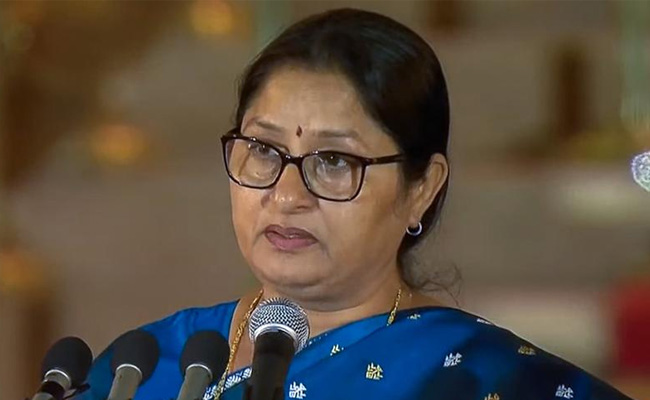
New Delhi (PTI): Union Minister for Women and Child Development Annpurna Devi on Tuesday expressed her anguish over the alleged gang rape of a girl in Tamil Nadu and urged the National Commission for Women to take immediate cognisance of the matter.
In a post on X, Devi said, "Deeply anguished by this horrific incident. I urge the NCW to take immediate cognisance and act swiftly in coordination with the concerned authorities to ensure the strictest action against all culprits."
Devi said, "Justice must be swift and unsparing — the accused must be brought to book without delay," adding, "the safety, dignity, and justice of every daughter of India remain our highest priority."
"We stand firmly with the survivor and her family in this difficult hour," she said.
Reacting to a post by former Tamil Nadu BJP president K Annamalai, who flagged concerns over the law and order situation in the state, Devi said such incidents "expose grave concerns" under the Dravida Munnetra Kazhagam government.
Annamalai, in his post, alleged that a 15-year-old girl from Kanchipuram, who had come to participate in a temple festival near Seyyaru in Tiruvannamalai district, was gangraped.
He said the incident was "deeply shocking and enraging" to him and alleged that such crimes point to a "complete failure" of law and order in Tamil Nadu.
Annamalai demanded immediate arrest of all those involved and the "harshest punishments" for the accused.
He also called for full protection and mental health counselling for the survivor and her family.