Stray dogs case: We will play video, ask you what is humanity, SC tells petitioner

New Delhi (PTI): Responding to a petitioner in the stray dogs case who objected to some rules framed by the Municipal Corporation of Delhi (MCD) saying "inhuman" treatment was being meted out to them, the Supreme Court on Thursday said a video will be played in the next hearing, "asking you what is humanity".
Senior advocate Kapil Sibal, who is appearing in the stray dogs case, told a bench of Justices Vikram Nath and Sandeep Mehta that a three-judge special bench which was scheduled to assemble on Thursday to hear the matter was cancelled.
"It will come on January 7," Justice Nath said.
Sibal said, "The problem is that the MCD, in the meantime, has framed some rules which are completely contrary.color:red;"
He urged the bench to hear the matter on Friday, saying authorities don't even have dog shelters. "It is very very inhuman what is being done," Sibal said.
Justice Mehta, in an apparent reference to the stray dog menace, said "On the next date, we will play a video for your benefit and we will ask you what is humanity," .
Sibal responded that they will also play a video to show what was happening.
"The problem is your lordships has passed an order and we respect that. But the point is, there are statutory rules," he said.
When the bench said it would consider the matter on January 7, Sibal said the authorities will implement the rules in December itself.
"They will be implementing it and they will be removing the dogs. They don't have shelters," he said.
Justice Nath said, "It is alright Mr Sibal. Let them do it, we will consider."
The bench said it would hear the matter on January 7.
On November 7, taking note of the "alarming rise" in dog bite incidents within institutional areas like educational institutions, hospitals and railway stations, the apex court directed the forthwith relocation of stray canines to designated shelters after due sterilisation and vaccination.
A three-judge special bench had also said the stray dogs so picked up shall not be released back in the place they were picked up from.
The bench had directed the authorities to ensure the removal of all cattle and other stray animals from state highways, national highways and expressways.
It had said recurrence of dog bite incidents within institutional areas, including sports complexes, reflected not only administrative apathy but also a "systemic failure" to secure these premises from preventable hazards.
The top court had passed a slew of directions in the suo motu case over the stray dog menace.
It is hearing a suo motu case, initiated on July 28 over a media report on stray dog bites leading to rabies, particularly among children, in the national capital.
Let the Truth be known. If you read VB and like VB, please be a VB Supporter and Help us deliver the Truth to one and all.
Maharashtra sets up state vaccination task force to strengthen immunisation programme
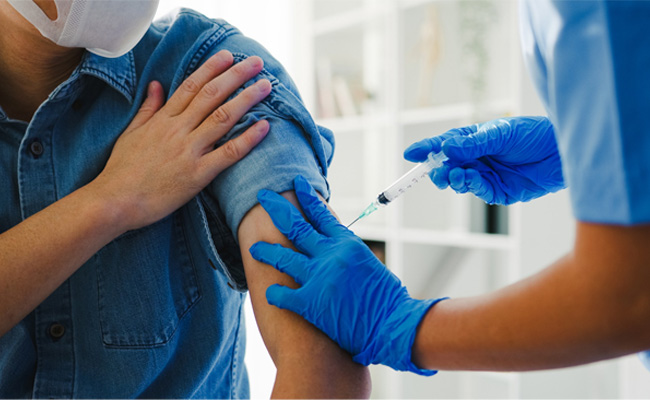
Mumbai (PTI): The Maharashtra government has set up a State Vaccination Task Force to strengthen the regular immunisation programme and review the progress of related campaigns, a health department official said on Monday.
The State Vaccination Task Force will comprise at least 29 members and will be headed by the administrative head of the health department, he informed.
The government has also constituted separate district-level and municipal vaccination task forces to improve implementation and address challenges at the grassroots level, he said.
Municipal task forces, chaired by respective civic commissioners, have been constituted in view of the vast urban population in Maharashtra and the role of civic bodies in implementing different health programmes.
The district-level task forces will function under the chairmanship of collectors.
"Complete immunisation of children at the appropriate age is an extremely simple, cost-effective and highly effective measure to reduce child mortality and the prevalence of diseases among kids. Immunisation is a powerful tool for reducing illness in children," maintained the official.
To ensure full vaccination of all children, the state government implements various campaigns from time to time as per the central government guidelines, he pointed out.
"Active participation and cooperation of other relevant government departments are essential (in making these campaigns successful)," according to the official.
The state-level body will review the regular immunisation programme, associated campaigns and vaccine-preventable diseases in detail. It will also conduct focused assessments of high-risk districts and municipal corporations, including vacancies at district, municipal and sub-district levels, availability of cold chain equipment, resource gaps and training requirements, he noted.
The state task force will review allocation and utilisation of funds for immunisation and ensure timely action by officers concerned based on reports from district and municipal task forces and state-level monitoring mechanisms, the official said.
It will also ensure active coordination and participation of other government departments in immunisation drives, while district and municipal task forces will carry out similar functions at their respective levels, the official added.