STT hike in F&O aimed at curbing speculative trade, protect small investors: Sitharaman
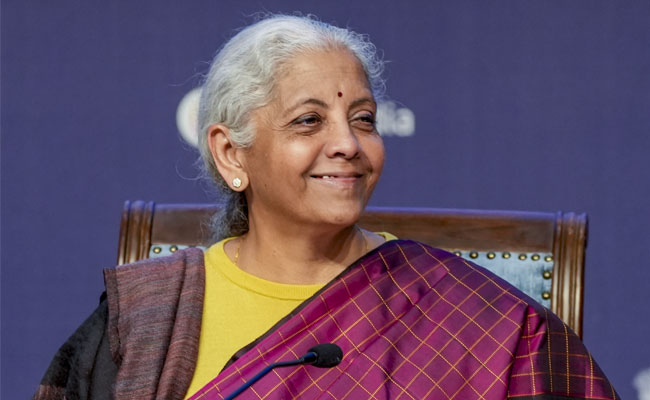
New Delhi (PTI): Finance Minister Nirmala Sitharaman on Sunday said the increase in STT in F&O is aimed at curbing high-risk speculative trade and discouraging gullible investors who were losing huge amounts of money in the derivatives market.
The Budget has proposed an increase in the Securities Transaction Tax (STT) on futures contracts to 0.05 per cent from 0.02 per cent.
STT on options premium and exercise of options are proposed to be raised to 0.15 per cent from the present rate of 0.1 per cent and 0.125 per cent, respectively.
Addressing a post-budget conference, Sitharaman said the government is not against derivative trade, but wants small investors, who are facing huge losses, to stay away from the speculative F&O market.
"This nominal increase is purely aimed at speculation, only to deter them, to discourage them. We are not against it (F&O trade), but small investors are facing losses, so how can we be quiet, so it (STT hike on F&O) is to deter such investments," Sitharaman said.
According to studies by Sebi, over 90 per cent of retail investors' trades in the F&O segment lead to losses, and the capital markets regulator has also taken steps to reduce volumes in the past.
Market regulator Sebi has also cautioned small and retail investors against trading in the F&O segment, underscoring the need for responsible investing.
Addressing questions on the intention behind the STT hike, Revenue Secretary Arvind Shrivastava said it has been done to discourage speculative tendencies and handle systemic risk in the derivatives market.
"The government's intention is to discourage speculative tendencies, and the increase in rate is essentially in that direction. So, it is meant to essentially handle the systemic risk in derivative markets," he added.
Shrivastava said even after this increase, the rates of STT will remain modest compared to the volume of the transactions that are happening.
The hike in STT is aimed squarely at high-volume derivative trading, rather than the cash equity market, and is expected to meaningfully increase transaction costs for active and short-term trading strategies.
Sitharaman further said the highest-ever capital expenditure of Rs 12.22 lakh crore announced for 2026-27 works out to be 4.4 per cent of GDP.
The capital expenditure for FY27 is 10 per cent higher than the Rs 11.11 lakh crore budgeted capex announced in FY26.
"We have announced that Rs 12.22 lakh crore is coming through public expenditure. This time it is 4.4 per cent of GDP, which is the highest at least in the last 10 years, it could even be the highest if you were to take data from earlier periods," Sitharaman said.
The capital expenditure was 2.5 per cent of GDP in 2021-22 and around 4 per cent of GDP in 2024-25. The government's capital expenditure was Rs 2.35 lakh crore in 2015-16.
She further said that the 4.3 per cent fiscal deficit target for FY27 is "realistic and responsible". The Budget has proposed to lower the fiscal deficit to 4.3 per cent in FY27, from 4.4 per cent in FY26.
Asked about the budget not making any big announcement for poll-bound states, Sitharaman said there are various announcements, including industrial corridors across the eastern and western parts of India. "So there is enough to cover election states and all other states," she said.
Let the Truth be known. If you read VB and like VB, please be a VB Supporter and Help us deliver the Truth to one and all.
AIITA welcomes Karnataka’s ban on obscene songs in school events
Bhatkal: The Karnataka unit of the All India Ideal Teachers Association (AIITA) has welcomed the Karnataka government’s decision to strictly ban school children from dancing to obscene songs during educational and cultural programmes in government, aided, and private schools across the state.
AIITA Karnataka State President M. R. Manvi congratulated the government for taking what he termed an important step to preserve the sanctity of education.
“Such decisions to safeguard the dignity of school children and uphold the values of education are the need of the hour. This rule should not be limited to government schools alone but must be strictly implemented in all private educational institutions as well,” he said.
He further urged the government to address other concerns within school programmes.
“The government should not only prohibit obscene dances in the name of school anniversaries, but also ensure that plays and dialogues that incite religious hatred are avoided. Schools should be centres of harmony, not platforms for spreading hatred,” he added.
According to a recent circular issued by the Department of School Education and Literacy, obscene dances are adversely affecting the mental health and moral values of students.
In this regard, schools have been advised to use songs that promote nationalism, positive thinking, the greatness of Kannada culture, and value-based traditions instead of inappropriate content during programmes.
The circular also emphasises that students should be dressed in decent attire.
AIITA also backed the department’s warning that disciplinary action would be taken against head teachers if such guidelines are violated. The association has further demanded that district Deputy Directors of Public Instruction strictly monitor the implementation of these rules.