Stubble burning, a major cause of Delhi air pollution, a solvable problem: Punit Renjen

Washington (PTI): Stubble burning, which is a major source of air pollution in the national capital region every winter, is a solvable problem, said Indian-American Punit Renjen, the Deputy Chair of German software firm SAP, based on the two pilot projects he has launched in Haryana and Punjab.
"It is very serious and there are multiple reasons for it. But stubble burning contributes about 25 per cent to 30 per cent of the air quality issues (in Delhi). There are 80,000 fire incidents in northern India, particularly in Punjab, Haryana, and Uttar Pradesh. About 13 million tonnes of stubble is burned and 19 million tonnes of carbon dioxide and other harmful gases are put into the atmosphere," Punit Renjen told PTI.
The top Indian American CEO, who has made part of his mission to help fight air pollution in the national capital region, said 15 million adjusted life years is equivalent to 2 lakh people dying each year as a result of stubble burning.
"There's USD 300 million of lost revenue," who is also the Global CEO Emeritus of Deloitte, said.
"It's a big issue impacting the air quality in northern India, Delhi and elsewhere. And it can be addressed. And this is the issue. It is a solvable problem," he said.
Renjen said for the last two years he has been working collaboratively with the government of Haryana and has mitigated stubble burning.
"This year we are working in 660 villages in nine districts that comprise 91 per cent of active fires in Haryana, 58 per cent reduction in fire incidents. So, it is a solvable problem. We're also working in one district in Punjab -- in Patiala district -- to try and demonstrate that our programme can address this issue," he said.
A collaborative effort between business and government, the programme has five elements, Renjen noted.
"The first is engagement and communication with the farmers. The second is leveraging technology. We've developed an app, the Krishi Yantra Sathi, which connects farmers with equipment providers, with end users," he said, adding that the app is almost like ordering an Uber.
"But it orchestrates, if you will, linking the farmers with the providers of equipment and the end users of the stubble. Now here's the issue. There is a very short window that the farmers have in between when they harvest the paddy crop and when they have to plant the winter crop. And the easiest answer is the 1 cent match that lights the stubble on fire, but it is absolutely destructive," he said.
"The third is orchestration. We are orchestrating this whole programme. The fourth is an ecosystem that we've developed between equipment manufacturers, and end users, so the equipment like Baylors, supersedes end users, like the bioenergy plants, and gaushalas. And then the fifth and final is to leverage the government and business," he explained.
"The prime minister has a Fasal Bima Yojana programme. Other programmes like this provide incentives to farmers so that they don't burn the stubble," he said.
"We are asking businesses to provide Corporate Social Responsibility (CSR) funds so that we can then put the effort into getting this orchestrated. It is a solvable problem. It can be solved. It requires the collective will of all of us, the farmers, the government, businesses, and individuals to make this happen," Renjen said.
In the first year, the project started in the Karnal district of Haryana where the fire incidents were reduced by 65 per cent.
This year it was expanded to 660 villages in nine districts, which accounts for 91 per cent of active fires in Haryana.
"It has been an excellent response. One and a half lakh farmers have requested through the app. More than 3,900 equipment owners have been registered on the app. About 37 per cent of farmers have submitted booking requests, with 44 per cent being small and marginal farmers. It is a clearance of close to 1.7 lakh acres of stubble. It has been a remarkable response, but of course, we need to do more because 58 per cent is excellent, but we need to get to a hundred per cent," he explained.
Encouraged by the success of the Haryana project, Renjen said it has been expanded to the Patiala district of Punjab and there are plans to launch it in Uttar Pradesh as well. "My hope is that in 2024, we can do all of Punjab and we can do all of Haryana."
"I have put in USD 10 million of our money, of private money into this. Other entities, other companies like SAP and others are stepping up and providing CSR dollars," he said.
There are other reasons for air pollution in northern India, but stubble burning constitutes 25-30 per cent of it which is a big chunk. "If we can address it, we can solve it," he said.
Let the Truth be known. If you read VB and like VB, please be a VB Supporter and Help us deliver the Truth to one and all.
Man kills 12-year-old nephew over property dispute in Karnataka’s Sindhanur
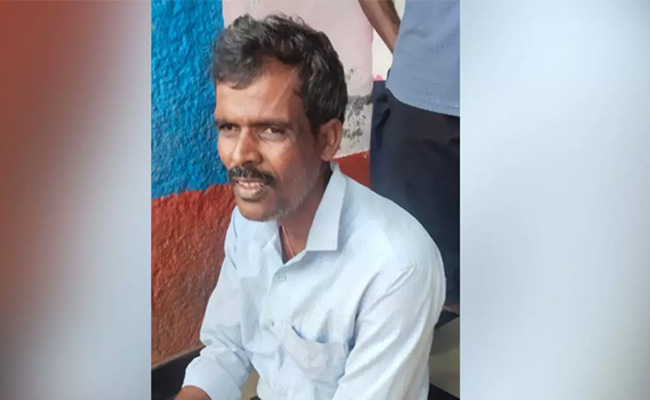
Sindhanur: A 12-year-old boy was killed and his mother seriously injured after a man allegedly attacked his elder brother’s family with a knife over a property dispute in Alabanur village of Sindhanur taluk on Wednesday morning.
The deceased has been identified as Nagaraj Siddappa Alvi (12). Amrutha Siddappa (42) sustained serious injuries in the attack. Police said the accused is Basavaraj Rudrappa Alvi, the younger brother of the victim boy’s father.
According to preliminary information, Basavaraj had arrived in Alabanur village on Tuesday and was staying at his mother’s house.
On Wednesday morning, he allegedly went to the house of his brother Siddappa carrying a knife. At the time, Siddappa’s wife Amrutha and children Nagaraj and Dhanush were present in the house.
Police said the accused allegedly attacked them with the knife. Nagaraj died in the incident, while Amrutha and Dhanush suffered serious injuries.
The injured were shifted to the government hospital in the city for treatment.
Deputy Superintendent of Police G. Chandrashekhar visited the spot and gathered information.
Sources said Chinnamma Rudrappa of Alabanur village has two sons Siddappa, who lives in Alabanur, and Basavaraj, who resides in Alliganur village of Siruguppa taluk.
Police suspect the long-standing property dispute between the two brothers led to the fatal attack.