Students, staff from containment zones not allowed at exam centres: Health Ministry SOPs
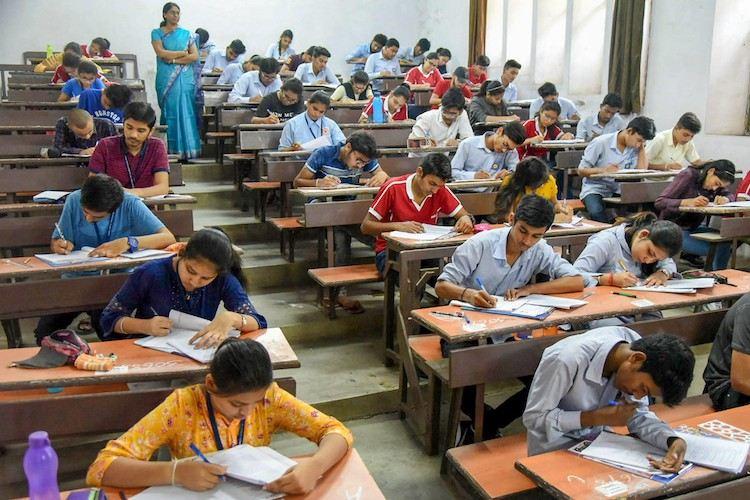
New Delhi: Staff and examinees from containment zones shall not be permitted to be physically present at exam centres and there will be alternative arrangements for such students, as per the Union Health Ministry's latest guidelines on conducting tests during the COVID-19 pandemic.
Such students shall be given an opportunity to take the exam through other means or educational institutions shall arrange their papers at a later date, according to the Standard Operating Procedures (SOPs) issued Wednesday.
Also, only asymptomatic staff and students shall be allowed inside the examination hall, the SOPs stated, adding wearing face cover/mask is mandatory.
The face cover or mask has to be worn at all times inside the examination center by all, it underlined.
Authorities concerned should plan out the examination schedule in a staggered manner so as to avoid overcrowding at any examination center on any day, the SOPs stated.
Examination centers in containment zones shall not be allowed to function, it said.
Appropriate arrangements for face covers/masks, hand-sanitiser, soap, sodium hypochlorite solution etc. shall be made available by universities, educational institutions, examination conducting authorities or examination centers to the staff as well as students, it said.
"Exam functionary and examinees may also submit self-declaration about health status at the time of entrance to the examination center. Such self-declaration form may be circulated at the time of issue of admit tickets," the guidelines said.
If any examination functionary/examinee fails to meet the self-declaration criteria, they shall not be allowed entry, the SOPs underlined.
For pen and paper-based tests, the SOPs outline that the invigilator will sanitise his/her hands prior to the distribution of question papers/answer sheets and the examinees will also sanitise their hands before receiving or handing back these materials.
The collection and packing of the answer sheets at every stage will involve sanitization of the hands. The answer sheets will preferably be opened up after 72 hours have elapsed post collection of papers, the guidelines recommended.
"Use of spit/saliva for counting and distributing sheets shall not be allowed," the SOPs stated.
For online or computer-based examination, the systems shall be disinfected using alcohol wipes before and after conduct of examination and record of all exam functionaries and examinees should be maintained in the system for future reference and traceability, the guidelines underlined.
Entrances of examination centres should have mandatory hand hygiene and thermal screening provisions, it said.
Let the Truth be known. If you read VB and like VB, please be a VB Supporter and Help us deliver the Truth to one and all.
SC asks Centre to consider amending law on terminating pregnancy of rape survivors
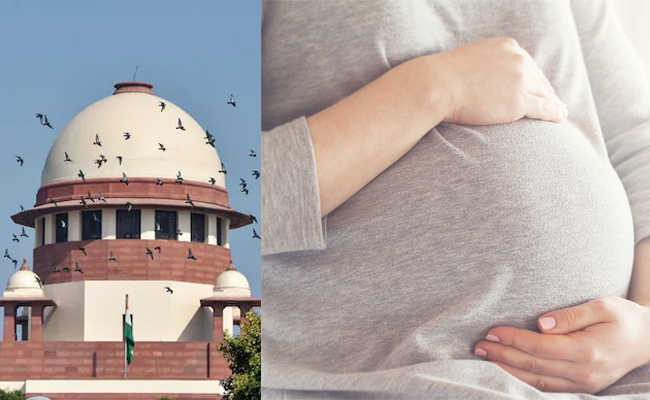
New Delhi (PTI): The Supreme Court on Thursday took strong exception to a plea by AIIMS seeking to set aside its order allowing a 15-year-old girl to medically terminate her 30-week pregnancy, and asked the Centre to consider amending the law to permit rape survivors to terminate unwanted pregnancies even beyond 20 weeks.
The top court said when there is pregnancy due to rape, there should not be a time limit.
Law needs to be organic and in sync with evolving time, it stressed.
A bench of Chief Justice Surya Kant and Justice Joymalya Bagchi said this is a case of child rape and the survivor will have a lifelong scar and trauma if termination is not allowed.
The top court said if the mother does not have permanent disability then it should be carried out.
ALSO READ: Chlorine gas leaks at defunct water purification plant in Pune; 24 persons hospitalised
It asked AIIMS to counsel parents of the survivor over the issue and said the decision has to be of the person concerned.
"There are children for adoption. In this country we have lot of sympathies...There are deserted, abandoned children on the streets and even mafias on it. We have to look at them. This is an unwanted pregnancy of a 15-year-old child.
"This is a curative petition. Unwanted pregnancy cannot be thrusted on a person. Imagine she is a child. She should be studying now. But we want to make her a mother. Imagine the pain, the humiliation the child has suffered in this," the bench said.
Additional Solicitor General Aishwarya Bhati, appearing for AIIMS, mentioned the curative plea, and said the termination of pregnancy is not possible.
"It will be a live baby with severe deformities. Minor mother will have lifelong health issues and cannot reproduce. Minor mother will have lifelong health issues. This child can be given for adoption. It has been 30 weeks now. It is a viable life now," she said.
The top court said the decision on termination has to choice of the survivor and her parents and AIIMS may help them take an informed decision.
On April 24, a bench of Justices B V Nagarathna and Ujjal Bhuyan had allowed the girl to medically terminate her pregnancy of 30 weeks.