Students with four-year undergraduate degree can directly pursue PhD programs: UGC chairman
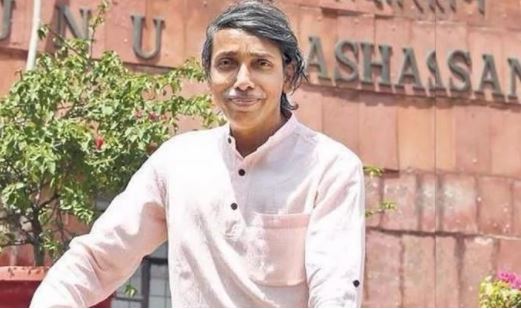
New Delhi, Dec 14: Three-year undergraduate courses will not be discontinued till the four-year undergraduate programme is fully implemented, University Grants Commission Chairman M Jagadesh Kumar said.
The new credit and curriculum framework for undergraduate courses was announced earlier this week and it defines Honours degree courses as a four-year programme.
However, Kumar clarified that universities can choose between the three and four year programmes. "It is left to the universities," he said in an interview with PTI on Wednesday.
He was asked whether it is mandatory for universities to migrate to the four-year pattern for Honours degrees.
The University Grants Commission (UGC) chairman also said candidates with four-year undergraduate degrees can directly pursue Ph.D and they will not require a Master's degree.
Describing the benefits of the four-year undergraduate programme (FYUP), Kumar said, "The first advantage is that they do not have to do a Master's degree to join a Ph.D programme. They can also take a single or double major to gain a deeper knowledge of a given discipline."
"Since multidisciplinary courses, ability enhancement courses, skill enhancement courses, value-added courses, and internships are embedded in the FYUP, it will enhance the opportunities for students to take up employment or go for higher studies," he said.
The UGC on Monday notified the curriculum and credit framework for undergraduate programmes which will provide students with multiple options for entry and exit, a choice between single major and double major and interdisciplinary choices of subjects.
The framework has been developed by revising the existing Choice Based Credit System.
Under the programme, students will only be able to pursue a four-year honours degree rather than a three-year course like the present. Honours degrees will also be offered in two categories -- honours and honours with research.
Let the Truth be known. If you read VB and like VB, please be a VB Supporter and Help us deliver the Truth to one and all.
NIA court to complete framing of charges against 2010 hand-chopping case accused on May 15
Kochi (PTI): A special court here will complete proceedings for framing charges against the prime accused in the 2010 hand-chopping case involving professor T J Joseph, in which PFI activists were accused of attacking him at Muvattupuzha.
Ernakulam Special Court for NIA cases judge P K Mohandas, on April 30, heard the arguments of counsel for accused Savad and Shafeer C and decided to proceed with framing charges against the duo.
A group chopped off Thodupuzha Newman College professor Joseph's right hand in July 2010, accusing him of religious blasphemy in a question paper he had prepared.
The case, later taken over by the National Investigation Agency (NIA), resulted in the conviction of 19 accused.
The first accused, Savad, who allegedly chopped off Joseph’s palm, was arrested in Berram in Mattannur, Kannur, in January 2024, where he had allegedly been hiding under the pseudonym Shajahan.
The NIA also arrested Shafeer, who allegedly arranged shelter and provided logistical support to Savad at Chakkad and Mattannur in Kannur since 2020.
On April 30, the court heard the counsel for the accused and the NIA prosecutor on framing charges against the duo.
"On going through the documents and evidence in the case and on hearing the counsel for the accused and the prosecutor, I am of the opinion that there are grounds for presuming that the first accused has committed offences punishable under provisions of the IPC, the Explosive Substances Act and the Unlawful Activities (Prevention) Act, and that the second accused has committed offences punishable under the IPC and the UAPA, and there are materials for framing charges under these provisions against the accused," the court said.
The court directed that Savad be produced and Shafeer, who is on bail, appear before it on May 15 for recording their pleas as part of the charge-framing process.
After framing the charges, the court will schedule the trial in the case.