Subsidised LPG price cut by Rs 5.91; non-subsidised rate reduced by Rs 120.50
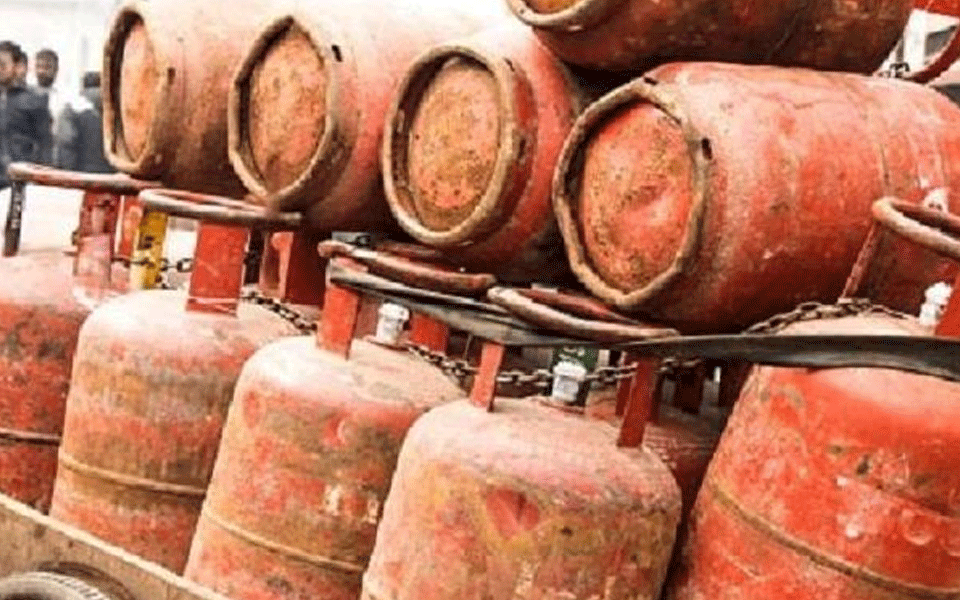
New Delhi, Dec 31: Domestic cooking gas (LPG) price was cut by Rs 5.91 per cylinder Monday, the second straight reduction in a month's time due to tax impact on reduced market rate of the fuel.
A 14.2-kg subsidised LPG cylinder will cost Rs 494.99 in the national capital from midnight tonight as against Rs 500.90 currently, Indian Oil Corp (IOC), the country's largest fuel retailer, said in a statement.
This is the second straight monthly reduction in LPG rate. On December 1, subsidised LPG price was cut by Rs 6.52 per bottle.
That price cut had come after six consecutive monthly hikes in rates since June. The two price reductions have mostly negated the Rs 14.13 per cylinder increase in rates between June and November.
IOC said non-subsidised or market priced LPG rates have been cut by a steep Rs 120.50 per cylinder "due to fall in price of LPG in international market and strengthening of US dollar-rupee exchange rate."
It will now cost Rs 689 per 14.2-kg cylinder in Delhi.
On December 1, price of non-subsidised LPG was cut by Rs 133 per bottle.
All LPG consumers have to buy the fuel at market price. The government, however, subsidises 12 cylinders of 14.2-kg each per households in a year by providing the subsidy amount directly in bank accounts of users.
This subsidy amount varies from month to month depending on the changes in the average international benchmark LPG rate and foreign exchange rate.
When international rates move up, the government provides a higher subsidy. And when they come down, subsidy is cut.
As per tax rules, GST on LPG has to be calculated at the market rate of the fuel. The government may choose to subsidise a part of the price but tax will have to be paid at market rates.
So, with the fall in market price or non-subsidised LPG price, the tax incidence on subsidised cooking fuel has also come down, leading to the current price reduction.
"Accordingly, the upfront cash payment by the consumer of domestic LPG will also reduce by Rs 120.50 per cylinder. Domestic LPG consumer will now be required to make upfront cash payment of Rs 689 a cylinder in place of Rs 809.50 per cylinder," IOC said.
Subsidised cooking gas consumers will get Rs 194.01 per cylinder subsidy in their bank accounts for the month of January. The subsidy transfer in the customer's bank account has been reduced from Rs 433.66 in November and Rs 308.60 in December.
Let the Truth be known. If you read VB and like VB, please be a VB Supporter and Help us deliver the Truth to one and all.
AIITA welcomes Karnataka’s ban on obscene songs in school events
Bhatkal: The Karnataka unit of the All India Ideal Teachers Association (AIITA) has welcomed the Karnataka government’s decision to strictly ban school children from dancing to obscene songs during educational and cultural programmes in government, aided, and private schools across the state.
AIITA Karnataka State President M. R. Manvi congratulated the government for taking what he termed an important step to preserve the sanctity of education.
“Such decisions to safeguard the dignity of school children and uphold the values of education are the need of the hour. This rule should not be limited to government schools alone but must be strictly implemented in all private educational institutions as well,” he said.
He further urged the government to address other concerns within school programmes.
“The government should not only prohibit obscene dances in the name of school anniversaries, but also ensure that plays and dialogues that incite religious hatred are avoided. Schools should be centres of harmony, not platforms for spreading hatred,” he added.
According to a recent circular issued by the Department of School Education and Literacy, obscene dances are adversely affecting the mental health and moral values of students.
In this regard, schools have been advised to use songs that promote nationalism, positive thinking, the greatness of Kannada culture, and value-based traditions instead of inappropriate content during programmes.
The circular also emphasises that students should be dressed in decent attire.
AIITA also backed the department’s warning that disciplinary action would be taken against head teachers if such guidelines are violated. The association has further demanded that district Deputy Directors of Public Instruction strictly monitor the implementation of these rules.