Sukhoi fighter jet engages aircraft arrester barrier on landing at Pune airport; probe on
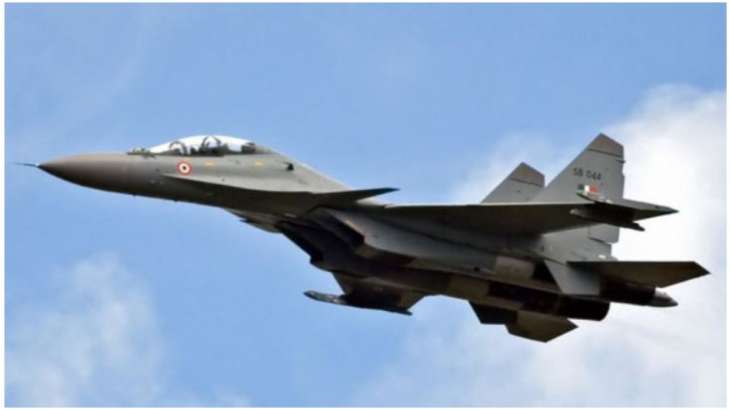
Pune, Mar 20: A Sukhoi-30 MKI fighter jet of the Indian Air Force had to engage an arrester barrier to stop the aircraft because of inadequate deceleration experienced by the pilots due to a technical snag on Monday, said the IAF.
The incident, which basically involved the use of a speed control technique, took place in the morning at the Air Force Station in Lohegaon in Pune after a routine training sortie, and a probe has been ordered.
Wing Commander Ashish Moghe, IAF Public Relations Officer (PRO), said, "Today, a Su-30 MKI of the Indian Air Force engaged the aircraft arrester barrier at the Air Force Station, Pune. The event occurred after a routine training sortie, following inadequate deceleration experienced by the pilots, on the landing roll due to a technical snag. Engaging of an arrester barrier gear is a planned activity for stopping of a fighter aircraft."
The runway, which was closed for sometime, was made operational again, he said, adding a probe has been ordered into the incident.
The Pune international airport is a civil enclave operating from the IAF station at Lohegaon. It is a base for the IAF's frontline Sukhoi aircraft.
Let the Truth be known. If you read VB and like VB, please be a VB Supporter and Help us deliver the Truth to one and all.
SC asks states, UTs to prepare action plan to implement guidelines for intensive care services
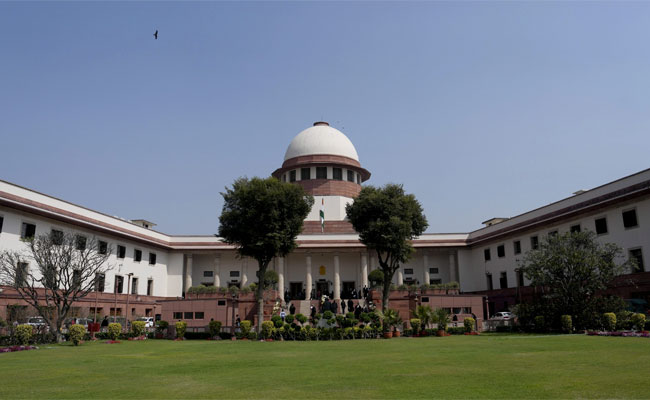
New Delhi (PTI): The Supreme Court has asked all the states and Union Territories to prepare a "realistic and practical" action plan to implement the guidelines necessary as a minimum standard for intensive care units.
The apex court was informed that "Guidelines for Organisation and Delivery of Intensive Care Services", on which there is consensus and which is practical, implementable and necessary as a minimum standard for an ICU, has been prepared.
A bench of Justices Ahsanuddin Amanullah and R Mahadevan said copies of the guidelines should be shared with all the states and UTs.
"Moving further, as an immediate measure, let all the additional chief secretaries/secretaries ... heading the department of health and medical education in the states and the UTs, convene a meeting of all experts involved in this exercise to prepare an action plan for implementation of the guidelines. Such a plan shall be realistic and practical," the bench said in its April 20 order.
The top court was hearing a matter relating to healthcare services, including guidelines for the treatment of patients in the ICU or critical care unit.
The bench said five basic issues shall be identified and prioritised in the first instance.
"The challenge ... lies in determining what ought to be treated as absolutely essential and mandatory; accordingly, an initial list of five basic requirements, in terms of priority, relating to both manpower and equipment/logistics, shall be prepared," it said.
It said a methodology should also be formulated for implementation on the ground, and more importantly, a mechanism to ensure compliance and monitoring of the implementation.
"We expect the exercise to commence immediately and the first meeting to be held within one week from today. We direct that the meeting shall be attended personally by the concerned additional chief secretary/secretary ... heading the department of health and medical education in the states and the UTs," the bench said.
It said the report prepared pursuant to the deliberations should be forwarded by the respective states and UTs to the Secretary of the Department of Health, Government of India, who in turn would circulate it to all the states and UTs.
The bench said thereafter, a meeting of all concerned should be convened where a final common agreed draft shall be prepared and circulated.
"A final report/blueprint/recommendation shall be prepared, which shall be placed before this court on the next date," it said, adding that the entire exercise should be completed within three weeks.
"Let the Ministry of Health, Government of India, formally issue the guidelines placed before us today, to the states and UTs concerned by way of an advisory. A copy of it shall also be uploaded on the website of the Ministry of Health, Government of India," the bench said, while posting the matter for further hearing on May 18.
During the hearing, it was suggested that for future requirements, the nursing staff should be trained to handle such situations since they remain with the patient round the clock, unlike doctors who may visit periodically.
"We fully endorse the suggestion, which is not only pragmatic but also imperative. Accordingly, the Indian Nursing Council and the Para Medical Council of India are impleaded as party respondents," the bench said.
It said on the next date, the newly added respondents shall come up with a plan indicating how they propose to augment the courses or curriculum and training imparted by them so that persons emerging from institutions recognised by them are capable of managing and handling situations in the ICUs.