Sunil Mittal exposes AI scam, says “my voice was perfectly articulated” in cloning attempt
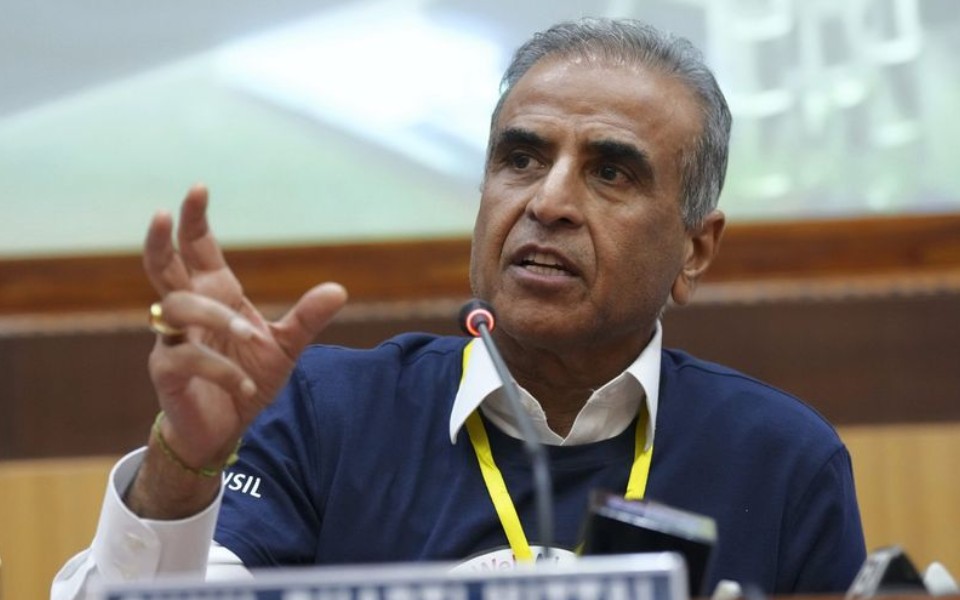
New Delhi, Oct 21: Scammers often use AI voice clones to con commoners to transfer money or disclose financial information but it's rare when they try to impersonate a billionaire. This is exactly what scammers tried to do by cloning telecom czar Sunil Bharti Mittal's voice to scam his executive in Dubai to transfer money.
Fortunately, the executive was smart enough to realise Mittal won't ask for such a huge money transfer and the scam was stopped in its tracks.
On Monday, speaking at the NDTV World Summit, Mittal cited the incident to caution people about the risks posed by misuse of emerging technologies like AI.
Mittal recounted how the said executive stationed in Dubai received a fraudulent call that seemed to mimic his voice and tone and directed that a large fund transfer be done.
The official who was vigilant and "sensible" immediately realised it was a scam, Mittal said admitting that when he heard the voice recording himself he was completely "stunned" as "it was perfectly articulated just as I would speak".
"And anyone who would not have been vigilant may have done something about it," Mittal said and warned that in future misuse of technology would enable fraudsters to go a step ahead and misuse digital signatures, even replicate faces on zoom calls to perpetrate such acts.
"We'll have to protect our societies from the evils of AI, and yet we have to use the goodness of AI, because those companies, and nations that will not adopt AI will be left behind. So this is a conundrum for every time you get a new technology into place, there are pluses and minuses. I remain very optimistic about the benefit of AI that the human race will achieve and be able to do jobs which are otherwise very difficult to perform," Mittal said.
It is pertinent to mention here that advent of tech era, powered by AI and digital tools, has armed economies and businesses with transformative powers. That said, it is also being misused blatantly by online scammers and fraudsters to dupe unsuspecting public.
There are umpteen instances of fraudsters nudging victims to click on malicious links, or using deepfakes and voice cloning for scams.
The sophisticated web of AI-powered deceit makes it harder to spot online scams, and fraudsters have been known to clone and mimic a person’s voice from even short audio clips nicked from video a person may have uploaded online.
Scammers then leverage the AI-cloned voice to pose as the person and demand money from friends and family.
At the same time, scammers are also using 'digital arrest' modus operandi, where they place audio or video calls, falsely pose as law enforcement officers, and use online intimidation to confine victims to their homes for extortion.
These elaborate and sophisticated scams involve cybercriminals using fake documents, replicating virtual courtroom or police stations as a backdrop, to place victims under 'digital arrest'.
Recently, SP Oswal, chairman and managing director of Vardhman Group was defrauded of Rs 7 crore by a gang which posed as officials from various government agencies.
Let the Truth be known. If you read VB and like VB, please be a VB Supporter and Help us deliver the Truth to one and all.
FIR filed after e-commerce platform linked tech firm alleges SMS spoofing fraud

Bengaluru (PTI): An FIR has been registered against unknown people for allegedly sending fraudulent messages in the name of an e-commerce platform with promises of cash rewards, further disrupting its operations, police said on Wednesday.
The offence is said to have taken place between April 23 and April 27, they said.
A representative of city-based technology company Hiveloop Technology Pvt Ltd (HTPL), part of the Udaan group (eB2B platform), has lodged a complaint alleging a large-scale SMS spoofing fraud following which a detailed investigation has been initiated into the matter, a senior police officer said.
According to the FIR, HTPL is a registered entity on the TRAI-mandated DLT platform, which permits only pre-approved SMS templates and whitelisted URLs to be sent through authorised sender IDs.
The issue came to light on April 23, when HTPL received alerts from buyers about fraudulent SMS messages appearing to originate from the company's sender ID "UDAANN". The messages reportedly contained Bitly links and falsely claimed a credit of Rs 10,001, urging recipients to withdraw money, it said.
On April 27, at around 12:49 pm, the DLT platform blacklisted HTPL's SMS templates, citing their alleged use in sending fraudulent messages. Within minutes, the company's sender ID was also blacklisted. Airtel's DLT system subsequently confirmed the action and shared details of the fraudulent messages that were circulated in HTPL's name without its knowledge or consent, the FIR stated.
Following this, the company's messaging operations were affected, and even legitimate communications such as one-time passwords to buyers began failing. Later, the DLT operator suspended HTPL's entire account following complaints raised on TRAI's Chakshu platform, bringing all SMS services of the company to a halt, it further stated.
HTPL has stated that neither it nor its authorised vendors sent the fraudulent messages. The links embedded in the messages reportedly redirected users to an online betting website, the FIR stated.
The company has claimed that the incident has resulted in a complete breakdown of SMS-based services, including buyer authentication, order updates and promotional communication, leading to significant financial losses.
At least 13 victims have been identified so far, with the possibility of more affected users. Victims were allegedly directed to an online betting platform, raising concerns of potential financial fraud, the FIR added.