Supreme Court directs RBI to disclose information on bank inspection report under RTI
New Delhi: The Supreme Court Friday directed the Reserve Bank of India (RBI) to disclose information pertaining to its annual inspection report of banks under the Right to Information (RTI) Act unless they are exempted under law.
A bench headed by Justice L Nageswara Rao also directed the federal bank to review its policy to disclose information relating to banks under RTI, saying "it is duty bound under the law".
The bench, which did not go ahead with contempt proceedings against the RBI, made it clear that it was giving a last opportunity to it to comply with provisions of the transparency law.
The bench said it would have taken a serious view to the refusal of RBI to part with information under RTI. "Any further violation shall be viewed seriously," the bench said.
In January this year, the top court had issued contempt notice to RBI for not disclosing annual inspection report of banks under RTI.
Earlier, the apex court and the Central Information Commission, both had held that the RBI cannot deny information to an information seeker under the transparency law unless the material is exempted from disclosure under the law.
The RBI, in its defence, had said that it cannot disclose information as the annual inspection report of the bank contained "fiduciary" information as defined under the transparency law.
The bench was hearing a contempt petition filed by RTI activist S C Agrawal against the RBI.
Let the Truth be known. If you read VB and like VB, please be a VB Supporter and Help us deliver the Truth to one and all.
Oath-taking ceremony of first BJP govt in Bengal on May 9; Modi, Shah likely to attend
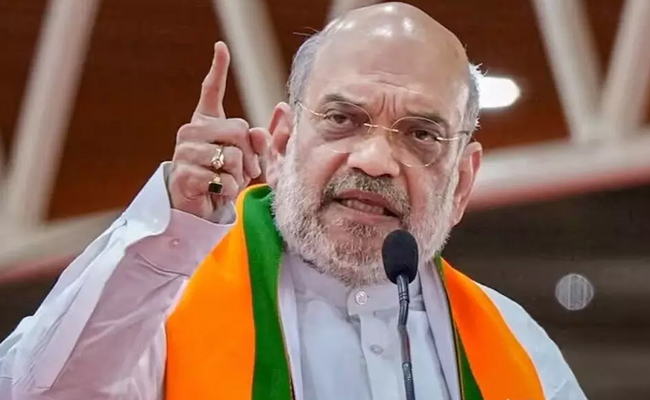
Kolkata (PTI): The oath-taking ceremony of the first BJP government in West Bengal will be held at Brigade Parade Ground here on May 9, marking the saffron camp’s arrival in power in a state after decades on the political fringes.
The ceremony, scheduled to begin at 10 am, is expected to witness the presence of Prime Minister Narendra Modi, Union Home Minister Amit Shah, BJP president Nitin Nabin, several Union ministers and chief ministers of BJP- and NDA-ruled states, party sources said.
“The new BJP government will take oath on May 9 at 10 am at Brigade Parade Ground,” state BJP president Samik Bhattacharya announced on Wednesday.
Even as the BJP leadership kept its cards close to the chest on the chief ministerial face, Leader of the Opposition Suvendu Adhikari has emerged as a frontrunner in internal discussions after cementing his position as the party’s principal mass leader in Bengal politics.
Adhikari, once among Mamata Banerjee’s closest lieutenants and a key architect of the TMC’s rural expansion in districts such as Purba Medinipur, crossed over to the BJP ahead of the 2021 assembly elections and went on to defeat Banerjee in Nandigram in one of Bengal’s fiercest political battles.
Five years later, he again found himself at the centre of Bengal’s political churn by beating Banerjee in her own turf at Bhabanipur by over 15,000 votes.
Other names for the CM post doing the rounds include Bhattacharya, Union minister Sukanta Majumdar and former Rajya Sabha MP Swapan Dasgupta, though party insiders indicated that the leadership was inclined towards projecting a “bhumiputra” face rooted in Bengal’s linguistic and cultural ethos.
During the campaign, Shah repeatedly asserted that the BJP’s chief minister in Bengal would be a “son of the soil”, born and educated in the state, in an attempt to blunt the TMC’s sustained attack that the BJP represented an “outsider” political culture alien to Bengal’s social and intellectual traditions.
The BJP bagged 207 of the 294 assembly seats in the recently concluded elections, ending the Trinamool Congress’s uninterrupted 15-year rule and scripting the saffron party’s biggest breakthrough in a state where it once struggled to open its electoral account.
Significantly, the swearing-in ceremony will be held on the 25th day of Baisakh in the Bengali calendar — observed across the state as Rabindra Jayanti, the birth anniversary of Rabindranath Tagore — lending the event a deeper cultural symbolism.
According to BJP leaders, the choice of the date is aimed at embedding the party’s historic rise within Bengal’s cultural imagination and countering the long-standing perception battle over identity and belonging.
Over the last decade, the BJP has steadily attempted to appropriate and reinterpret icons of Bengal’s cultural nationalism — from Tagore and Swami Vivekananda to Netaji Subhas Chandra Bose and Syama Prasad Mookerjee — as part of a broader ideological effort to expand its emotional and political footprint in the state.
Party insiders said the leadership was also conscious of the need to balance Bengal’s competing regional aspirations while choosing the chief ministerial face, with discussions also taking place around whether greater representation should be accorded to north Bengal, a region where the BJP has made substantial electoral gains over successive elections.
A meeting of the newly elected BJP MLAs has been convened on May 8 evening, party sources said, though the leadership remained tight-lipped over the final choice.
The Brigade Parade Ground ceremony is expected to mark not merely a transfer of power, but a defining moment in Bengal’s political history, the culmination of the BJP’s long ideological and organisational march from the margins to the centre of power in a state that had for decades resisted the saffron surge seen elsewhere in India.