Supreme Court observes Governors cannot delay assent to bills indefinitely
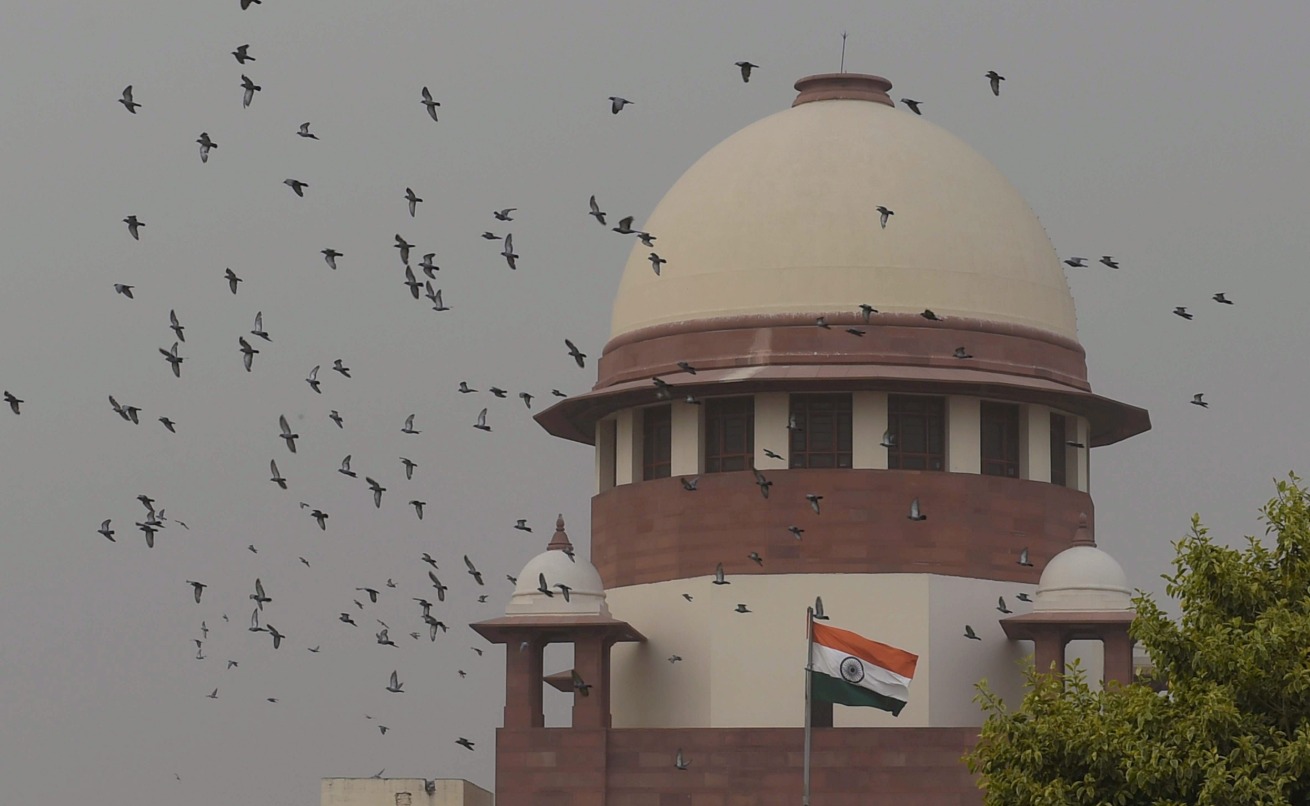
New Delhi: In a significant development during the Presidential reference hearing, a Constitution Bench of the Supreme Court of India on Tuesday, September 2, orally observed that Governors cannot indefinitely delay granting assent to Bills passed by state legislatures.
Three of the five judges on the Bench — Chief Justice of India B.R. Gavai, Justice Vikram Nath, and Justice P.S. Narasimha — remarked that Governors must act within a reasonable timeframe and cannot obstruct the legislative process.
"Governors cannot delay the wisdom of the legislature endlessly," Justice Narasimha stated, adding, "No organ can impair the functioning of the Constitution."
The remarks came during a hearing stemming from a 14-point Presidential reference sent to the Supreme Court in May 2025. The reference seeks the Court’s opinion on constitutional provisions concerning the roles of Governors and the President in giving assent to Bills — particularly in light of the Supreme Court's earlier judgment in the State of Tamil Nadu vs Governor of Tamil Nadu case.
The Tamil Nadu government, represented by senior advocates A.M. Singhvi and P. Wilson, argued that Governors "cannot assume to be royalty in a Republic" and must act in accordance with the constitutional mandate. The West Bengal government, represented by senior advocate Kapil Sibal, echoed similar concerns.
"When the Constitution is clear that a Governor should act with immediacy, why should he hold back Bills? There is a sense of urgency associated with the Governor’s assent. Legislation is a sovereign act. It cannot wait," Sibal argued.
Sibal also criticized the Union government’s interpretation of Article 200, which he said effectively granted Governors unchecked discretion to withhold assent. He warned that such a stance would lead to "absurdity" and could derail democratic governance in the states.
"This Constitution has its genesis in history, but its alignment is with the future… And who decides the future of this country? You five in this case. The future of India is at stake if you give such absurd powers to the Governor," Sibal told the Bench.
While the Court agreed that indefinite delays are problematic, it expressed reservations about imposing a uniform time limit or allowing for "deemed assent" if a Governor fails to act within a certain period.
Justice Nath questioned the implications of setting a rigid time frame: “What happens if the time limit of three months set by the Supreme Court \[in the Tamil Nadu Governor judgment] is not followed by the President or Governors?”
CJI Gavai also noted that not all legislation follows the same timeline and cautioned against applying a “broad brushstroke” that could lead to judicial overreach.
The matter under consideration originates from controversy surrounding Tamil Nadu Governor R.N. Ravi’s move to reserve ten Bills for presidential assent, a move previously ruled illegal by the Supreme Court. That judgment prompted President Droupadi Murmu to seek the Court’s formal opinion under Article 143 of the Constitution.
Let the Truth be known. If you read VB and like VB, please be a VB Supporter and Help us deliver the Truth to one and all.
Tamil Nadu: Cong stages statewide protests against guv over govt formation
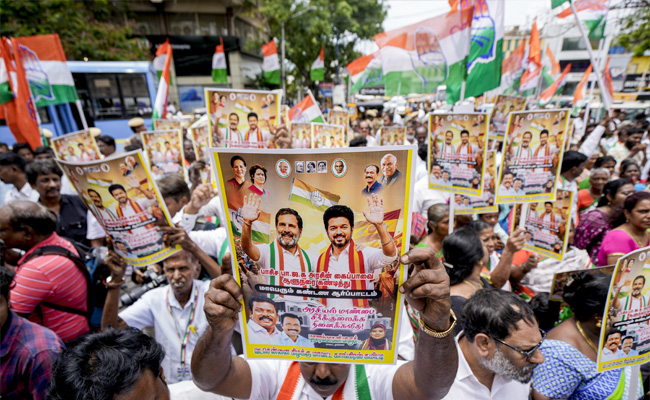
Chennai (PTI): TNCC on Friday launched a statewide protest against Governor Rajendra Vishwanath Arlekar for his refusal to invite the TVK to form the government despite it emerging as the single largest party in the recently concluded Assembly elections.
Leading a spirited demonstration at Anna Salai in Chennai, AICC in-charge for Tamil Nadu, Girish Chodankar, and TNCC President K Selvaperunthagai accused the Raj Bhavan of acting as a "puppet" of the BJP-led Centre and subverting democratic norms.
Speaking to reporters at the protest site, Chodankar launched a scathing attack on the Governor's delay in government formation.
"The Governor has a mission, but he is following (Union Home Minister) Amit Shah. That is his problem," Chodankar charged.
ALSO READ: UP govt sacks five doctors, orders action against 16 health officials for negligence
When asked about mounting speculation regarding a potential "outside support" arrangement between traditional rivals DMK and AIADMK to keep the TVK-Congress combine out of power, Chodankar said, "Let them come together. Let everyone get exposed before the people of Tamil Nadu.”
According to him, if that happens people will know who is really secular and who is ready to stand by them in this situation.
"I am confident that many secular parties are not ready to see BJP or RSS rule enter Tamil Nadu and will definitely oppose it," said Chodankar.
Addressing his party's recent exit from the DMK-led alliance to support actor-turned-politician Vijay's TVK, Chodankar dismissed allegations of "backstabbing" by his party's former ally.
"In a democracy, people are the masters. We have respected the people's mandate," he stated.
Selvaperunthagai demanded that the Governor immediately invite the single largest party to form the government.
"The Governor must implement the Constitution. That is our only demand, and that is why we are protesting today," Selvaperunthagai said.
The Congress, which recently snapped its long-standing ties with the DMK, has aligned itself with the TVK, which won 108 seats. The party cadres held demonstrations across all district headquarters, raising slogans against the Governor and the Union government, while demanding that the democratic mandate of the 2026 elections be respected without further delay.
The protests come amid a tense political climate in the state, as the DMK and AIADMK -- who both suffered significant losses to the TVK -- reportedly explore tactical manoeuvres to navigate the hung assembly.
TVK with 108 seats has the support of Congress' five MLAs but the party is still short of five legislators to form government.