Supreme Court refuses to entertain PIL for common dress code in educational institutes
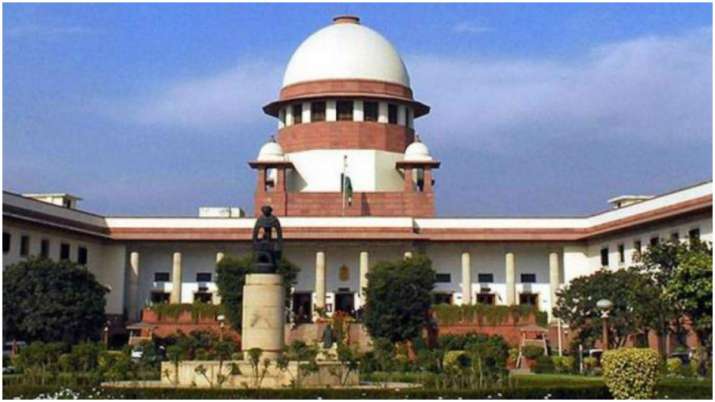
New Delhi, Sep 16: The Supreme Court on Friday refused to entertain a PIL seeking a direction to the Centre, states and union territories to implement a common dress code for staffers and students in registered educational institutions.
A bench of Justices Hemant Gupta and Sudhanshu Dhulia said this is not a matter which should come to the court for adjudication.
The PIL argued that a dress code should be implemented to secure equality and promote fraternity and national integration. Senior advocate Gaurav Bhatia, appearing for PIL petitioner Nikhil Upadhyay, said this is a constitutional issue and sought a direction under the Right to Education Act.
Sensing the bench's disinclination to entertain the PIL, the counsel withdrew it.
The plea had been filed in the backdrop of the Karnataka 'hijab' row.
The same bench, headed by Justice Gupta, is hearing arguments on a batch of pleas challenging the Karnataka High Court verdict refusing to lift the ban on hijab in educational institutions in the state.
The PIL, which was filed through lawyers Ashwini Upadhyay and Ashwani Dubey, had sought a direction to the Centre to set up a judicial commission or an expert panel to suggest steps for inculcating values of "social and economic justice, socialism secularism and democracy and to promote fraternity dignity unity and national integration among the students".
"Alternatively, being custodian of the Constitution and protector of fundamental rights, direct the Law Commission of India to prepare a report suggesting steps to secure social equality and to promote fraternity dignity unity and national integration within three months," it said.
Educational institutions are secular public places and are meant to impart knowledge and wisdom employment, good health and contribute to nation building, not to follow essential and non-essential religious practices, it said.
"It is very essential to introduce a Common Dress Code in all schools-colleges to preserve the secular character of educational institutions, otherwise tomorrow Naga Sadhus may take admission in colleges and attend the class without clothes citing essential religious practice," the PIL argued.
Let the Truth be known. If you read VB and like VB, please be a VB Supporter and Help us deliver the Truth to one and all.
UP man gets life term for electrocuting mentally challenged wife to death in Bareilly

Bareilly (UP) (PTI): A local court here has sentenced a man to life imprisonment for murdering his mentally challenged wife by repeatedly electrocuting her while she was tied to a cot, lawyers said on Thursday.
Additional district government counsel Harendra Singh Rathore said Additional Sessions Judge Avinash Kumar Singh on Wednesday convicted Vinod Kumar (45) for killing his wife, Satyavati, in Chaina village of Bareilly district and imposed a fine of Rs 15,000 on him.
According to the prosecution, he was allegedly frustrated with his wife Satyavati's mental illness and often assaulted her.
Rathore said the prosecution examined nine witnesses to establish the charges against him.
As per court records, on the night of May 1-2, 2022, when Satyavati was asleep, Vinod tied her hands and legs to a cot using ropes and then connected an aluminium cable to an electric board to repeatedly administer electric shocks to her.
"She writhed in pain, but the accused continued to electrocute her until she died," the prosecution said.
The court observed that the murder was carried out in an inhuman manner.
After committing the crime, the accused threw the rope and cable on the roof and left for work at a brick kiln around 2 am to create a false alibi.
He later tried to mislead the police and the victim's family by claiming that Satyavati, whose mental condition was unstable, had accidentally died by suicide after grabbing a live electric wire.
However, the victim's brother, Sanjeev, a resident of Shahjahanpur district, suspected foul play and lodged an FIR under sections 498A (husband subjecting wife to cruelty) and 302 (murder) of the Indian Penal Code at Nawabganj police station.
During the trial, the prosecution relied on the post-mortem report prepared by Dr Faraz Anwar, who stated that multiple electrocution marks found on different parts of the victim's body could not have been self-inflicted.
The police also recovered the rope and electric wire used in the crime on the accused's identification, officials said.