Supreme Court refuses to examine legality of QR code orders for Kanwar Yatra eateries
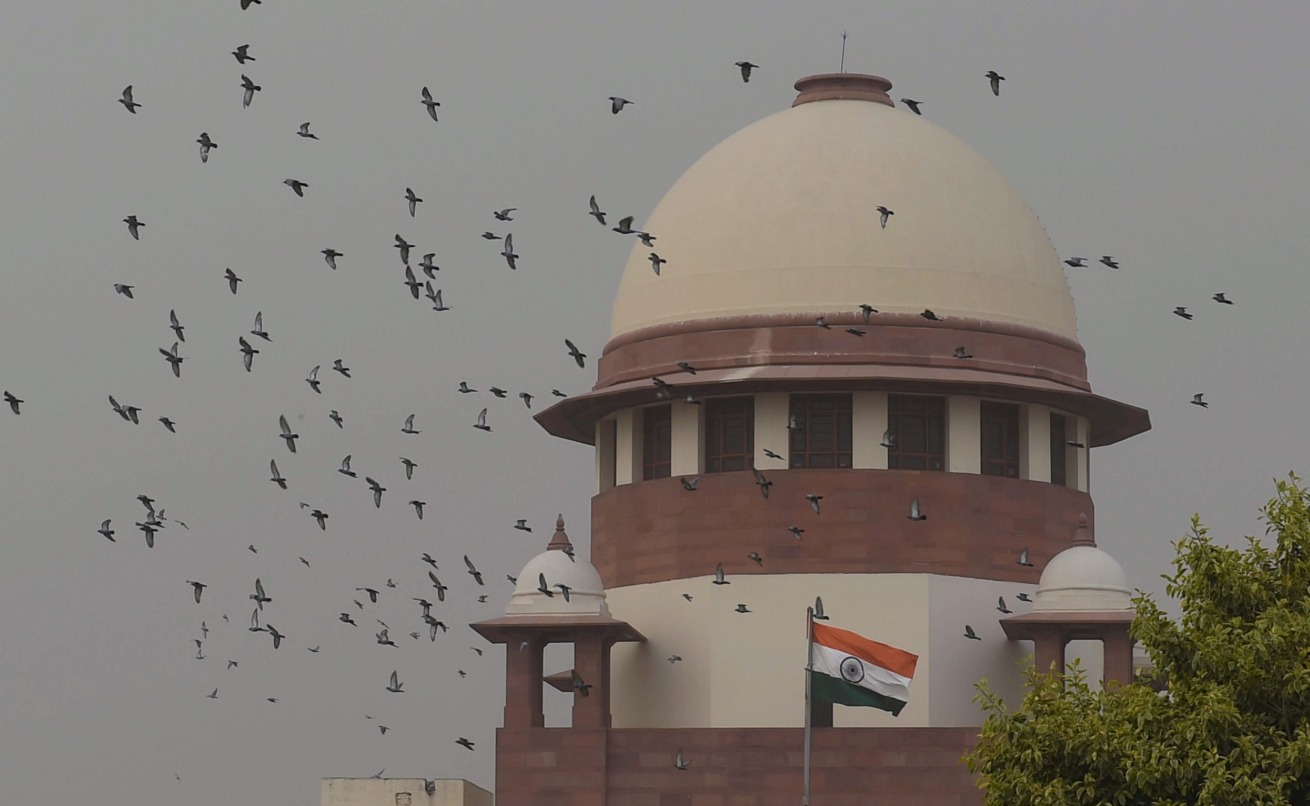
New Delhi: The Supreme Court on Tuesday declined to examine the legality of the QR code directives issued by Uttar Pradesh and Uttarakhand authorities for food vendors along the Kanwar Yatra route. The directives required eateries to display QR codes that would reveal the identities of their owners. The court said that since the pilgrimage concludes today, the issue has become infructuous.
A bench comprising Justices M.M. Sundresh and N.K. Singh disposed of the interlocutory applications filed against the directives, while emphasizing that all food vendors must display their licences and registration certificates as mandated by statutory law. "We are told that today is the last day of the Yatra. In any case, it is likely to come to an end in the near future. Therefore, at this stage, we would only pass an order that all the respective hotel owners shall comply with the mandate of displaying the licence and the registration certificate as per the statutory requirements," the court said.
The applications, filed by Professor Apoorvanand and activist Aakar Patel, challenged the QR code directive on the grounds that it violated a 2024 interim Supreme Court order which prohibited forced disclosure of identity by food vendors. The petitioners argued that the new QR mandate was designed to circumvent that earlier order and promote religious profiling.
Senior Advocate Dr Abhishek Manu Singhvi, appearing for the petitioners, contended that the directive was aimed at religious discrimination under the guise of consumer transparency. “How does the surname of the owner ensure good service?” he asked, suggesting that the move was intended to isolate vendors from minority communities. He further said, "This is the most divisive initiative, to ostracise people during the yatra, as if these people are untouchables."
Justice Sundresh acknowledged the issue of consumer choice, observing that pilgrims may prefer strictly vegetarian places. “If one hotel was earlier serving non-veg and for the purpose of better business they serve only veg during the yatra, that will be an issue for the consumer. The choice is of the consumer,” he said.
Senior Advocate Huzefa Ahmadi, also representing the petitioners, rejected the need for disclosure of names and identities. He argued that if a restaurant is currently selling only vegetarian food, past menu items or ownership details are irrelevant. “What happens on the ground is... if religion is to be considered as a factor, this is promoting untouchability through the backdoor,” Ahmadi said.
Justice Sundresh tried to strike a balance, noting, “Customer is the king.” He emphasized the need to respect consumer rights without enabling identity-based discrimination.
Representing Uttar Pradesh, Senior Advocate Mukul Rohatgi defended the QR code directive as compliant with the Food Safety and Standards Authority of India (FSSAI) regulations. He said some dhabas had previously misrepresented non-vegetarian food as vegetarian, leading to law and order issues during the Yatra. Rohatgi argued that the directions drew from central law and were not specific to UP. “As per the regulations under the Act, they require photo identity. Why are you scared of showing your name?” he asked.
Counsel for Uttarakhand, Deputy Advocate General Jatinder Kumar Sethi, also supported the State’s stance. Another counsel, attempting to link the issue with Muslim-run dhabas using Hindu names, was rebuked by the bench. “Please, don’t embarrass us like this,” Justice Sundresh remarked.
After the order was dictated, Ahmadi requested a clarification that names and QR codes need not be displayed, arguing that such directives have no legal backing and expose religious identity. However, Justice Sundresh declined to delve into the matter further, stating, “We have said that we are not going into it. If you want to challenge it, go before the High Court.”
Let the Truth be known. If you read VB and like VB, please be a VB Supporter and Help us deliver the Truth to one and all.
AIITA welcomes Karnataka’s ban on obscene songs in school events
Bhatkal: The Karnataka unit of the All India Ideal Teachers Association (AIITA) has welcomed the Karnataka government’s decision to strictly ban school children from dancing to obscene songs during educational and cultural programmes in government, aided, and private schools across the state.
AIITA Karnataka State President M. R. Manvi congratulated the government for taking what he termed an important step to preserve the sanctity of education.
“Such decisions to safeguard the dignity of school children and uphold the values of education are the need of the hour. This rule should not be limited to government schools alone but must be strictly implemented in all private educational institutions as well,” he said.
He further urged the government to address other concerns within school programmes.
“The government should not only prohibit obscene dances in the name of school anniversaries, but also ensure that plays and dialogues that incite religious hatred are avoided. Schools should be centres of harmony, not platforms for spreading hatred,” he added.
According to a recent circular issued by the Department of School Education and Literacy, obscene dances are adversely affecting the mental health and moral values of students.
In this regard, schools have been advised to use songs that promote nationalism, positive thinking, the greatness of Kannada culture, and value-based traditions instead of inappropriate content during programmes.
The circular also emphasises that students should be dressed in decent attire.
AIITA also backed the department’s warning that disciplinary action would be taken against head teachers if such guidelines are violated. The association has further demanded that district Deputy Directors of Public Instruction strictly monitor the implementation of these rules.