Sushma Swaraj, Maneka Gandhi, Rajyavardhan Rathore among notable omissions in Modi govt
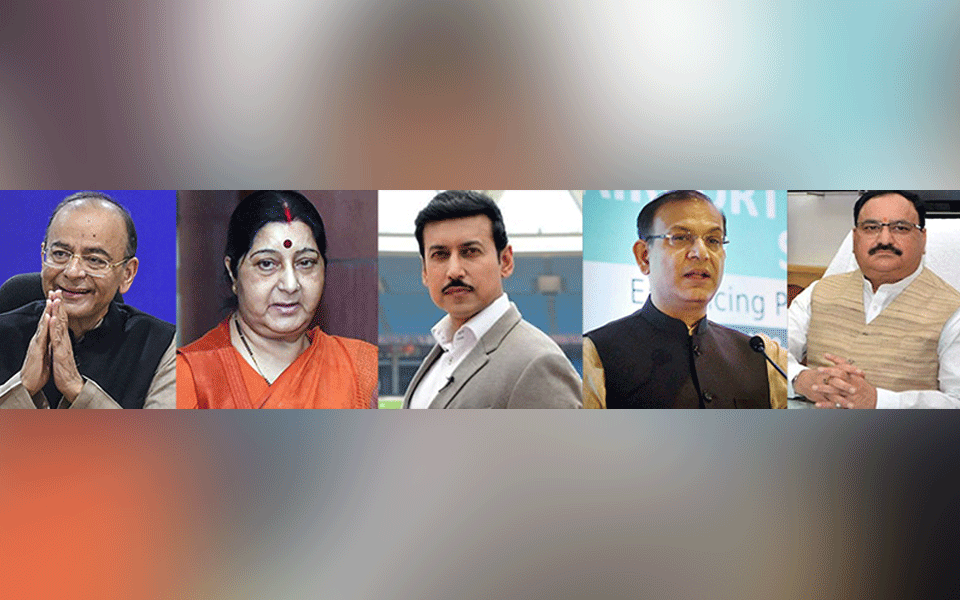
New Delhi, May 30: Sushma Swaraj, J P Nadda, Suresh Prabhu, Maneka Gandhi, Rajyavardhan Rathore and Mahesh Sharma are among the notable omissions in the BJP-led NDA's second innings.
Despite winning their seats, eight-time MP Maneka Gandhi, six-time MP Radhamohan Singh, Sharma, Jayant Sinha, Anupriya Patel, Jual Oram, Ram Kripal Yadav and Rathore lost their ministerial berths.
Another key BJP leader, Nadda, who did not make it to the Cabinet this time was the health minister in the first Modi dispensation.
He could be the next Bharatiya Janata Party president as incumbent Amit Shah has joined the government.
Swaraj had opted out of fighting the polls due to health reasons while Arun Jaitley, who held the finance portfolio, too decided not to be a part of the new Union cabinet as he has been unwell and needed time for his medical treatment.
Others who decided not to contest were Suresh Prabhu, who held the civil aviation portfolio, Uma Bharati, the minister of drinking water and sanitation and Birender Singh, who was minister of steel - all of whom lost their ministerial berths.
Manoj Sinha, the minister of state for railways, Alphons Kannanthanam, the minister of tourism with independent charge, and Hansraj Ahir, the minister of state for home, were among those who not only tasted defeat in the elections but also lost their ministerial berths.
Former bureaucrat and minister of state for urban affairs (independent charge) Hardeep Singh Puri, however, retained his berth despite losing his seat.
Vijay Sampla, who was the minister of state, social justice and empowerment, was denied a ticket by the BJP from the Hoshiarpur (SC) Lok Sabha seat in Punjab.
Expressing his displeasure, Sampla had termed the saffron party's decision as "cow slaughter".
Known for his controversial statements, Anantkumar Hegde, who held the skill development portfolio, too has been dropped.
Other prominent faces who have failed to find a place in the council of ministers this time include Shiv Sena leader Anant Geete, senior Delhi BJP leader Vijay Goel, Pon Radhakrishnan, S S Ahluwalia and Ramesh Chandappa Jigajinagi, a Dalit leader from Karnataka.
While Radhakrishnan had lost from Kanyakumari parliamentary constituency, Ahluwalia had bagged the Durgapur Lok Sabha seat.
Assam leader Rajen Gohain, Lok Sabha MP from Tikamgarh in Madhya Pradesh Virendra Kumar and Rajasthan leaders, C R Chaudhary and P P Chaudhary were dropped as well.
Let the Truth be known. If you read VB and like VB, please be a VB Supporter and Help us deliver the Truth to one and all.
Trump says EU has until July 4 to approve last year's trade deal or it will face higher tariffs
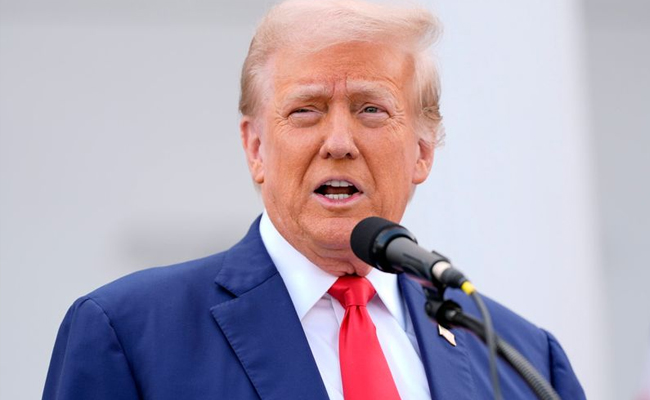
Washington (AP): President Donald Trump has said in a social media post that goods from the European Union would face higher tariff rates if the 27-member bloc fails to approve last year's trade framework by July 4.
The announcement on Thursday appeared to be a deadline extension after the president said last Friday that EU autos would face a higher 25 per cent tariff starting this week. Trump made the updated announcement after what he described as a "great call" with European Commission President Ursula von der Leyen.
Still, the US president was displeased that the European Parliament had yet to finalize the trade arrangement reached last year, which was further complicated in February by the US Supreme Court ruling that Trump lacked the legal authority to declare an economic emergency to impose the initial tariffs used to pressure the EU into talks.
"A promise was made that the EU would deliver their side of the Deal and, as per Agreement, cut their Tariffs to ZERO!" Trump posted. "I agreed to give her until our Country's 250th Birthday or, unfortunately, their Tariffs would immediately jump to much higher levels."
It was unclear from the post whether Trump was implying that the tariff rates would jump on all EU goods or the increase would only apply to autos.
His latest statement indicates he might be backing away from his earlier threat on EU autos by giving the European Parliament several more weeks to approve the agreement.
Under the original terms of the framework, the US would charge a 15 per cent tax on most goods imported from the EU.
But since the Supreme Court ruling, the administration has levied a 10 per cent tariff while investigating trade imbalances and national security issues, aiming to put in new tariffs to make up for lost revenues.