Suspected schoolgirl poisoning attacks rattle a shaken Iran

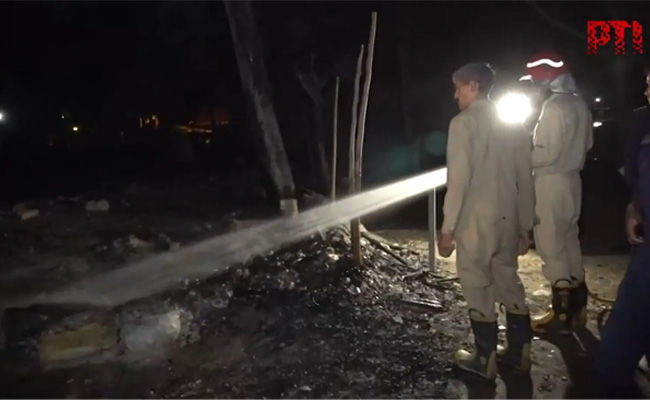
Dubai (AP): Over the past three months, hundreds of young girls attending different schools in Iran have become overpowered by what are believed to be noxious fumes wafting into their classrooms, with some ending up weakened on hospital beds.
Officials in Iran's theocracy initially dismissed these incidents, but now describe them as intentional attacks involving some 30 schools identified in local media reports, with some speculating they could be aimed at trying to close schools for girls in this country of over 80 million people.
The reported attacks come at a sensitive time for Iran, which already has faced months of protests after the September death of Mahsa Amini following her arrest by the country's morality police.
The authorities have not named suspects, but the attacks have raised fears that other girls could be poisoned apparently just for seeking an education something that's never been challenged before in the over 40 years since the 1979 Islamic Revolution.
Iran itself also has been calling on the Taliban in neighbouring Afghanistan to have girls and women return to school.
The first cases emerged in late November in Qom, some 125 kilometres (80 miles) southwest of Iran's capital, Tehran.
There, in a heartland of Shiite theologians and pilgrims, students at the Noor Yazdanshahr Conservatory fell ill in November. They then fell ill again in December.
Other cases followed, with children complaining about headaches, heart palpitations, feeling lethargic or otherwise unable to move. Some described smelling tangerines, chlorine or cleaning agents.
At first, authorities didn't link the cases. It's winter in Iran, where temperatures often drop below freezing at night.
Many schools are heated by natural gas, leading to speculation it could be carbon monoxide poisoning affecting the girls. The country's education minister initially dismissed the reports as "rumors."
But the schools affected at first only taught young women, fuelling suspicion it wasn't accidental.
At least one case followed in Tehran, with others in Qom and Boroujerd. At least one boys' school has been targeted as well.
Slowly, officials began taking the claims seriously. Iran's prosecutor-general ordered an investigation, saying "there are possibilities of deliberate criminal acts."
Iran's Intelligence Ministry reportedly investigated as well.
On Sunday, Iran's state-run IRNA news agency filed multiple stories with officials acknowledging the scope of the crisis.
"After several poisonings of students in Qom schools, it was found that some people wanted all schools, especially girls' schools, to be closed," IRNA quoted Younes Panahi, a deputy health minister, as saying.
A Health Ministry spokesman, Pedram Pakaieen, said the poisoning didn't come from a virus or a microbe. Neither elaborated further.
Ali Reza Monadi, a national parliament member who sits on its education committee, described the poisonings as "intentional".
The "existence of the devil's will to prevent girls from education is a serious danger and it is considered a very bad news," he said, according to IRNA. "We have to try to find roots" of this.
Already, parents have pulled their students from classes, in effect shuttering some schools in Qom in recent weeks, according to a report by Shargh, a reformist news website based in Tehran.
The poisonings come as getting verifiable information out of Iran remains difficult given the crackdown on all dissent stemming from the protests and internet slowdowns put in place by the government.
At least 95 journalists have been arrested by authorities since the start of the protests, according to the New York-based Committee to Protect Journalists.
Overall, the security force crackdown has killed at least 530 people and seen 19,700 others detained, according to Human Rights Activists in Iran.
Attacks on women have happened in the past in Iran, most recently with a wave of acid attacks in 2014 around Isfahan, at the time believed to have been carried out by hard-liners targeting women for how they dressed.
But even in the chaos surrounding the Islamic Revolution, no one targeted schoolgirls for attending classes.
Jamileh Kadivar, a prominent former reformist lawmaker and journalist, wrote in Tehran's Ettelaat newspaper that as many as 400 students have fallen ill in the poisonings.
She warned "subversive opposition" groups could be behind the attacks. However, she also raised the possibility of "domestic extremists" who "aim to replace the Islamic Republic with a caliphate or a Taliban-type Islamic emirate."
She cited a supposed communique from a group calling itself Fidayeen Velayat that purportedly said, "the study of girls is considered haram" and threatened to "spread the poisoning of girls throughout Iran" if girls' schools remain open.
Iranian officials have not acknowledged any group called Fidayeen Velayat, which roughly translates to English as "Devotees of the Guardianship."
However, Kadivar's mention of the threat in print comes as she remain influential within Iranian politics and has ties to its theocratic ruling class.
The head of Ettelaat newspaper also is appointed by Supreme Leader Ayatollah Ali Khamenei.
Another prominent reformist politician, Azar Mansouri, also linked the suspected poisoning attacks to hard-line groups, referencing the Isfahan acid attacks.
"We said the acid attacks were organized. You said: You are disturbing public opinion!'" Mansouri wrote online.
"If operatives of the attacks were identified and punished then, today a group of reactionaries would not have ganged up on our innocent girls in the schools."
Activists also worry this could be a disturbing new trend in the country.
"This is a very fundamentalist thinking surfacing in society," said Hadi Ghaemi, the executive director of the New York-based Centre for Human Rights in Iran.
"We have no idea how widespread this group is but the fact they have been able to carry it out with such impunity is so troubling."
Let the Truth be known. If you read VB and like VB, please be a VB Supporter and Help us deliver the Truth to one and all.
Noida International Airport appoints Nitu Samra as interim CEO
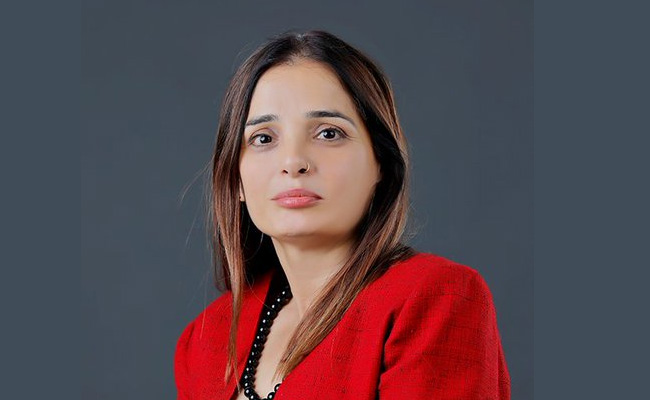
New Delhi (PTI): Noida International Airport on Friday announced the appointment of its Chief Financial Officer Nitu Samra as the interim Chief Executive Officer after authorities denied permission for foreign national Christoph Schnellmann to be at the helm.
"This change follows directions issued by the Bureau of Civil Aviation Security (BCAS) that the Chief Executive Officer of an airport in India is required to be an Indian national," NIA said in a statement.
Samra will replace Schnellmann, a Swiss national who has led Noida International Airport (NIA) as the CEO since August 2020.
The regulatory issue related to the requirement of having an Indian national as CEO has been delaying the start of commercial operations of the airport, which was inaugurated by Prime Minister Narendra Modi on March 28.
Schnellmann will join the airport's Board of Directors as Executive Vice Chairman. In this role, he will continue to support the project and its transition to operations, the statement said.
With immediate effect, NIA said Samra has been appointed as the CEO on an interim basis until the Board of Directors can conclude a formal selection process.
Samra has been serving as the CFO since October 2021 and was closely involved in the airport’s development journey, overseeing financial stewardship, governance, and strategic planning during a key phase of the project, the statement added.
NIA will be operated by Yamuna International Airport Pvt Ltd (YIAPL), a subsidiary of Zurich Airport International AG, under a public-private partnership.
Originally scheduled to commence passenger services in September 2024, NIA is being developed in four phases, along with a dedicated cargo terminal. It received an aerodrome license from the aviation regulator Directorate General of Civil Aviation (DGCA) in March.
YIAPL Chairman Daniel Bircher said that since the inauguration of the airport by the Prime Minister, the goal was to enable the start of operations as early as possible.
"This management change brings the airport into compliance with Bureau of Civil Aviation Security requirements while maintaining continuity in the airport’s leadership team. The newly structured team will support a smooth transition into operations, guided by clear and transparent governance and a strong corporate culture," he said.
On March 28, Civil Aviation Minister K Rammohan Naidu said commercial flight operations from the airport would start in the next 45 to 60 days.
Among the largest greenfield airport projects in the country, NIA will initially have a capacity to handle 12 million passengers per annum.
Once fully developed, the airport will have a total passenger handling capacity of 70 million.
The first phase of NIA has been developed at an investment of around Rs 11,200 crore. 'DXN' is the code for the airport.
The airport features a 3,900-metre runway capable of handling wide-body aircraft, along with modern navigation systems, including Instrument Landing System (ILS) and advanced airfield lighting.
The peak handling capacity in the first phase will be 30 flights per hour.
In the first phase, there will be 28 aircraft stands, and the projected cargo capacity is around 2.5 lakh tonnes.
Terminal 1 of the airport is spread across 1,37,985 square metres with 48 check-in counters. Over 40 acres of land have been earmarked for developing MRO (Maintenance, Repair and Overhaul) facilities at the airport.