Swiggy takes down 'egg ad' billboard for Holi after backlash: Sources
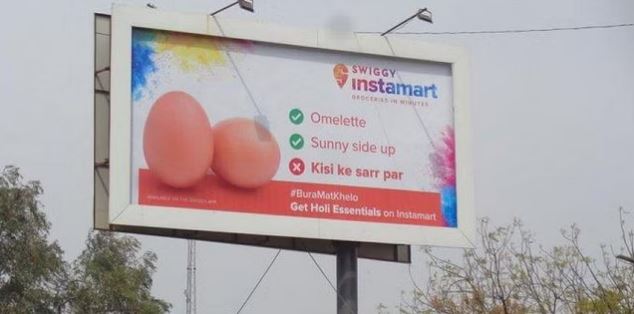
New Delhi, Mar 7: Swiggy's egg ad billboard for Holi has been taken down after a section of people expressed "outrage" on social media.
The advertisement said, "Omelette - Sunny side-up - Kisi ke sarr par. #BuraMatKhelo. Get Holi essentials on Instamart."
Though there is no official statement from Swiggy on the matter, a source told PTI, "The billboard ads were only in Delhi-NCR and have been taken down now."
Soon after the ad was put up, several people tweeted with the hashtag "HinduphobicSwiggy", urging people to boycott the food and grocery delivery service provider.
All India Sadhu Samaj member and former president of the Kutch Sant Samaj wrote, "Hey @swiggy, it's not okay to give selective gyan on Hindu festivals. Your Holi reel and Billboard is creating a wrong perception about Holi. You must apologize and take steps to promote cultural inclusivity."
VHP leader Sadhvi Prachi also objected as she wrote, "Hey Swiggy, why don't you give similar gyan on Eid/Christmas? Afraid of Sar Tan Se Juda gang? Since you serve diverse communities, it's important for you to learn to respect all religions. Remove your Holi ads."
While former president of Gujarat's Bharatiya Janata Yuva Morcha, Hardik Bhavsar said, "Immediately Uninstalled", former BJP MLA from Uttar Pradesh Arun Kumar Yadav wrote, "By promoting controversial billboards and posting reel, #HinduPhobicSwiggy has hurt the sentiments of millions of people. Swiggy must apologize to Hindu community and remove them immediately, or face consequences. Why is their lack of similar Ads during non Hindu festivals?"
Uninstalled Swiggy 👍#HinduPhobicSwiggy pic.twitter.com/XPoHlAqxPs
— Ashwini Shrivastava (@AshwiniSahaya) March 7, 2023
Hey @Swiggy why don't you give Similar gyan on Eid/Christmas? Afraid of Sar Tan Se Juda gang? Since you serve diverse communities, it's important for you to learn to respect all religions. Remove your Holi ads. #HinduPhobicSwiggy pic.twitter.com/uV6m8jX3s1
— Dr. Prachi Sadhvi (@Sadhvi_prachi) March 7, 2023
The recent Billboard advertisement of @Swiggy is a clear attempt to defame Holi & create a negative perception among people. The lack of similar Ads for non-Hindu festivals shows a clear bias. Show some sensitivity and Apologize to Hindu community. #HinduPhobicSwiggy pic.twitter.com/vSomzhSiBO
— Elvish Yadav (@ElvishYadav) March 7, 2023
Let the Truth be known. If you read VB and like VB, please be a VB Supporter and Help us deliver the Truth to one and all.
Cong says Modi 'has lost authority to continue as PM', cites Ram Madhav's remarks on oil, tariffs
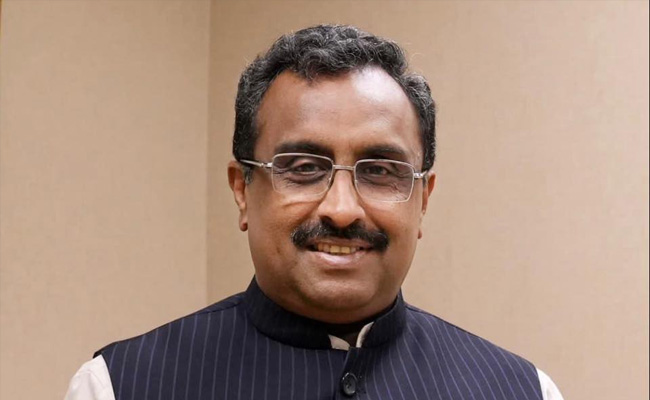
New Delhi (PTI): The Congress on Friday said Narendra Modi has lost his authority to continue as the prime minister, claiming that a senior RSS leader has made a "clear admission" that Modi is "dancing to Washington's tunes".
Congress general secretary, Organisation, K C Venugopal shared a video of RSS leader Ram Madhav on X where the latter says that India agreed to stop buying oil from Iran and Russia and also agreed to higher tariffs imposed by the US.
Madhav, however, later apologised saying what he said was "wrong as India did not agree to stop import of oil from Russia. "What I said was wrong. India didn't agree to stopping import of oil from Russia anytime."
"Also it vigorously protested 50 per cent tariff imposition. I was trying to make a limited counterpoint to the other panellist. But factually incorrect. My apologies," Madhav said in a post on X while sharing his video.
ALSO READ: Noida International Airport appoints Nitu Samra as interim CEO
Madhav along with RSS general secretary Dattatreya Hosabale are on a visit to the United States and attended an event at the Hudson Institute in Washington.
In a post on X, Venugopal said, "Clear admission by a senior RSS leader - PM Modi is dancing to Washington's tunes.
"There was once a time when the US' 7th Fleet was in the Bay of Bengal, and India didn't budge. And then there is today, where a Compromised PM has handed over India's sovereignty to the US," Venugopal said in a post on X.
The Congress leader said this is exactly what Leader of Opposition in Lok Sabha Rahul Gandhi and the entire Opposition has been saying. "India has lost its independent voice on the world stage.
"After this surrender, it's clear that Narendra Modi has lost his authority to continue as Prime Minister," Venugopal said in his post.
In the video shared by Venugopal along with his post, Ram Madhav is heard saying, "India agreed to stop buying oil from Iran. We agreed to stop buying oil from Russia, facing so much criticism from our Indian opposition."
"We agreed to a 50 per cent tariff...Agreed means, we did not say anything. We maintained our patience. 50 per cent tariffs we agreed. Today, in the new trade deal also we agreed for 18 per cent tariffs higher than what it used to be.... I mean, average tariff.
"So, where is India lagging behind in that. What are those issues where India is not doing enough?" Madhav is heard saying in the video during an interactive session at the Hudson Institute.