Tahawwur Rana in NIA custody for 18 days; Email trails, travel logs reveal key role in 26/11 plot
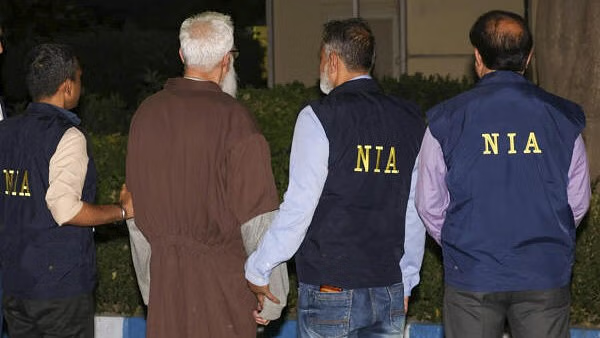
New Delhi (PTI): Tahawwur Hussain Rana, a key accused in the 26/11 Mumbai terror attacks, will be questioned in detail by the National Investigation Agency to unravel the conspiracy behind the deadly 26/11 terror strike and his role as a planner of the attacks after a court here granted the agency his 18-day custody on early Friday.
The anti-terror agency had produced Rana before the NIA Special Court at Patiala House after formally placing him under arrest on his arrival here on Thursday evening, following his extradition from the US.
Special National Investigation Agency (NIA) judge Chander Jit Singh sent Rana to 18-day custody while the NIA sought 20-day custody.
Rana was brought to the Patiala House Court in a cavalcade, including a jail van, an armoured SWAT vehicle and an ambulance, late Thursday night.
Senior advocate Dayan Krishnan and Special Public Prosecutor Narender Mann represented the NIA.
Before the proceedings, the judge asked Rana if he had a lawyer.
After Rana said he did not have a lawyer, the judge informed him that a counsel was being provided to him from the Delhi Legal Services Authority. After that, advocate Piyush Sachdeva was appointed to represent him.
The 64-year-old Pakistani-origin Canadian businessman, a close associate of 26/11 Mumbai terror attacks main conspirator David Coleman Headley alias Daood Gilani, a US citizen, was brought to India after the US Supreme Court on April 4 dismissed his review plea against his extradition.
The agency told the court that Rana's interrogation was necessary to unearth the larger conspiracy behind the 2008 attacks. It also told the court that it had to look into his role as a planner of the attacks.
Before Rana was brought to the Patiala House Court, Delhi Police removed mediapersons and members of the public from the complex, citing security concerns.
Police authorities said, "No one would be permitted inside".
After the court order, Rana was transported to the NIA headquarters in a heavily-secured motorcade comprising Delhi Police's Special Weapons and Tactics (SWAT) and other security personnel.
Rana will be kept in a highly secured cell inside the anti-terror agency's head office at CGO complex here, officials said.
"Rana will remain in NIA custody for 18 days, during which time the agency will question him in detail in order to unravel the complete conspiracy behind the deadly 2008 attacks, in which a total of 166 persons were killed and over 238 injured," a statement issued by the probe agency said soon after the court's order.
The NIA said that as part of the criminal conspiracy, accused no. 1, Headley, had discussed the entire operation with Rana before his visit to India.
Anticipating potential challenges, Headley sent an email to Rana detailing his belongings and assets, the NIA told the court, adding that Headley also informed Rana about the involvement of Pakistani nationals Ilyas Kashmiri and Abdur Rehman, who are also accused in the case, in the plot.
The NIA had secured Rana's extradition from the US following years of sustained efforts, and after the terror mastermind's last-ditch efforts to get a stay on his extradition from the US failed.
The extradition finally came through after Rana's various litigations and appeals, including an emergency application before the US Supreme Court, were rejected.
Let the Truth be known. If you read VB and like VB, please be a VB Supporter and Help us deliver the Truth to one and all.
Bhojshala case: Disputed structure built from remains of pre-existing temples, claims ASI
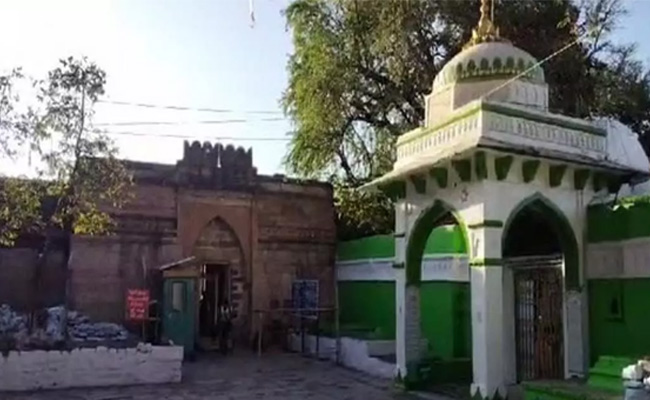
Indore (PTI): The ASI has told the Madhya Pradesh High Court that a massive structure dating back to the Paramara kings' rule existed at the disputed Bhojshala temple-Kamal Maula mosque complex, and the current structure was built from the remains of temples.
The Archaeological Survey of India (ASI) made the claim on Tuesday based on its 98-day scientific survey and over 2,000-page report.
The Hindu community considers Bhojshala a temple dedicated to Vagdevi (Goddess Saraswati), while the Muslim side claims the monument as the Kamal Maula Mosque. The disputed complex is protected by the ASI.
During the hearing before Justices Vijay Kumar Shukla and Alok Awasthi of the HC's Indore bench, Additional Solicitor General Sunil Kumar Jain, representing the ASI, presented a detailed account of the scientific survey conducted two years ago at the complex.
Referring to the ASI's survey report, he said, "Retrieved architectural remains, sculptural fragments, large slabs of inscriptions with literary texts, Nagakarnika inscriptions on pillars, etc, suggest that a large structure associated with literary and educational activities existed at the site. Based on scientific investigations and archaeological remains recovered during the investigations, this pre-existing structure can be dated to the Paramara period."
It can be said that the existing structure was made from the parts of earlier temples, based on scientific investigations, survey and archaeological excavations conducted, study and analysis of retrieved finds, study of architectural remains, sculptures, and inscriptions, art and sculptures, Jain said quoting the report.
Summarising the report, he also drew the court's attention to the fact that the archaeological study identifies that many architectural components, such as pillars and beams, were originally part of temple structures before being repurposed for a mosque.
"The evidence of this transition includes Sanskrit and Prakrit inscriptions that were damaged or hidden, alongside sculptures of deities and animals that were often mutilated or defaced," Jain contended.
The report also states that "all Sanskrit and Prakrit inscriptions are older than the Arabic and Persian inscriptions, indicating that users or engravers of the Sanskrit and Prakrit inscriptions occupied the place earlier".
In light of the Muslim side's earlier objections, the bench wanted to know why there were some discrepancies in the ASI's responses regarding the status of the disputed complex in the cases filed over the years.
The Additional Solicitor General argued that earlier studies of the complex involved only officials, while the current survey involved scientists and the use of advanced technologies such as Ground Penetrating Radar (GPR).
The hearing in the Bhojshala case will continue on Wednesday.
The high court has been regularly hearing four petitions and one writ appeal regarding the religious nature of the Bhojshala temple-Kamal Maula mosque complex since April 6.