Tamil Nadu abolishes class 11 board exams from academic year 2025-26

Chennai: The Tamil Nadu government has formally cancelled the Class 11 public examinations with effect from the 2025–2026 academic year.
According to a Government Order (G.O.) issued in line with the provisions of the State Education Policy, on Monday, students in Class 11 will now follow the evaluation system that existed prior to the introduction of board exams in 2017–2018.
The order further states that the Directorate of Government Examinations will continue to conduct Class 11 public examinations until March 2030, but only for students who had failed to clear them in previous years.
From the 2025–2026 academic year, the practice of issuing integrated mark certificates for Classes 11 and 12 will also be discontinued. Students will instead receive mark certificates reflecting only their Class 12 performance after completing the higher secondary public examination.
The cancellation of the Class 11 board exam has been a long-standing demand from school managements and teachers’ associations. The latest order gives effect to the State’s earlier announcement in August 2025, made during the release of the Tamil Nadu State Education Policy.
Let the Truth be known. If you read VB and like VB, please be a VB Supporter and Help us deliver the Truth to one and all.
Court can reject anticipatory bail but cannot direct accused to surrender: SC
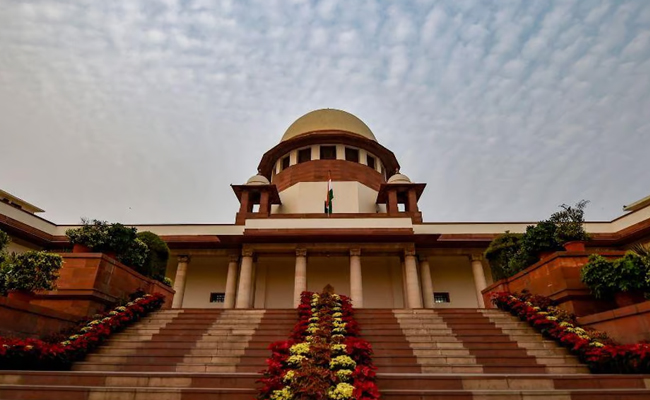
New Delhi (PTI): A court can reject anticipatory bail of an accused but it has no jurisdiction to direct him to surrender before the trial court, the Supreme Court has said.
A bench of Justices J B Pardiwala and Ujjal Bhuyan made the observation while hearing a plea filed by a man accused of cheating and forgery.
"If the court wants to reject the anticipatory bail, it may do so, but the court has no jurisdiction to say that the petitioner should now surrender," the bench said.
The Jharkhand High Court had rejected anticipatory bail plea of the accused and asked him to surrender and seek regular bail.
In this case, a complaint had been filed before a magistrate alleging offences under Sections 323 (voluntarily causing hurt), 420 (cheating), 467 (forgery of valuable security), 468 (forgery for purpose of cheating), 471 (using forged document) and 120B read with 34 of the IPC, in connection with a land dispute.
The high court had dismissed the second anticipatory bail application of the accused on the ground that no new circumstances were shown.
It had relied on its earlier order rejecting his first anticipatory bail plea, in which the court directed the petitioner to surrender before the trial court and seek regular bail in terms of the decision in Satender Kumar Antil v. CBI.
The top court said such a direction was wholly without jurisdiction and said that if a court chooses to reject anticipatory bail, it may do so, but it cannot compel the accused to surrender.