Teesta Setalvad's lawyer seeks bail, points lack of prima facie case, violation of procedure by ATS
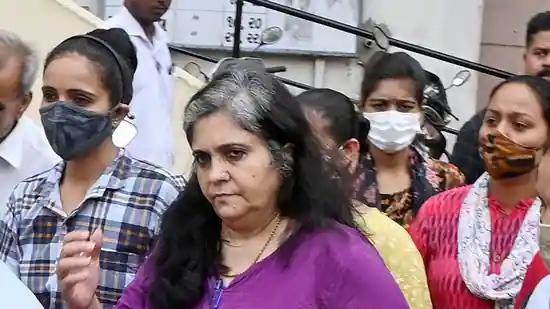
Gujarat: In a bail hearing at the Gujarat High Court, Teesta Setalvad's lawyer presented arguments emphasizing the lack of a prima facie case and the violation of legal procedures. Setalvad, a renowned human rights activist, is seeking permanent bail in a case accusing her of submitting false evidence.
During the hearing, Senior Advocate Mihir Thakore, representing Setalvad, meticulously discussed each charge mentioned in the First Information Report (FIR) and expounded upon the definitions of the offenses invoked against his client under the Indian Penal Code (IPC). Thakore underscored that none of the charges were substantiated against Setalvad, as the alleged forged or false affidavits were actually filed before the Supreme Court and not the police. These affidavits were submitted in a transfer petition by the National Human Rights Commission (NHRC) four years prior to the complaint filed by Zakia Jafri in 2006. Thakore argued that, as per Section 195 of the Code of Criminal Procedure (CrPC), no proceedings can be initiated against Setalvad without a complaint from the court.
Furthermore, Thakore highlighted that the statements recorded by the Special Investigation Team (SIT) and the affidavits filed before the SIT were not referred to in Jafri's 2006 complaint or the subsequent protest petition. These affidavits were not utilized in Jafri's special leave petition before the Supreme Court; they were solely submitted to support the NHRC's transfer petition, which predated Jafri's complaint.
Citing the Supreme Court's judgment in Iqbal Singh Marwah and anr vs Meenakshi Marwah (2005) 4 SCC 370, Thakore emphasized that proceedings can only be initiated through a complaint filed by a competent court, as specified in Section 195 and Section 340 of the CrPC. He pointed out that the Gujarat Anti-Terrorist Squad (ATS) had violated this procedure by arresting Setalvad without a warrant and forcefully taking her to Ahmedabad, where she was subsequently remanded to police custody.
Regarding the specific charges invoked against Setalvad, Thakore argued that sections 467, 469, and 471 of the IPC would only be applicable if it were alleged that Setalvad had influenced Zakia Jafri to file the complaint in 2006. However, the complaint was filed by Jafri herself, not Setalvad. Thakore further alleged that these charges were invoked against his client solely to avoid the application of Section 195 of the CrPC, as Setalvad had only signed a single document—the petition submitted to the Supreme Court.
Thakore contended that for sections 194 and 211 of the IPC to apply, a complaint from the Supreme Court would be necessary, which was not the case. Thus, he argued that no prima facie case was made against Setalvad.
Additionally, Thakore referred to relevant provisions in the CrPC, specifically Sections 437 and 439, to assert why bail should be granted in this instance.
To support his plea for a humanitarian approach toward Setalvad's bail, Thakore cited the Supreme Court's ruling in Satender Kumar Antil vs Central Bureau Of Investigation (Miscellaneous Application No.1849 of 2021; decided on July 11, 2022). The court had highlighted the need for a humane approach in cases where the accused is a senior citizen and there is no danger of the accused tampering with evidence or influencing witnesses.
While Teesta Setalvad has presented her case seeking bail, the state is currently in the process of making its submissions. The court will carefully consider the arguments put forth by both parties before reaching a decision on her bail application. The outcome of this hearing will have significant implications for Setalvad and the ongoing legal proceedings.
Let the Truth be known. If you read VB and like VB, please be a VB Supporter and Help us deliver the Truth to one and all.
SC asks states, UTs to prepare action plan to implement guidelines for intensive care services
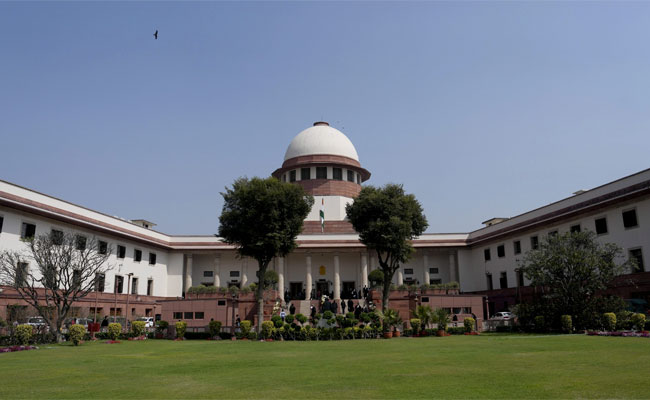
New Delhi (PTI): The Supreme Court has asked all the states and Union Territories to prepare a "realistic and practical" action plan to implement the guidelines necessary as a minimum standard for intensive care units.
The apex court was informed that "Guidelines for Organisation and Delivery of Intensive Care Services", on which there is consensus and which is practical, implementable and necessary as a minimum standard for an ICU, has been prepared.
A bench of Justices Ahsanuddin Amanullah and R Mahadevan said copies of the guidelines should be shared with all the states and UTs.
"Moving further, as an immediate measure, let all the additional chief secretaries/secretaries ... heading the department of health and medical education in the states and the UTs, convene a meeting of all experts involved in this exercise to prepare an action plan for implementation of the guidelines. Such a plan shall be realistic and practical," the bench said in its April 20 order.
The top court was hearing a matter relating to healthcare services, including guidelines for the treatment of patients in the ICU or critical care unit.
The bench said five basic issues shall be identified and prioritised in the first instance.
"The challenge ... lies in determining what ought to be treated as absolutely essential and mandatory; accordingly, an initial list of five basic requirements, in terms of priority, relating to both manpower and equipment/logistics, shall be prepared," it said.
It said a methodology should also be formulated for implementation on the ground, and more importantly, a mechanism to ensure compliance and monitoring of the implementation.
"We expect the exercise to commence immediately and the first meeting to be held within one week from today. We direct that the meeting shall be attended personally by the concerned additional chief secretary/secretary ... heading the department of health and medical education in the states and the UTs," the bench said.
It said the report prepared pursuant to the deliberations should be forwarded by the respective states and UTs to the Secretary of the Department of Health, Government of India, who in turn would circulate it to all the states and UTs.
The bench said thereafter, a meeting of all concerned should be convened where a final common agreed draft shall be prepared and circulated.
"A final report/blueprint/recommendation shall be prepared, which shall be placed before this court on the next date," it said, adding that the entire exercise should be completed within three weeks.
"Let the Ministry of Health, Government of India, formally issue the guidelines placed before us today, to the states and UTs concerned by way of an advisory. A copy of it shall also be uploaded on the website of the Ministry of Health, Government of India," the bench said, while posting the matter for further hearing on May 18.
During the hearing, it was suggested that for future requirements, the nursing staff should be trained to handle such situations since they remain with the patient round the clock, unlike doctors who may visit periodically.
"We fully endorse the suggestion, which is not only pragmatic but also imperative. Accordingly, the Indian Nursing Council and the Para Medical Council of India are impleaded as party respondents," the bench said.
It said on the next date, the newly added respondents shall come up with a plan indicating how they propose to augment the courses or curriculum and training imparted by them so that persons emerging from institutions recognised by them are capable of managing and handling situations in the ICUs.