Tejashwi Yadav moves SC seeking transfer of defamation case, informs Ahmedabad court
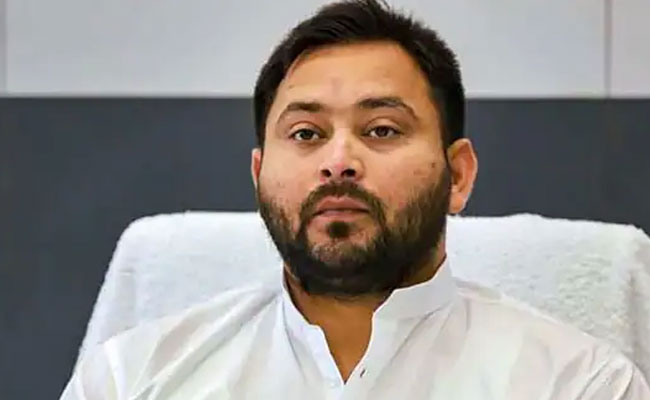
Ahmedabad (PTI): Bihar Deputy Chief Minister Tejashwi Yadav on Saturday informed a trial court here that he has moved the Supreme Court seeking transfer of the criminal defamation case against him and the matter is likely to be taken up on November 6.
The Rashtriya Janata Dal (RJD) leader, through his lawyer, sought exemption from appearance in the court of additional metropolitan magistrate DJ Parmar, which had summoned him on September 22 in a criminal defamation case for his alleged remark "only Gujaratis can be thugs".
The court adjourned the case and posted it for hearing on December 2.
The lawyer for complainant Haresh Mehta had argued that since the matter has not been taken up by the apex court yet and no direction has been passed, the trial court must continue hearing the case in Yadav's absence.
Among the grounds for exemption presented before the court on Saturday was Yadav's official engagement on the day and the fact that he has filed a petition under section 406 of the Criminal Procedure Code (CrPC) before the Supreme Court seeking transfer of the case.
As per the case status obtained from the website of the Supreme Court, the said transfer petition is tentatively listed on November 6, the RJD leader said.
In the exemption application, Yadav said he is a law-abiding citizen and deputy chief minister of Bihar and ordinarily resided at his official address in Patna.
"Hence, the applicant-accused has not been able to attend the further proceedings before this court owing to pressing and urgent official commitments, which involve overseeing important projects for the welfare of the general public, which is necessary in view of the forthcoming religious festivities in the state," the application stated.
Yadav further stated that his transfer petition before the apex court is likely to be taken up on November 6, and sought that further proceedings be conducted in the presence of his lawyer and no objection be taken in this regard.
The court had conducted an inquiry against Yadav under section 202 of the CrPC and found sufficient grounds to summon him based on a complaint filed by Mehta, a 69-year-old social worker and businessman from Ahmedabad.
Mehta had filed his complaint in court along with the proof of Yadav's statement made before the media in Patna on March 21 this year.
"Only Gujaratis can be thugs in the present situation, and their fraud (crime) will be forgiven. Who will be responsible if they abscond after they are offered the money belonging to the LIC and bank?" Yadav had said.
The complainant claimed that the statement was made in public and calling the entire Gujarati community "thugs" defames and humiliates all Gujaratis in public.
A "thug" is a rogue, sly and criminal person, and such a comparison with the entire community will cause people to look at Gujaratis with suspicion, he said, while seeking maximum punishment for Yadav.
Let the Truth be known. If you read VB and like VB, please be a VB Supporter and Help us deliver the Truth to one and all.
Rickelton's ton in vain as SRH beat MI by 6 wickets
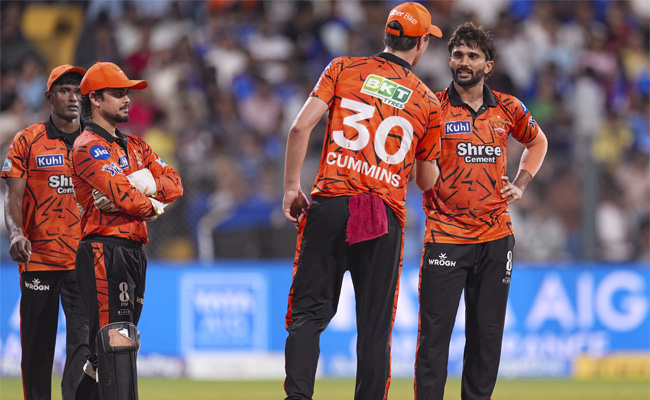
Mumbai (PTI): Ryan Rickelton's whirlwind unbeaten ton was overshadowed by Heinrich Klaasen's unbeaten 65 as Sunrisers Hyderabad defeated Mumbai Indians by six wickets in an IPL match here on Wednesday.
Chasing an imposing 244-run target, Travis Head (76 off 30) and Abhishek Sharma (45 off 24) shared 129 runs for the opening wicket to set the platform for SRH.
Klaasen (65 not out off 30 balls) then displayed his all-round hitting abilities to guide SRH home with the help of Nitish Kumar Reddy (21) and Salil Arora (30 not out off 10) in 18.4 overs.
Earlier, Rickelton's knock powered MI to 243 for five.
MI rode on a 93-run stand between Rickelton (123 not out off 55 balls) and Will Jacks (46 off 22) in 7.1 overs for the opening stand to power the side.
MI skipper Hardik Pandya scored a valuable 31 off 15 balls before being dismissed.
Praful Hinge (2/54), Eshan Malinga (1/29), Sakib Hasan (1/39) and Nitish Kumar Reddy (1/31) were the wicket-takers for SRH.
Brief Scores:
Mumbai Indian: 243 for 5 in 20 overs (Ryan Rickelton 123 not out; Praful Hinge 2/54).
Sunrisers Hyderabad: 249 for 4 in 18.4 overs (Travis Head 76, Heinrich Klaasen 65 not out; AM Ghazanfar 2/51).