Telangana polls: Karimnagar Collector, Police Commissioner transferred
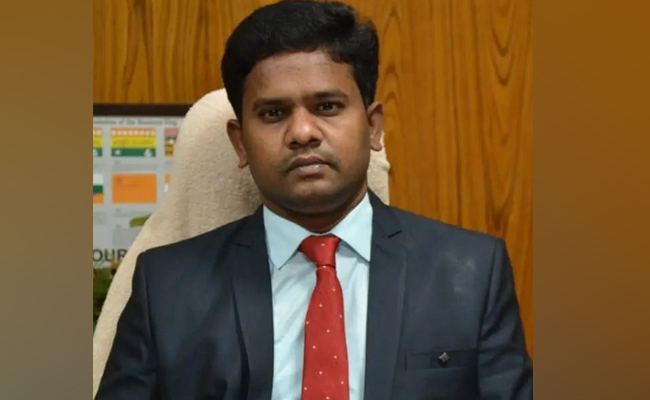
Hyderabad (PTI): Pursuant to Election Commission's instructions, the Telangana government has issued orders transferring Karimnagar Collector B Gopi and Police Commissioner L Subba Rayudu.
Both the officials were asked to handover the charge to officials next in rank and report in General Administration Department.
The BJP's Election Commission Affairs Committee Chairman Marri Shashidhar Reddy on Friday lodged a complaint with the EC requesting it to transfer the Police Commissioner alleging police inaction over the attack on the Lok Sabha member Bandi Sanjay Kumar's office in Karimnagar recently.
Let the Truth be known. If you read VB and like VB, please be a VB Supporter and Help us deliver the Truth to one and all.
ICSE, ISC results: Girls outperform boys, pass rate over 99%
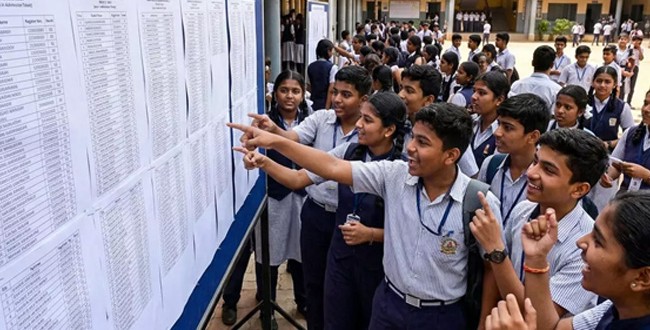
New Delhi (PTI): The Council for the Indian School Certificate Examinations on Thursday announced the Class 10 and Class 12 results for 2026, with overall pass percentages of 99.18 per cent and 99.13 per cent, respectively.
A total of 2,58,721 candidates appeared for the Indian Certificate of Secondary Education (ICSE), or Class 10, examination.
About 1,03,316 students took the Indian School Certificate (ISC), or Class 12, exam.
Girls outperformed boys in both examinations.
In ICSE, girls recorded a pass percentage of 99.46 per cent compared to 98.93 per cent for boys.
In ISC, girls achieved a 99.48 per cent pass percentage, while those of boys stood at 98.81 per cent.
Students can now access their scorecards on the official website cisce.org.