Telangana thwarts China-based hacker's bid to target power set up, says official

Hyderabad: Power utilities in Telangana have averted a possible attempt by a China-based group to hack the state's power systems, officials said on Wednesday.
The preventive action was taken following an alert by the Computer Emergency Response Team of India (CERT-In) and a heightened state of alertness would continue for more days, an official said.
"We noticed some malware. Immediately, we erased that.
We have taken all the preventive steps. Absolutely, there is no problem," the senior official told PTI.
The CERT-In communicated to the state power utilities two days ago.
"We have a good team here also. Everyday, they are reviewing. We have anti-virus software," he added.
The CERT-In has reported from a trusted source that China-based "Threat actor Group Command and Control" servers are trying to communicate with systems belonging to Telangana State Load Dispatch Centre (SLDC), TS Transco (Transmission Corporation of Telangana Ltd)) and advised taking suitable precautionary measures to ensure security of the power system, official sources said.
The TS Transco has taken various measures like blocking server IPs communicated by CERT-In and temporarily disabling control function for remote operation of circuit breakers from SLDC, they said.
User credentials for all those accessing TSSLDC website were changed and suspected equipment within the perimeter of the SCADA (process control system) control centre were isolated to ensure safety of the grid and satisfactory power supply to all consumers of the state, they said.
The increased state of alertness would continue for some days, the official said, adding, "not only Telangana, for that matter, every state has to be careful."
Let the Truth be known. If you read VB and like VB, please be a VB Supporter and Help us deliver the Truth to one and all.
Bengaluru airport introduces AI-based system to enhance safety at vehicle-aircraft intersections
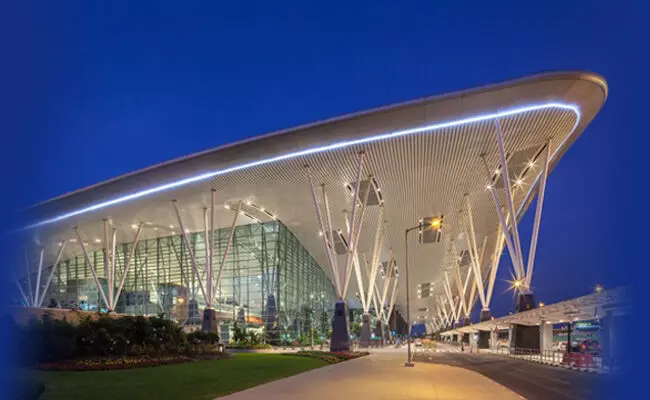
Bengaluru: Bangalore International Airport Limited (BIAL) has introduced an integrated smart airside safety system at Kempegowda International Airport to improve operational safety at key intersection zones.
According to The Hindu, the system has been designed to enhance safety at Cross Service Roads (CSRs), where aircraft and ground vehicle movements intersect.
According to BIAL, the system integrates AI-based computer vision, automation, and centralised monitoring to manage right-of-way movements and reduce the risk of human error.
“CRSs are among the most sensitive areas within airport operations, requiring precise and seamless coordination between aircraft and ground vehicles. Traditionally, right of way protection at these intersections relied on manual or semi-manual inset light activation, creating dependencies on human intervention, increasing the risk of delays and limiting operational visibility,” TH quoted BIAL as saying.
The new system uses real-time detection of vehicle movement, risk assessment, and automated signalling. AI-enabled cameras identify potential conflicts and trigger automated inset light signals to ensure aircraft priority. Normal operations resume once the area is confirmed clear.
“Based on these detections, the system triggers automated inset light activation to protect aircraft right‑of‑way and restores normal signalling once the intersection is confirmed clear. A centralised monitoring and analytics platform digitally logs all events, strengthening governance, compliance, and operational control,” BIAL said.
By embedding technology into operations, the system creates a data-driven separation layer between aircraft and ground vehicles, significantly reducing human error, especially during night and low-visibility conditions.
“Precision-led signal activation improves traffic flow, minimises unnecessary stoppage and enhances turnaround efficiency. It also establishes a scalable foundation for predictive safety analytics, enabling trend analysis, peak-hour optimisation, compliance mapping and risk forecasting to support continuous improvement and stronger airside governance,” BIAL said.