Terrorists using remote motorcycle keys to trigger IEDs in Kashmir: Report
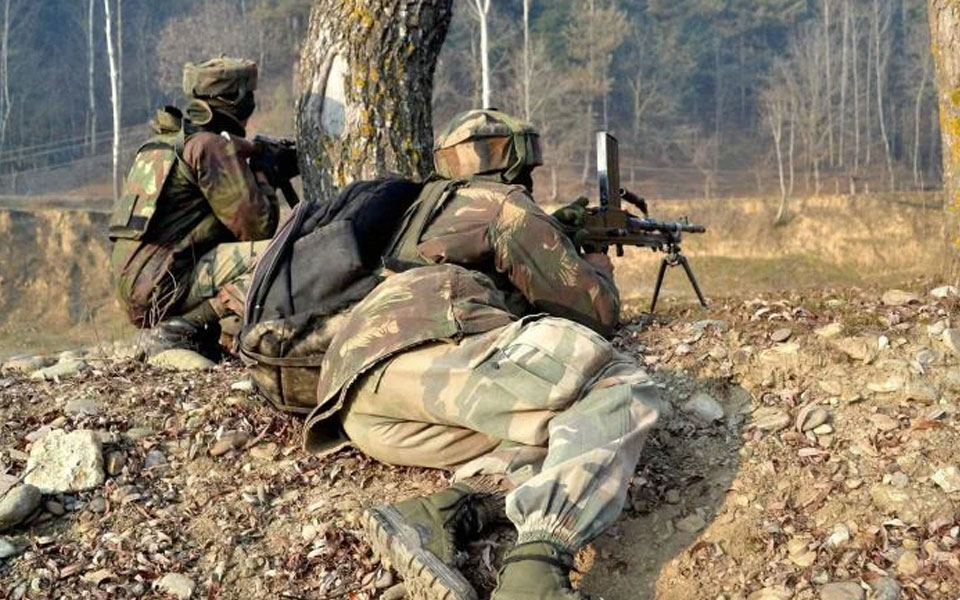
New Delhi: The commonly used anti-theft remote alarms or keys used in motorcycles and vehicles are being increasingly used by terrorists to trigger IEDs in Jammu and Kashmir, a possibility suspected in the recent Pulwama attack on a CRPF convoy that killed 40 personnel, a latest report has revealed.
According to the report, prepared by investigative and security agencies working in the counter-terrorism grid in Jammu and Kashmir, terrorists "suddenly shifted their tactics" last year to deploy a remote control mechanism to blast improvised explosive devices (IEDs) using electronic tools such as mobile phones, walkie-talkie sets and anti-theft devices used to secure two- and four-wheelers.
The report accessed by PTI said these electronic gadgets are "easily available" in the market and terrorists operating in Kashmir Valley are using them to "fabricate" remote-controlled IEDs as they want to not only avoid one-to-one combat with the forces which are conducting operations almost every day against them but also to inflict maximum casualties.
"It is expected that the militants in J-K may use more anti-theft devices, similar to the devices used by Naxals in other states, in the future. Hence, the security forces deployed in J-K need to be more vigilant," the report on the history and emerging trends of IEDs in the state said.
Investigators probing the Pulwama attack suspect that the deadly blast on February 14 was executed by a lone Jaish-e-Mohammed terrorist by blowing off a strong combination of RDX-mix explosive, laden in a car, next to a troop-carrier bus plying as part of a convoy on the Jammu-Srinagar Highway.
The report stated that sometime back, an IED attack was engineered to target the personnel of the Army's 44 Rashtriya Rifles (RR) unit in Shopian district and it was found that the explosive was trigerred using a remote key used to lock and unlock a two-wheeler.
"Use of anti-theft device in remote-controlled IEDs is common in the red corridor (Left Wing Extremism-affected states) and the use of these devices by militants in J-K reveals that there could be a nexus between the terrorists operating in the valley and the Naxals," it said.
However, senior security officials working in the counter-terrorism grid in the valley denied getting "solid proofs" of any direct links between the militants operating in J-K and the Maoists.
The report also analysed the recent history of IED blasts in Kashmir and found terrorists were using military-grade explosives such as RDX, PETN (Pentaerythritol Tetranitrate), TNT (Trinitrotoluene) and commercial explosives such as slurries and ammonium nitrate for fabricating IEDs.
"Recovery of incendiary chemicals (in J-K in the past) indicates the terrorists' intention to use these chemicals in sabotage activities in the state and against security forces," the report said, adding both military-use and commercial electric detonators are "commonly" being used by the terrorists to launch terror attacks or blasts.
It added that the terrorists continue to use the "rudimentary" command-wire mechanism (by joining wires) to blast IEDs, probably to "hit the targets precisely".
"Militants have been adopting different methods, technologies and strategies to detonate IEDs to inflict maximum casualties on the security forces in J-K. It is believed that the renewed tactics and modus operandi of the forces might have forced the militants to avoid direct confrontation with them (security forces) and instead use IEDs which offer the terrorists a scope to carry out attacks by staying behind the screens," it said.
Let the Truth be known. If you read VB and like VB, please be a VB Supporter and Help us deliver the Truth to one and all.
BJP, TMC hail SC directions on counting of votes for West Bengal polls
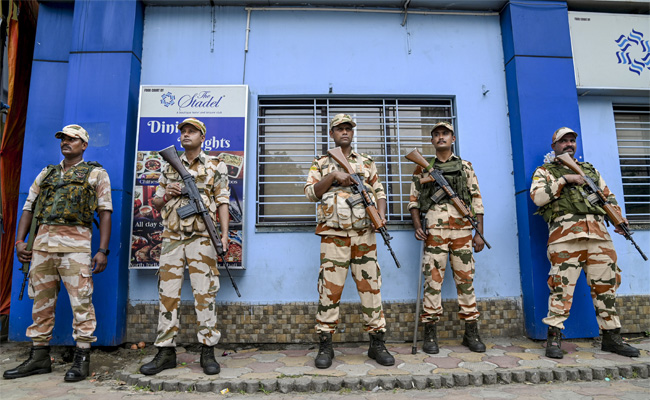
Kolkata (PTI): The BJP and TMC on Saturday both hailed the SC directions on the Election Commission's circular over the deployment of central government personnel for vote counting in West Bengal.
The apex court on Saturday said no further order was necessary on the TMC's plea challenging the Calcutta High Court's dismissal of its petition against the April 13 circular.
In a social media post, BJP leader Amit Malviya said, "In yet another legal setback, the Supreme Court has refused to intervene. The Trinamool Congress had approached the court challenging the exclusion of state government employees from vote-counting supervisor duties, and had sought an urgent hearing."
"The refusal to entertain this plea underscores a clear message -- attempts to influence or cast doubt over the integrity of the counting process will not find easy validation. Another day, another judicial rebuff for Mamata Banerjee," he added.
The TMC, however, claimed that the SC directions vindicated its stand.
"The issue raised before the Hon'ble Supreme Court pertained to the implementation of the said communication in a manner whereby only Central Government/Central PSU employees were being appointed as Counting Supervisors and Counting Assistants for counting of votes," the party said in a statement.
The TMC said it was highlighted that such an interpretation and implementation of the communication would be contrary to the framework of a fair and balanced counting process.
"After hearing the parties, the Hon'ble Supreme Court directed that Clause 1 of the communication dated 13.04.2026, relating to the appointment of Counting Supervisors and Counting Assistants, must be read along with the salient feature contained in the second page of the said communication, which provides for random selection of both State Government and Central Government employees," it said.
"The Hon'ble Supreme Court has further recorded the undertaking of Mr Dama Seshadri Naidu, learned Senior Advocate appearing for the Election Commission of India that the said communication shall be followed in its letter and spirit," it added.
The TMC said that in view of the directions, it is expected that the counting of votes shall be conducted in a fair, transparent, and balanced manner.
A special bench of Justices P S Narasimha and Joymalya Bagchi said the EC can choose the counting personnel, and its April 13 circular, which provides for deployment of state government employees as well, cannot be said to be incorrect.
The poll body said the apprehensions of TMC of any wrongdoing are misplaced, as the circular very clearly states that there will be a mix of central and state government employees.
The EC assured the court that the circular would be implemented in letter and spirit, and there would be state government employees also during the counting of votes on May 4.
Polling for the 294-member West Bengal assembly was held in two phases -- April 23 and April 29. The counting of votes will be taken up on May 4.
On April 30, the Calcutta High Court dismissed the TMC's petition against the Election Commission circular, saying there was no illegality in the poll panel's decision to appoint counting supervisors and assistants from Central government and Public Sector Undertaking (PSU) employees, instead of the state government staff.