The Telegraph editor Sankarshan Thakur dies in Gurgaon hospital
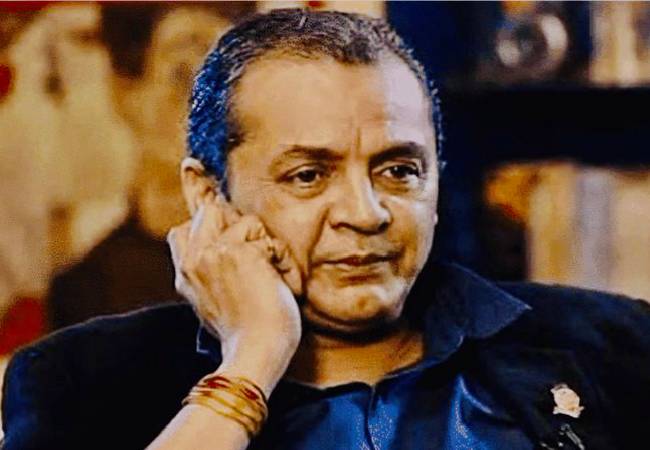
New Delhi (PTI): Veteran journalist Sankarshan Thakur, editor of The Telegraph whose prowess with words added that extra edge to his analyses and ground reports, died at a Gurgaon hospital on Monday after prolonged illness. He was 63.
Born in Patna in 1962, Thakur was the son of senior journalist Janardhan Thakur. He received his early education at St Xavier’s in Patna and later in Delhi, before earning a degree in political science from Hindu College, Delhi University.
Thakur, who began his journalism career in 1984 with SUNDAY magazine, is survived by his wife Sona, daughter Jahan and son Ayushman.
He worked in several places, including The Indian Express, Tehelka and The Telegraph in two stints.
Known for his sharp political commentary and empathetic pen, Thakur was a keen chronicler of India’s politics, particularly Bihar. His home state was the focus of not just his journalism but also his credentials as an author.
Thakur authored the widely cited and bestselling biographies of the state’s prominent political figures. His books include "Subaltern Saheb", a political biography of former chief minister Lalu Prasad Yadav, "Single Man: The Life and Times of Nitish Kumar of Bihar", and "The Brothers Bihari", a highly acclaimed political diptych on Yadav and Kumar.
His untimely death led to an outpouring of grief on social media and elsewhere.
Several politicians, including Jammu and Kashmir Chief Minister Omar Abdullah, Congress leader Jairam Ramesh and RJD’s Manoj Kumar Jha remembered the journalist for his incisive writings.
Abdullah said Thakur was one of the few journalists who "made an effort to travel extensively around J&K and, while travelling, actually listened without judgment".
“Very sorry to hear about the tragic death of @SankarshanT. He was an excellent journalist, objective & well informed... He put up a brave fight but ultimately the illness prevailed. May his soul rest in peace. My heartfelt condolences to his family,” Abdullah posted on X.
Ramesh described Thakur as a "delightfully brilliant writer".
"He was a very incisive analyst of Indian politics and his numerous articles on Bihar as well as J&K established his reputation. Over the many years that he sparkled as a journalist, he was consistently informed and educated. He belonged to a breed that is already endangered," the Rajya Sabha MP said in his post.
One might agree or disagree with his views on Bihar and Jammu and Kashmir but he shall always be remembered for his insight into the ground, said Jha in a lengthy post while pointing out that Thakur loved “swimming against the current”.
His colleagues and many readers agreed.
"Thakur was deeply objective in his writings, never allowing his personal likes or dislikes to influence his reportage. In fact, I had a word with him 10-15 days ago and as usual, he was full of life - telling stories, laughing. He was not someone who would make his illness a big deal," senior journalist and author Rasheed Kidwai told PTI.
Struggling to speak about his long-time associate who had drafted him into The Telegraph in 1995-96, Kidwai remembered him as a “lively figure” and a journalist with impeccable integrity.
"He was eagerly looking forward to covering the upcoming Bihar elections. But his knowledge wasn’t confined to Bihar alone - it was encyclopaedic. He wrote on a wide range of issues. Kashmir, in particular, was very close to his heart; it was his idea of happiness," he added.
In addition to his in-depth reporting on Bihar, Thakur published monographs on a range of critical issues, including the Kargil War, Pakistan and caste-based honour killings in Uttar Pradesh.
The Editors Guild of India condoled the passing of the "gifted writer," noting that Thakur enjoyed a formidable reputation as both a journalist and an author.
"A fearless ground reporter, he brought to life some of India’s most defining events - from the Kargil war front, Bhopal tragedy, 1984 anti-Sikh riots and Indira Gandhi’s assassination, to the complexities of Kashmir, the Sri Lankan civil war, and socio-political currents in Bihar and Pakistan," the Guild said in a statement.
Thakur's distinguished contributions earned him the Prem Bhatia Award for excellence in political journalism (2001) and the Appan Menon Fellowship (2003).
Readers, fellow journalists and friends wrote in with their tributes and personal memories of the journalist, flooding social media platforms.
Senior journalist AJ Philip, in his tribute titled "Sankarshan Thakur: A Reporter Who Wrote with a Poet’s Pen", recalled Thakur’s “nuanced and riveting” dispatches from the 1999 Kargil War.
"He was holidaying in Goa when he heard about the 'war' in Kargil. Without hesitation, he rushed there. His reports from the conflict zone were nuanced and riveting. Television reporters like Barkha Dutt became household names with their ground-zero coverage, but Sankarshan’s words captured the complexity of the war with a depth that only print could provide," Philip wrote.
Author Nilanjana Roy termed him the "lighthouse of an editor".
"A great and saddening loss. Sankarshan Thakur held on to courage and his conscience when so many sold theirs. He was a gifted writer, the sharpest of political analysts, and kept faith with the people , the country, and the Constitution. Such a lighthouse of an editor," she said on X.
In January this year, Thakur wrote a condolence message for a friend on X and bemoaned the "brutal uncertainties of life".
"Irredeemably sad to learn that Tarun Bhartiya @LudditeNed is no more. What a fine mind, what a multifaceted person. What a loss. Such are the brutal uncertainties of life," he said.
It was among his last posts on X.
Let the Truth be known. If you read VB and like VB, please be a VB Supporter and Help us deliver the Truth to one and all.
4 held for sexually assaulting woman, girl on moving bus after social media alert in UP's Agra

Agra (UP) (PTI): Four people were arrested, after a prompt response by police following a social media alert, for allegedly sexually assaulting a woman and a girl inside a moving bus here, officials said on Tuesday.
According to an official police statement, at 12:27 am on April 27, information was received on the social media platform X about an incident of sexual assault on a bus travelling from Kanpur to Ahmedabad, which was approaching Namner crossing in Agra.
Acting under the direction of Police Commissioner Deepak Kumar, the Agra Police social media team immediately alerted the Rakabganj police station within minutes and coordinated with the victims to confirm the incident and obtain the exact location, it stated.
Police teams launched intensive checking at Namner crossing and intercepted the bus as it reached the spot. The four accused involved in the incident were apprehended on the spot, and legal action was initiated against them, the statement said.
The police said the swift response and coordination between the social media team and field units ensured timely action, bringing relief to the victims and other passengers, who expressed gratitude towards the police, it added.