‘There is a clear fascist onslaught’, says Sasikanth Senthil who quit IAS
This interview was first published in Hindustantimes.com
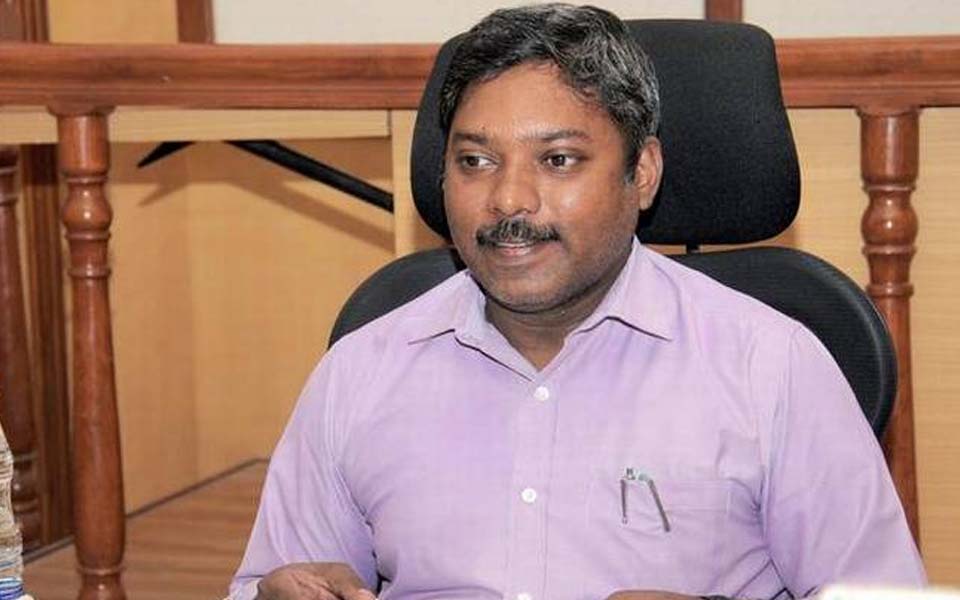
A day after he resigned, S Sasikanth Senthil, a 2009 batch IAS officer who was working as the Deputy Commissioner of Dakshina Kannada district, told HT that matters reached a crescendo with the abrogation of Article 370 and he had to quit the service to speak up about it. Excerpts from the interview:
Q. Why exactly did you resign?
A. I had mentioned that in my note that what is happening in the national scenario pushed me to get out of the services. It is not related to the state, just the overall framework of politics which is being pushed on the nation that is very troublesome for me. I feel this reached a crescendo when it came to the abrogation of Article 370.
Q. Were such feelings building up in you?
A. Yes it has been building up for a long time because I for one had some experience at the grassroots level coming into the services. I have always been tracking political agendas and moves and in my opinion this is a very clear fascist onslaught. People have become hyper nationalist. People can’t encourage intellectual debate. I cannot sit in the bureaucracy and observe these things. If I have to do something about it, I have to come out from service, which is why I resigned.
Q. Then why did you say your decision was personal?
A. The government is doing what it has to do, what it feels is appropriate. My problem is that this does not match my understanding and ideas of the spirit in which we have built this country. My personal values, the way I have understood the Constitution, is not in sync with what is happening right now. It may be lawful to do these things, but there is a preamble to the Constitution which highlights the intentions and the building blocks of the Constitution. When I see it from that perspective and the ideas I have don’t match with what is happening then it becomes a personal reason. Now whether my ideas are right is something that needs to be debated. When my ideas don’t match I have only two options before me, I have to either change my ideas or change my work. So, I left the job.
Q. Is this in anticipation of a plunge into electoral politics?
A. The point is, I feel strongly that I had to come out and my conscience is not in sync with what is happening. It is for the country to decide whether it is right or wrong, but I am very clear what is happening.
Q. What next then?
A. Obviously I will try to engage with various groups and people. I’m sure in this fascist framework one of the major agendas will be to quash any intellectual debate and institutions. History has proven this many times, it’s not new either.
Q. Shah Faesal also resigned from the IAS and went on to form a political party. Are you thinking along these lines?
A. I’m not bent on leadership as of now. I’m only trying to push my understanding and show what is happening to the people. I’m sure a lot of people are not able to spot it. They think it is a nationalistic viewpoint... If you are asking about electoral politics then, no.
Q. Since your resignation letter didn’t spell out your stand there was speculation that this was because of issues within the bureaucracy, like pay increase, slow pace of development, or was it just Article 370...?
A. It is not only Article 370, I don’t want to trivialise the issue. But it has reached a crescendo. It is horrible to see. We have anticipatory powers in the district [administration]. If we use Section 144 [of the CrPC] to prohibit certain things, we feel very anxious about how long we can curtail the fundamental rights of people even if it is used for 12 hours. Now, 30 days of no communication and nothing... imagine if we are put in that situation... In this framework institutions will be weakened and people who talk will be threatened. I am not saying this is just about Kashmir.
Secondly, about the service-related issues, I have already said that I was treated like a king. I have worked under three governments and in three districts. Never did I feel that my government was pushing me to do something that I didn’t want to do. And I didn’t leave service on things like remuneration, I think it has gone beyond such things. In fact, I feel whatever we are being paid is much more than what we actually deserve.
This interview was first published by Hindustantimes.com
Courtesy: www.hindustantimes.com
Let the Truth be known. If you read VB and like VB, please be a VB Supporter and Help us deliver the Truth to one and all.
Bridge portion collapses on Jammu outskirts; 3-4 labourers feared trapped, 1 rescued
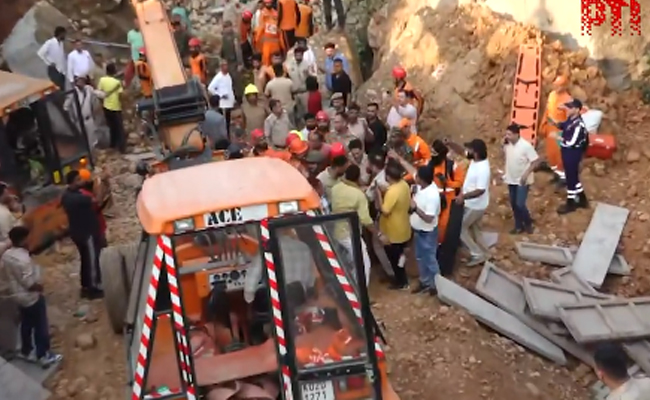
Jammu (PTI): A portion of a small bridge collapsed in the Bantalab area on the outskirts of Jammu city on Friday, trapping at least three to four labourers under the debris, while one injured worker was rescued, official sources said.
Authorities have closed the road link following the collapse of the portion of the bridge.
The incident occurred when labourers were carrying out repair work on a retaining wall near the bridge that was damaged in last year's flash floods, the sources said.
According to the sources, a section of the bridge suddenly gave way, burying workers engaged at the site under the rubble.
Police, Army and State Disaster Response Force (SDRF) teams launched rescue operations to extricate those buried under the debris. They pulled out one injured labourer and shifted him to a hospital, the sources said.
Family members of the labourers present at the site said around six workers engaged at the site at the time of the incident came under the debris when the structure collapsed. The family members said while two of the labourers managed to escape, four got trapped.
The sources said those trapped included the husband of a woman labourer, a mason, an unmarried labourer and a relative of the contractor.
There was no official confirmation on the exact number of persons trapped under the debris till the filing of this report.
The rescue operations are ongoing.