Three minor girls go missing in Uttar Pradesh's Shahjahanpur after leaving home for school
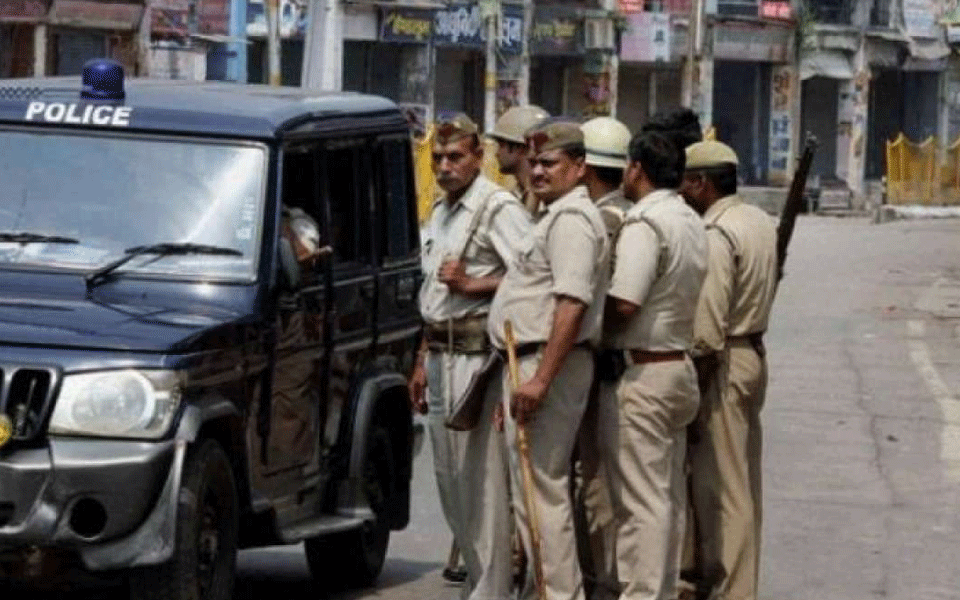
Shahjahanpur (UP): Three minor girls went missing here after they left home for school, with one of them carrying cash and clothes supposedly meant for a programme at the institution, police said on Tuesday.
Two of the girls are aged 15 and one is 10, Superintendent of Police S Anand said, adding that three teams have been formed to look into the matter.
The three girls are from separate localities in the Sadar area and study in the same school. They left home on Monday to go to the school, Assistant Superintendent of Police (City) Praveen Kumar told PTI.
He said one of them was carrying Rs 2,500 and another had taken Rs 2,700 and clothes with her. One of the girls told her family members that she had packed the clothes as there was a programme at the school, the police said.
Police were informed about the matter on Monday night when the girls did not return home, Kumar said.
Last month in the district, a BA second-year student of a college run by the Mumukshu Ashram of former Union minister Swami Chinmayanand was found without clothes and severely burnt along a national highway.
She said in a statement before a magistrate that three people tried to rape her in a field near Rai Kheda village and when they did not succeed, they poured kerosene and set her on fire. Four people, including a female friend who had allegedly sent her to the field, were arrested from different places in the district.
Let the Truth be known. If you read VB and like VB, please be a VB Supporter and Help us deliver the Truth to one and all.
Bengaluru airport introduces AI-based system to enhance safety at vehicle-aircraft intersections
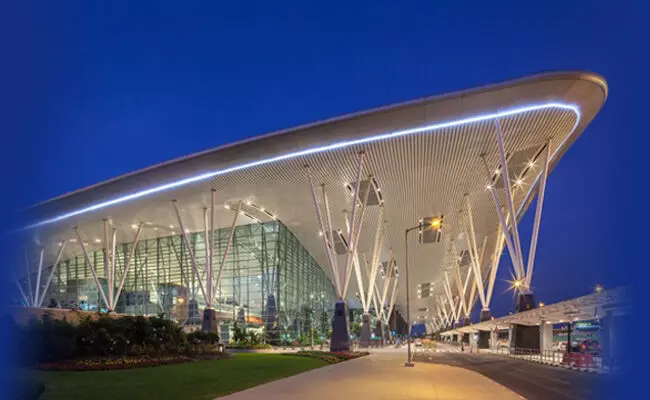
Bengaluru: Bangalore International Airport Limited (BIAL) has introduced an integrated smart airside safety system at Kempegowda International Airport to improve operational safety at key intersection zones.
According to The Hindu, the system has been designed to enhance safety at Cross Service Roads (CSRs), where aircraft and ground vehicle movements intersect.
According to BIAL, the system integrates AI-based computer vision, automation, and centralised monitoring to manage right-of-way movements and reduce the risk of human error.
“CRSs are among the most sensitive areas within airport operations, requiring precise and seamless coordination between aircraft and ground vehicles. Traditionally, right of way protection at these intersections relied on manual or semi-manual inset light activation, creating dependencies on human intervention, increasing the risk of delays and limiting operational visibility,” TH quoted BIAL as saying.
The new system uses real-time detection of vehicle movement, risk assessment, and automated signalling. AI-enabled cameras identify potential conflicts and trigger automated inset light signals to ensure aircraft priority. Normal operations resume once the area is confirmed clear.
“Based on these detections, the system triggers automated inset light activation to protect aircraft right‑of‑way and restores normal signalling once the intersection is confirmed clear. A centralised monitoring and analytics platform digitally logs all events, strengthening governance, compliance, and operational control,” BIAL said.
By embedding technology into operations, the system creates a data-driven separation layer between aircraft and ground vehicles, significantly reducing human error, especially during night and low-visibility conditions.
“Precision-led signal activation improves traffic flow, minimises unnecessary stoppage and enhances turnaround efficiency. It also establishes a scalable foundation for predictive safety analytics, enabling trend analysis, peak-hour optimisation, compliance mapping and risk forecasting to support continuous improvement and stronger airside governance,” BIAL said.