Three more wild elephants die in MP's Bandhavgarh, toll rises to 10
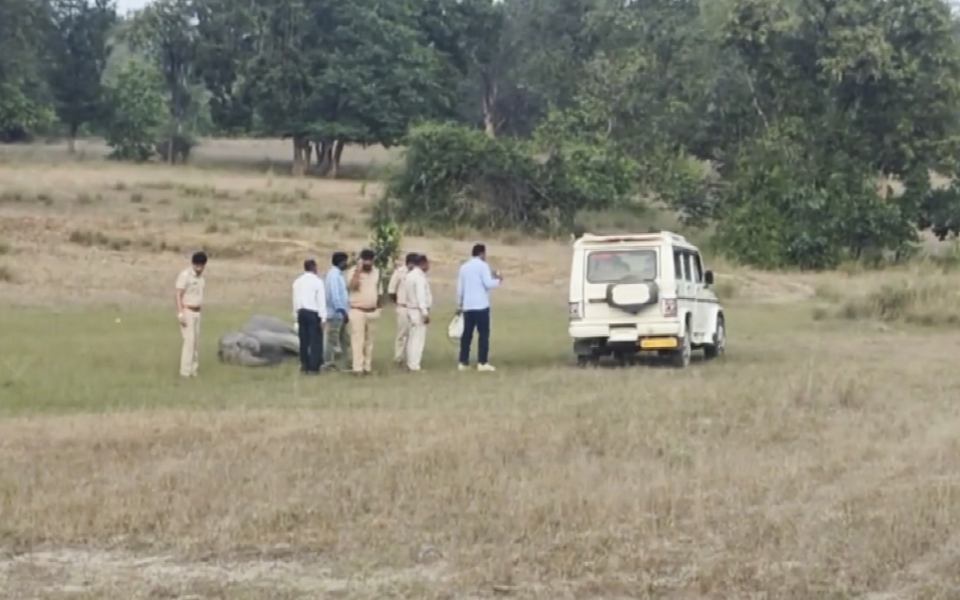
Umaria (MP), Oct 31: Three more wild elephants have died in Madhya Pradesh's Bandhavgarh Tiger Reserve (BTR) after consuming a toxic substance, taking the toll to ten so far this week, a forest department official said on Thursday.
One tusker died on Wednesday evening and another two on Thursday," MP Principal Chief Conservator of Forest (PCCF-Wildlife) VKN Ambade told PTI over the phone from inside the reserve.
"At present, we have not found any foul play (in the death of elephants). I have visited so many nearby areas. I am not seeing any foul play as of now. But let us see what (autopsy and forensic) reports say," he said.
"A five-member team of the Wildlife Crime Control Bureau from Delhi is in the reserve. The National Tiger Conservation Authority's Nagpur-based regional officer, assistant inspector general of forests Nandkishore Kale, was camping here to get first-hand feel of the situation," Ambade said.
"Our state tiger strike force is also doing investigations along with sniffer dogs," he added.
They have collected samples from nearby agriculture lands, paddy fields, water bodies and from fields where the elephants consumed kodo millets," he added.
When contacted over phone, Additional Principal Chief Conservator of Forest (Wildlife) L Krishnamoorthy said, "Autopsies have been conducted and veterinary doctors on the basis on circumstantial evidences have said toxicity has been observed in their stomach."
"Also, a lot of kodo millet has been found (in their stomach)," said Krishnamoorthy, who heads the state government-appointed five-member committee probing the death of tuskers in Bandhavgarh which is spread across Umaria and Katni districts in eastern Madhya Pradesh.
"We have sent samples (viscera) of elephants to Jabalpur-based School of Wildlife Forensic and Health (SWFH) for examination. Only forensic examination will reveal the toxin," Krishnamoorthy said when asked whether the dead elephants had consumed some poisonous pesticides sprayed in the field.
All the dead elephants were part of a herd of 13 which included one male jumbo that has died, he said.
The remaining three pachyderms from the herd are healthy and under continuous monitoring in the jungle, Krishnamoorthy informed.
Teams of wildlife health officers and Jabalpur-based SWFH have performed post-mortem examination of nine elephants and the autopsy of the tenth carcass will be done on Friday, he said later in a statement.
"Samples have been collected and they shall be sent to SWFH forensic lab for analysis. Veterinary doctors have indicated the chances of mycotoxins associated with kodo millet," Krishnamoorthy noted.
Mycotoxins generate cyclopiazonic acid that causes poisoning in kodo millet.
The forest department’s wildlife veterinarians are in regular touch and also consulting with experts of Indian Veterinary Research Institute (IVRI) Bareilly, Wildlife Institute of India (WII) Dehradun, State Forensic Science Laboratory, Sagar, and Centre for Cellular and Molecular Biology (CCMB) Hyderabad to get in-depth details about the said mycotoxins, said the senior officer.
As per decisions of the Madhya Pradesh government, SIT and special task force teams are investigating the case with all possible angles, said the Indian Forest Service officer.
According to wildlife experts, this is perhaps the first instance in the country where ten wildlife elephants have died in a span of three days.
On Tuesday, four wild elephants were found dead in Salkhania and Bakeli areas under the Khitoli range of the reserve, a popular tourist attraction, during routine patrolling by forest guards. Subsequently, six more jumbos died on Wednesday and Thursday.
The Krishnamoorthy-led probe panel has been directed by the government to submit its report within ten days.
Let the Truth be known. If you read VB and like VB, please be a VB Supporter and Help us deliver the Truth to one and all.
Sujit Nair raises concerns over speculation of DMK-AIADMK understanding to block TVK
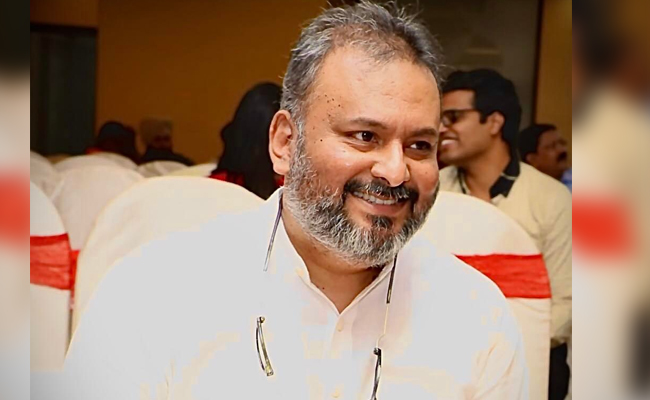
Chennai: Journalist and political commentator Sujit Nair has expressed concern over speculation that the Dravida Munnetra Kazhagam and the All India Anna Dravida Munnetra Kazhagam could explore a post-poll understanding to prevent Vijay-led Tamilaga Vettri Kazhagam from forming the government in Tamil Nadu.
In a social media post, Sujit Nair said the election verdict in Tamil Nadu reflected a clear public demand for political change and argued that the mandate should be respected irrespective of political preferences.
Referring to reports and political discussions surrounding a possible understanding between the DMK and AIADMK, he said he hoped such developments remained only speculative conversations and did not turn into reality.
Nair stated that if such an alliance were to take shape, it would raise serious questions about ideological politics in the country. He said TVK had emerged through a democratic electoral process and that the legitimacy to govern in a parliamentary democracy comes from the people’s verdict.
According to him, attempts to prevent an electoral winner from forming the government through unexpected political arrangements may be constitutionally valid, but many people could view them as politically opportunistic.
He further said that such a move could particularly affect the political image of the DMK, which has historically projected itself around ideology, social justice and opposition politics. Nair said that in ideological terms, the DMK appeared closer to TVK than to the AIADMK, and joining hands with its long-time political rival only to remain in power could weaken its broader political narrative.
He added that the same questions would apply to the AIADMK as well, as the party had spent decades positioning itself against the DMK and such an arrangement could create discomfort among its cadre and supporters.
Drawing a comparison with Maharashtra politics in 2019, Nair said he had expressed similar views when the Shiv Sena formed an alliance with the Indian National Congress and the Nationalist Congress Party after the Assembly elections.
He said post-poll alliances between long-standing political rivals often create a public perception that ideology and electoral mandates become secondary when political power equations come into play.
Nair also said such developments increase public cynicism towards politics and reinforce the belief among voters that ideology is often sidelined after elections.
He maintained that the Tamil Nadu verdict was emphatic and said respecting both the spirit and substance of the mandate was important for the credibility of democratic politics.